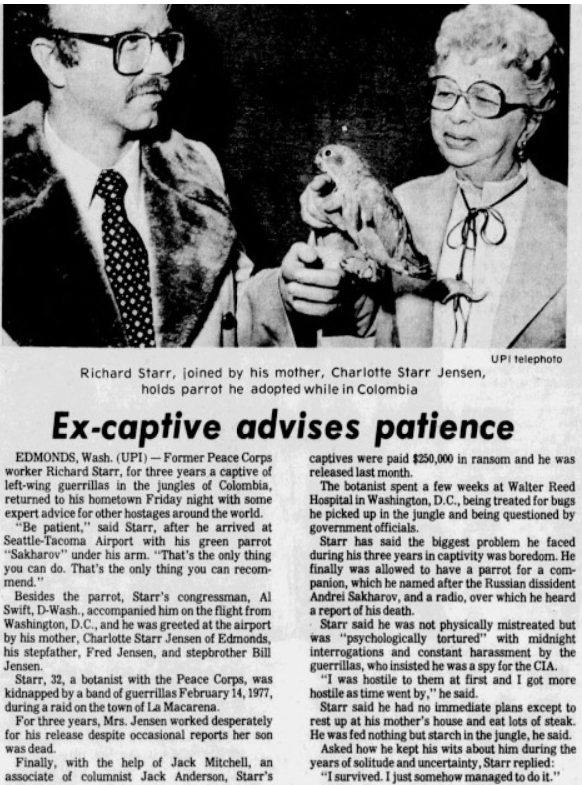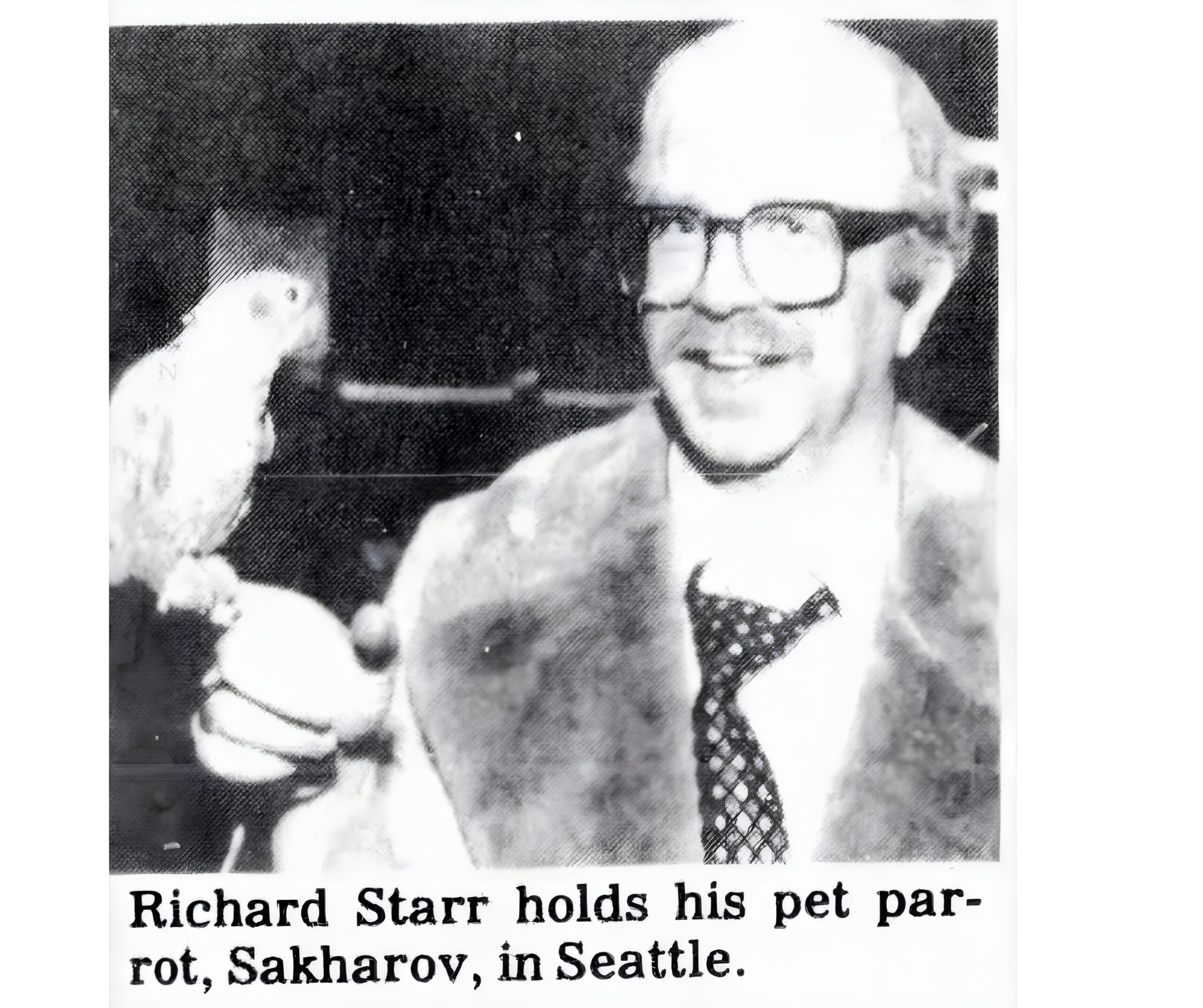
I’ve been building out the branches of the Starr family tree in preparation for a trip east this summer. This led me to find the fascinating tale of Charles Richard STARR 1947-1983 my 7th cousin 2x removed. We’re related through my 8x great grandfather, Joseph Starr, a tailor that was later a tax collector in 1705, then constable in 1711 and 1712 Middletown, Connecticut. My 7x great grandfather was Joseph’s son Thomas Starr, and Charles’ 6x great grandfather was Thomas’ brother Samuel.
Charles went by the name “Dick”. Born in Portland Oregon in 1947, he was the only child of Robert Starr and Charlotte Ruby. Robert died when Dick was just 18 years old, having been a patient for four years in a convalescent home suffering from metastatic brain cancer. After Dick graduated from high school he earned a B.S. in Ecological Systems Analysis from Huxley College of Environmental Studies at Western Washington State College and then a M.S. in Botany from the University of Wyoming followed by two years in the Ph.D. program at Northern Arizona University where he was also an Instructor of Biology. In 1976 he joined the Peace Corps as part of an agricultural research project based in Bogota, Columbia.
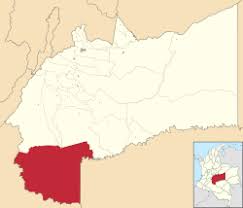
After completing some training in Bogota he was sent to Le Macarena, an isolated region of Columbia about 120 miles southeast of Bogota. Shortly after arriving there, in February of 1977 a guerrilla group, the Revolutionary Armed Forces of Colombia (FARC), attacked a local police outpost and found Dick in the judge’s chambers. Dick’s spanish was not good and he was unable to explain to the soldier why he was there to their satisfaction and so they kidnapped him.
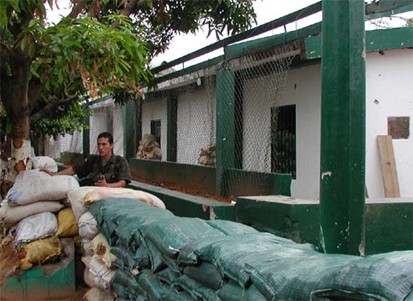
According to the Bogota daily El Tiempo, “as many as 75 guerrillas marched into the town of La Macarena and laid seige to the local police station. After capturing the newly appointed police chief, the guerrillas seized agarian credit office funds, radio equipment, food and medicines, painted the towns with slogans and departed, taking with them one Richard Starr, a North American they found in the local judge’s chambers.”
The Latin American press reported that Dick was a CIA agent and a Fellow of the CIA-linked Summer Linguistics Institute (ILV). There was a formal request for this to be retracted as this was untrue.
El Tiempo reported that the military commander of the region gave a press conference following the incident to register his “disillusionment” with the population which refused totally to come to the defense of the police station “which had been placed there to protect them.” The La Macarena police chief, when asked about the citizens’ reaction, admitted that, “No one came out, except for the priest ‘who called through a loud speaker for the people to come help the police.”
The Washington Post later reported that Dick “was moved 16 times during his captivity, but spent most of the time living under a tarpaulin shelter in dense jungle at the foot of the Andes Mountains.
Starr was “left to his own devices to amuse himself,” and was allowed to read books, or sometimes listen to radio broadcasts from the BBC and the Colombian national network, Mitchell said.
“If he hadn’t had the radio, he would have lost his mental stability,” Mitchell said. He said the Colombian station played mostly classical music — Starr’s favorite.
When Starr was kidnaped — three years ago today — he was unable to speak Spanish and could not explain to his captors why he was in Colombia. “He speaks fluent Spanish now,” Mitchell said yesterday.”
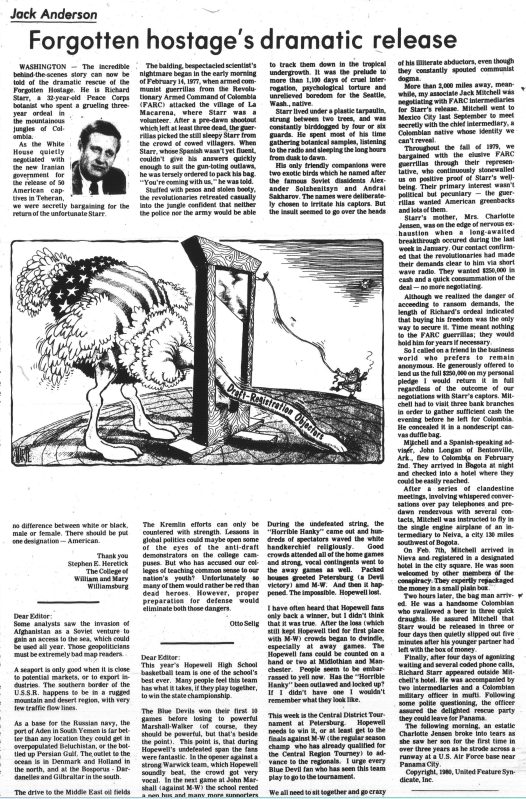
The American state department under Jimmy Carter had a strict policy of not paying ransoms for hostages. In August 1977, Dick’s mother, Charolotte, traveled to Colombia at her own expense and met with US officials in Bogota. She met with another hostage who had been released by the same group after the Dutch government paid two million pesos ($160k) for his return. She also traveled to Washington DC at least three times to meet with government officials and American Red Cross officials to arrange for care packages and to facilitate his release. But the guerillas released a letter demanding an exchange, Dick for a captured member of their group. The family offered a ransom of $140k but it was refused. Finally in 1980 after Charlotte plead for help from a Washington journalist named Jack Anderson their luck changed.
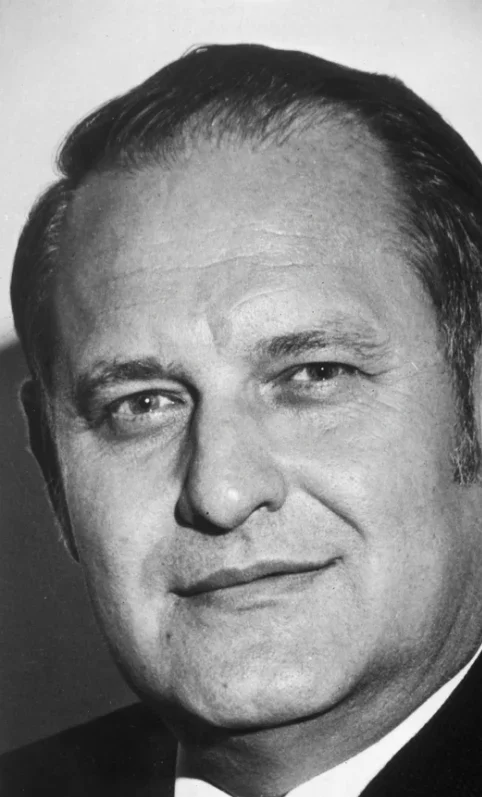
Anderson’s newsletter 50 PLUS/June 1980, tells the story:
“At the end of her rope, Mrs. Jensen appealed to me for help, explaining that she was afraid her son was sick or dying in the Andean jungles. I published a plea to the terrorists, asking them to contact me for private negotiations that would bring Starr’s release. After months of haggling, the guerrillas suddenly demanded $250,000 ransom. I borrowed the money from a friend in the business community, and my associate Jack Mitchell flew to Colombia for a rendezvous with the kidnappers.”
The negotiations were successful and on February 12, 1980, Richard Starr was released in Neiva, Tolima, Colombia. He had been held captive 1093 days. His mother flew to Colombia to bring him home.
By the end of 1981 Peace Corps had withdrawn from Colombia.
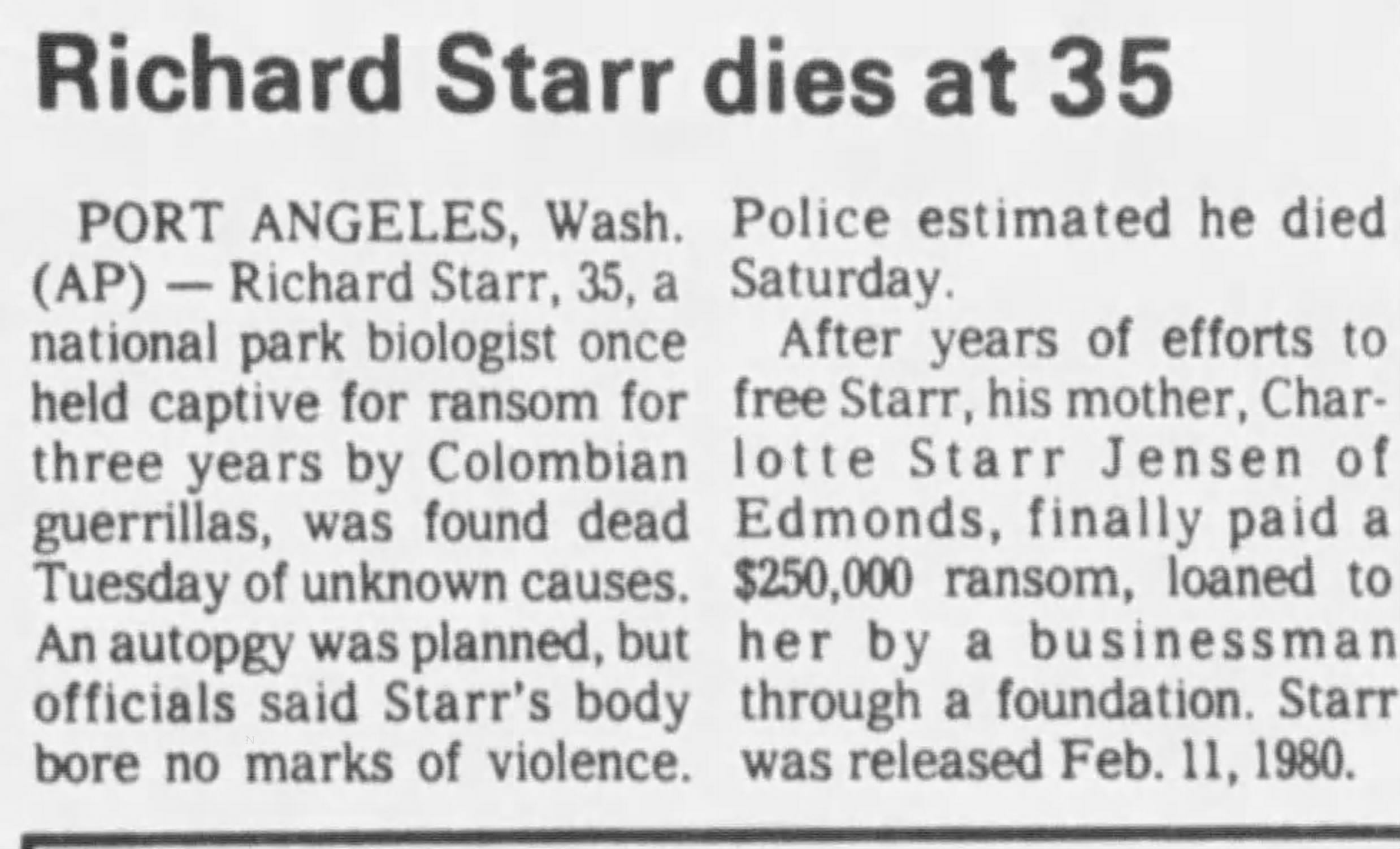
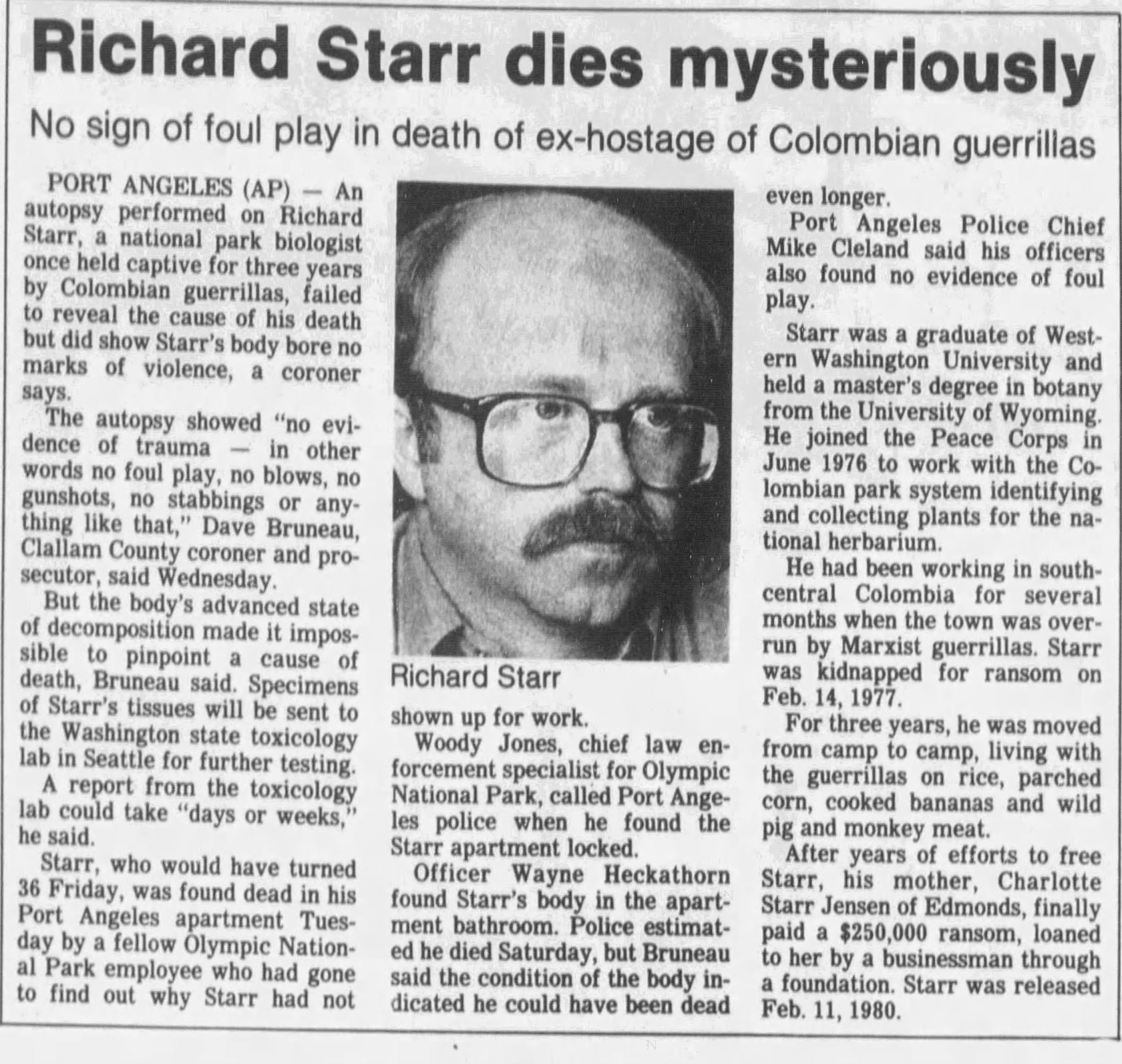
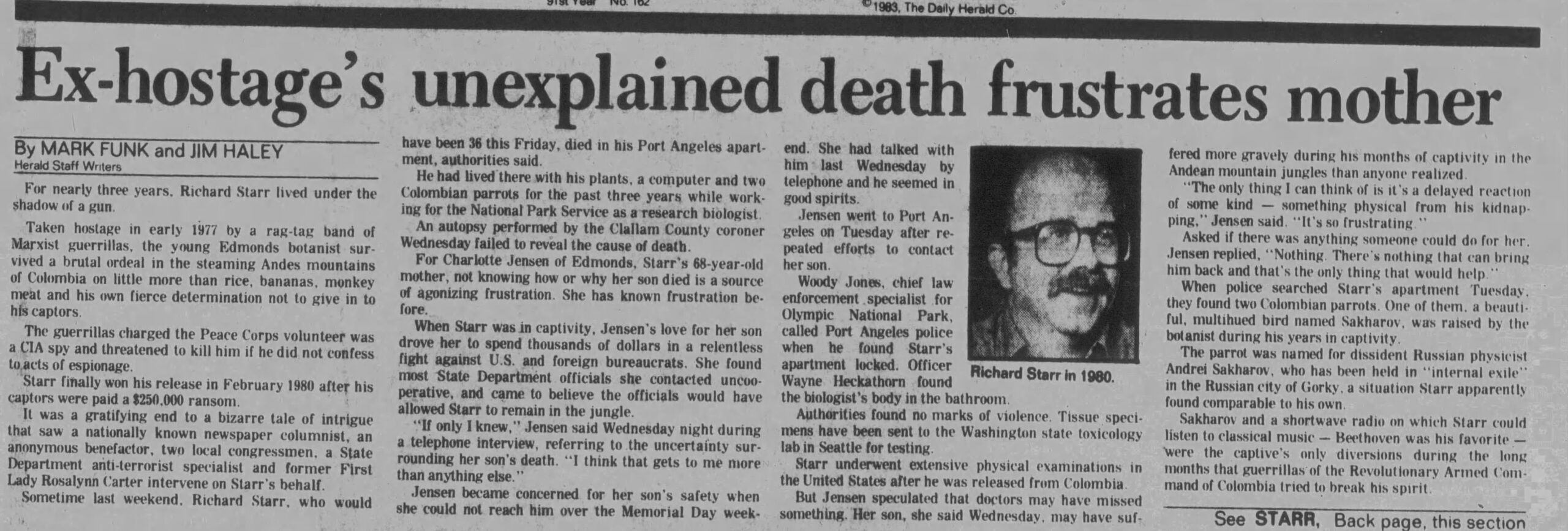
Then, on June 3, 1983, Charlotte felt compelled to travel to Port Angeles to check on her son after he failed to answer his phone when she called over Memorial Day weekend. She called his work and as he had not reported to work at his National Park Service job so the chief law enforcement officer for Olympic National Park went to check on him and found his apartment locked and called the police. They found his body on the bathroom floor, no marks of violence and having been dead for enough time that decompensation had begun. His mother said she had last talked to him the Wednesday before Memorial Day weekend. “The only thing I can think of is it’s a delayed reaction of some kind – something physical from his kidnapping,” Jensen said. “It’s so frustrating.”
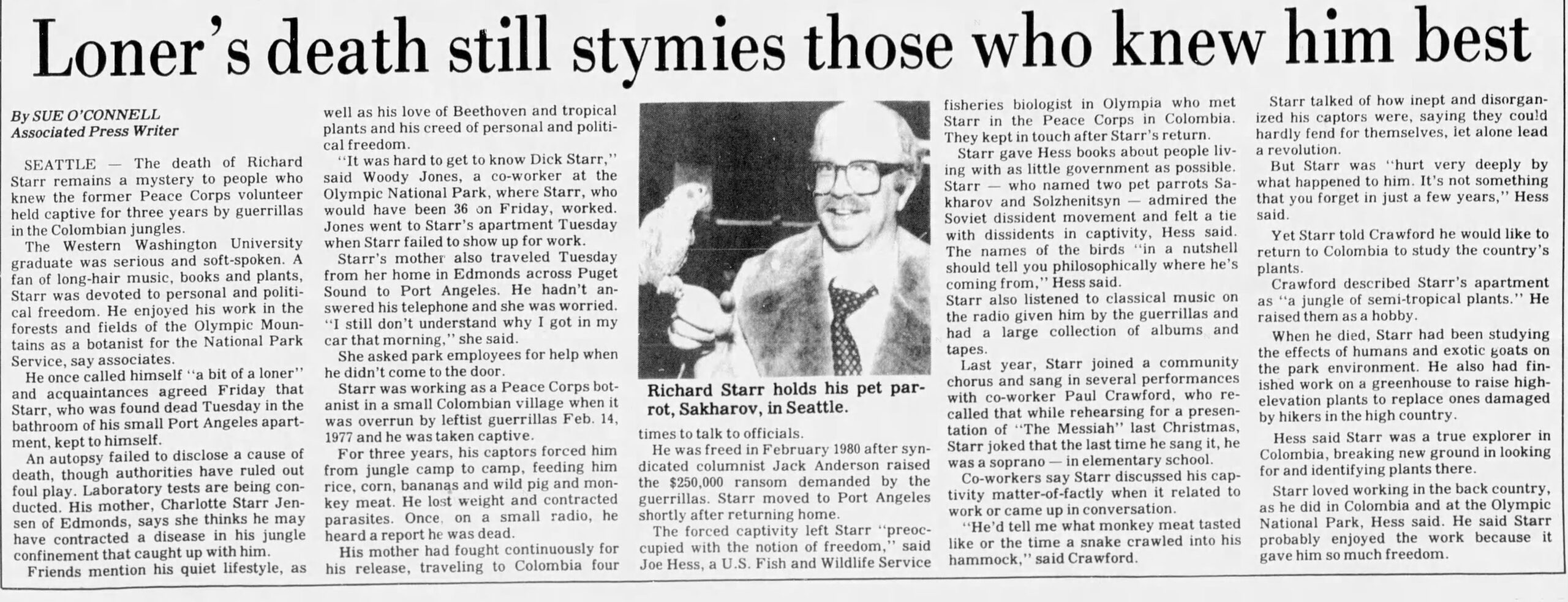
The AP story summed up what his associates said about him:
“What is known is that Starr was serious and soft-spoken and led a quiet life. he loved classical music, books and tropical plants and was devoted to a creed of personal and political freedom. Since his release from captivity three years ago, he enjoyed his work in the forests and fields of the Olympic Mountains as a botanist for the National Park Service.”
The AP went on to quote Joe Hess, a U. S. Fish and Game warden, that:
“The captivity left him preoccupied with the notion of freedom.”
http://peacecorpsonline.org/messages/messages/467/2019711.html