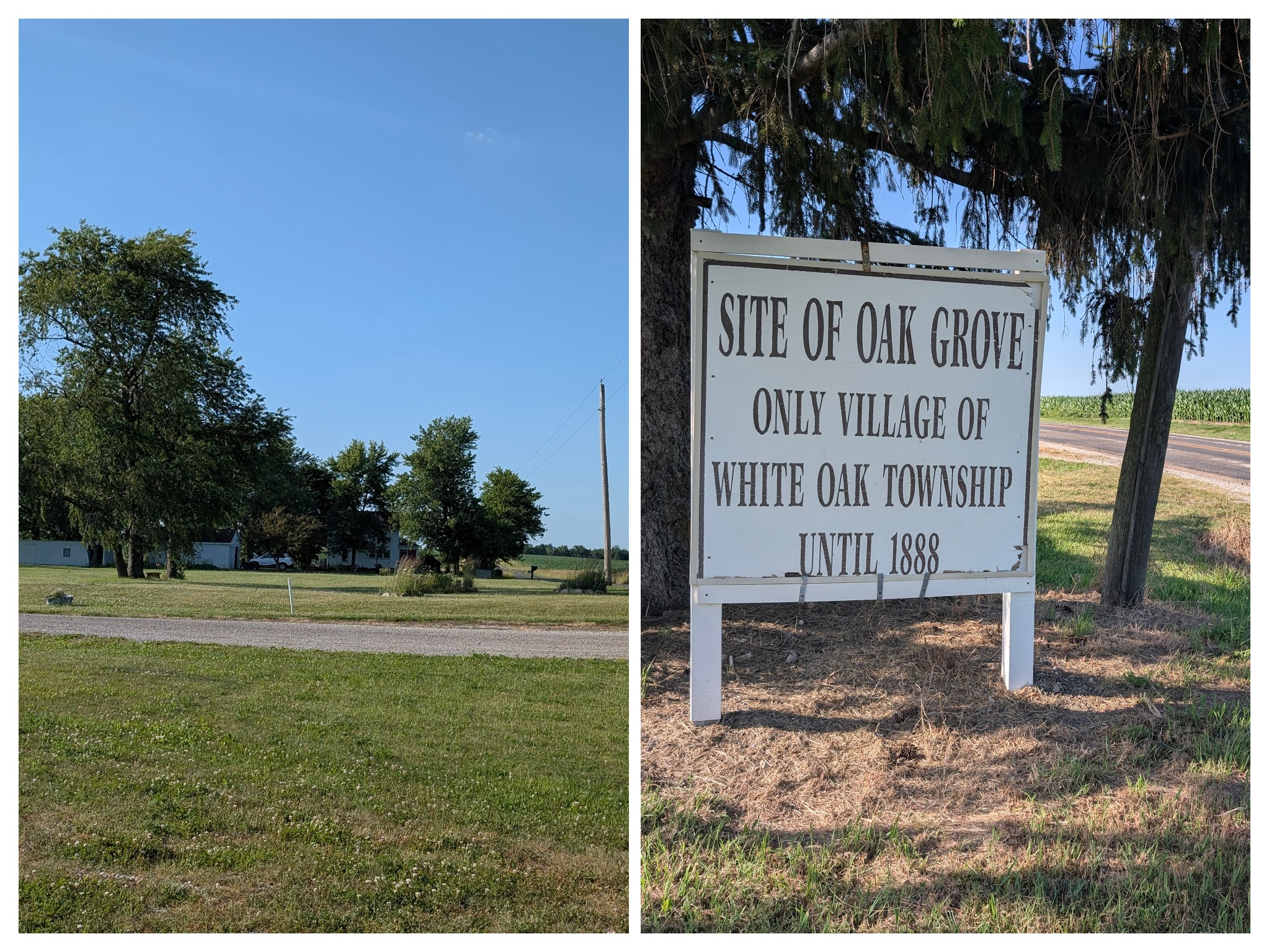
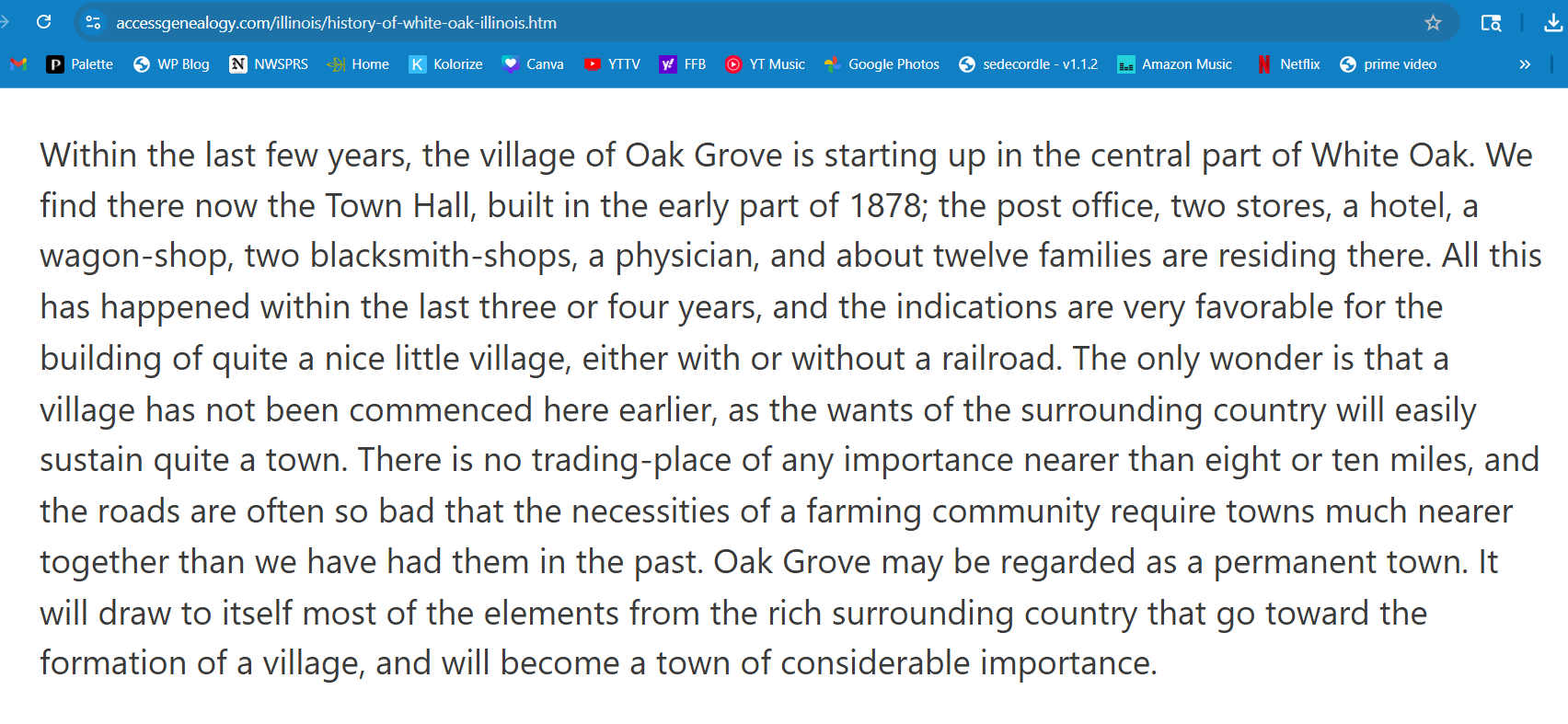
The house my grandparents bought in 1961, the same house my father lives in today, was once part of a small town called Oak Grove. Built on the highest point in McLean County, a ridge overlooking current day Carlock, Oak Grove became a bustling center of commerce at a time when transportation was literally bogged down in muddy wagon wheels. I did some digging on the history of the town and also its residents. I found an old map showing the location of the lots in Oak Grove with some of the names of the owners and so I looked up the census documents for Oak Grove and found a page listing those who lived in the small village in 1880. I used ancestry . com and newspapers . com to find more information about the village and those who lived there.
But first an overview of the history of Oak Grove:
The first settlers of White Oak Grove came in 1829. In 1836 John McGee purchased a tract of land located on a hilltop. You can find that hill on 825 East Road (Sunset Lake Road). A sign marks the site to this day. – https://whiteoaktownship.com/history/
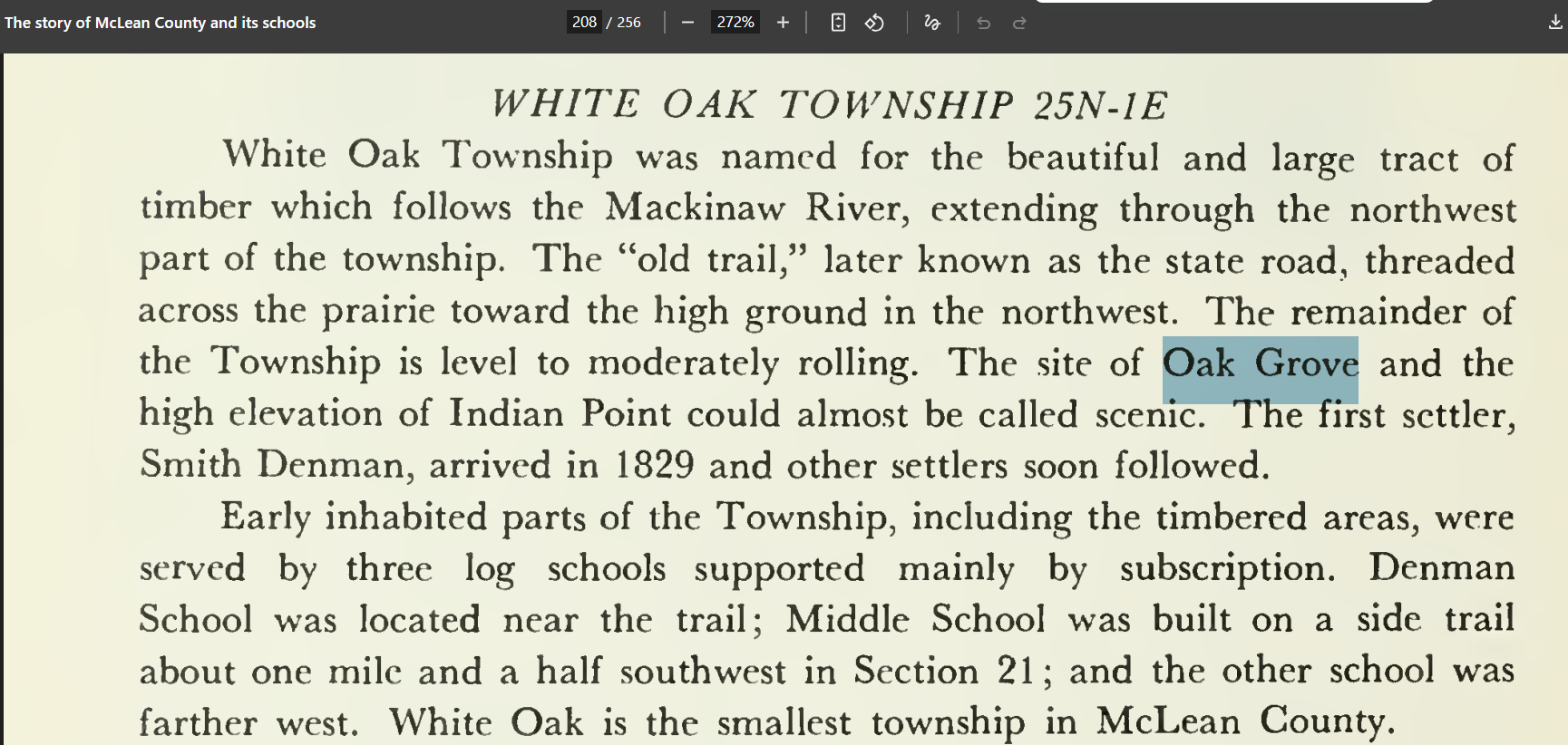
The south corner where Dad’s property begins was once called “Indian Point”, an intersection of a trail back to the Mackinaw River that is now Sunset Lake Rd and a trail that ran along the ridge where the lane at the edge of the property is now.
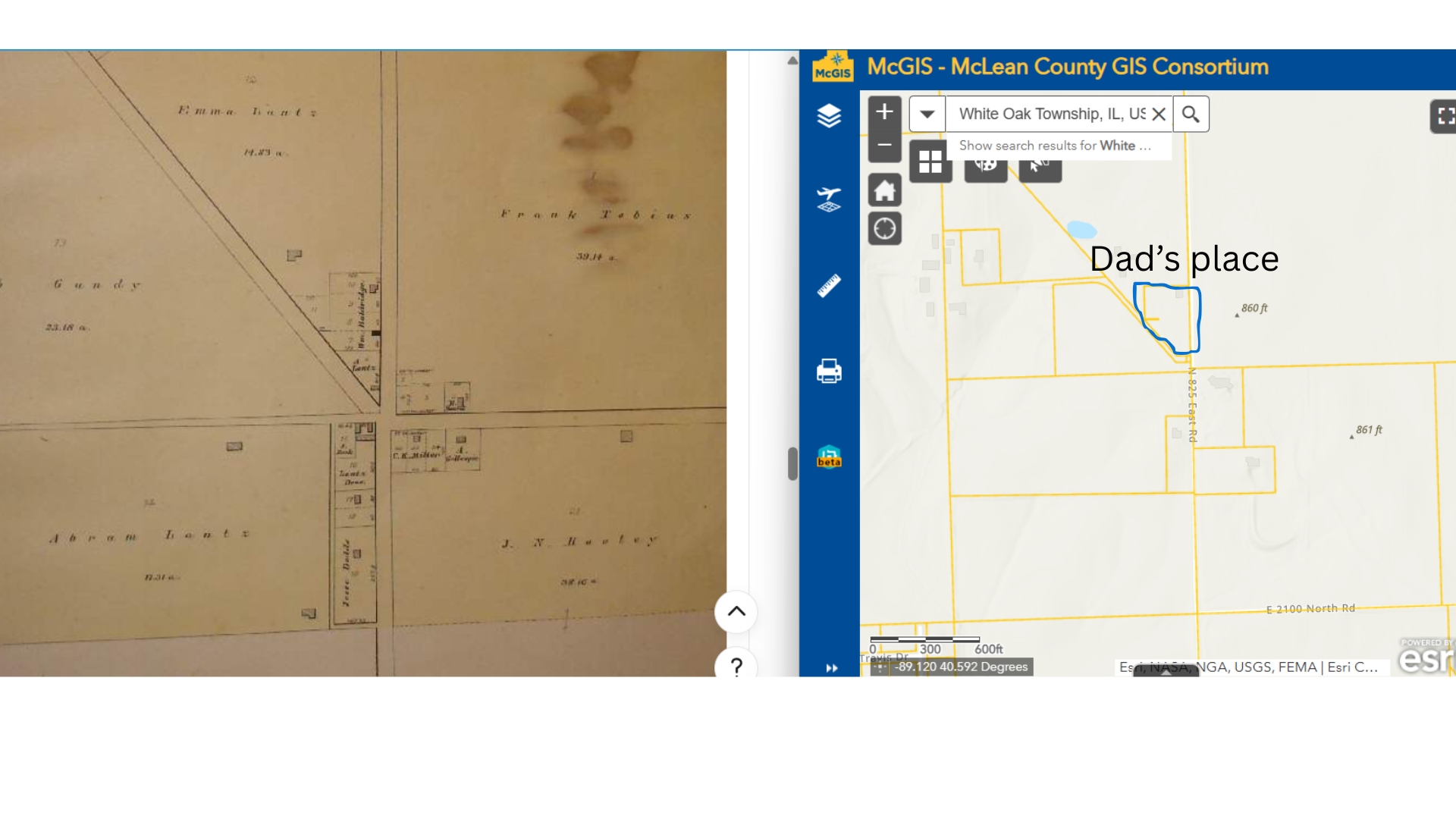
The 1895 Atlas of McLean County shows the town plots in Oak Grove. If you compare it side by side with current McGIS online map, you can see Dad’s property encompasses much of the site of Oak Grove.
Dad had the Carlock Centennial book created by Carlock residents in 1988 and shared it with me. The book includes plat maps from as early as 1874.
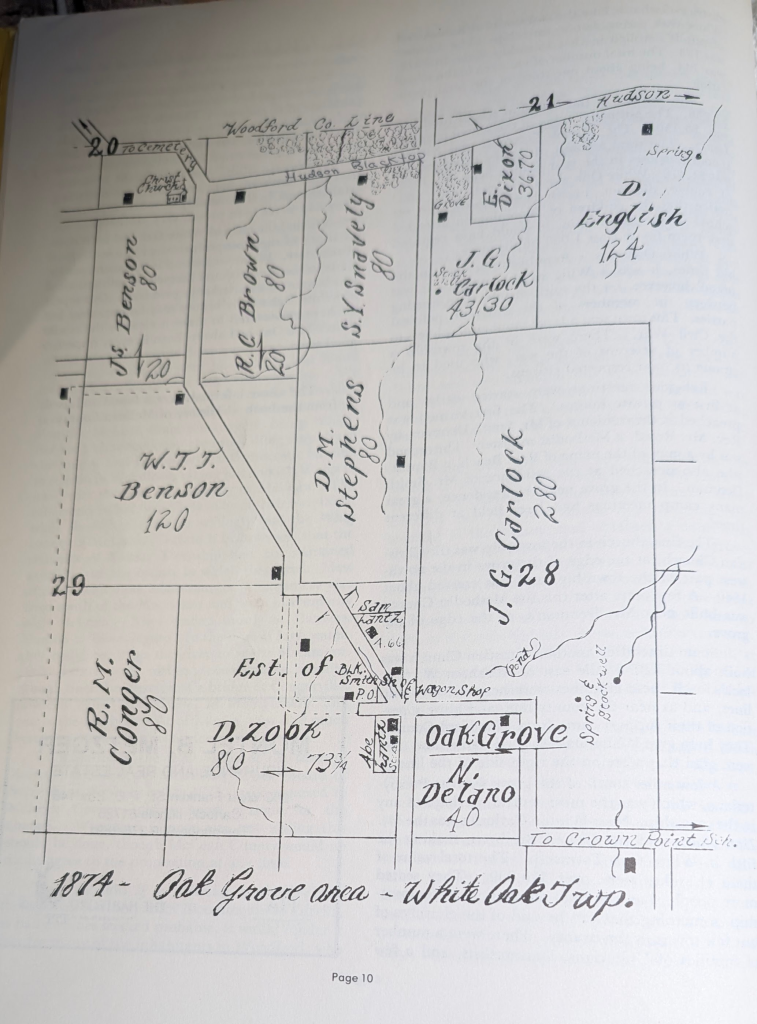
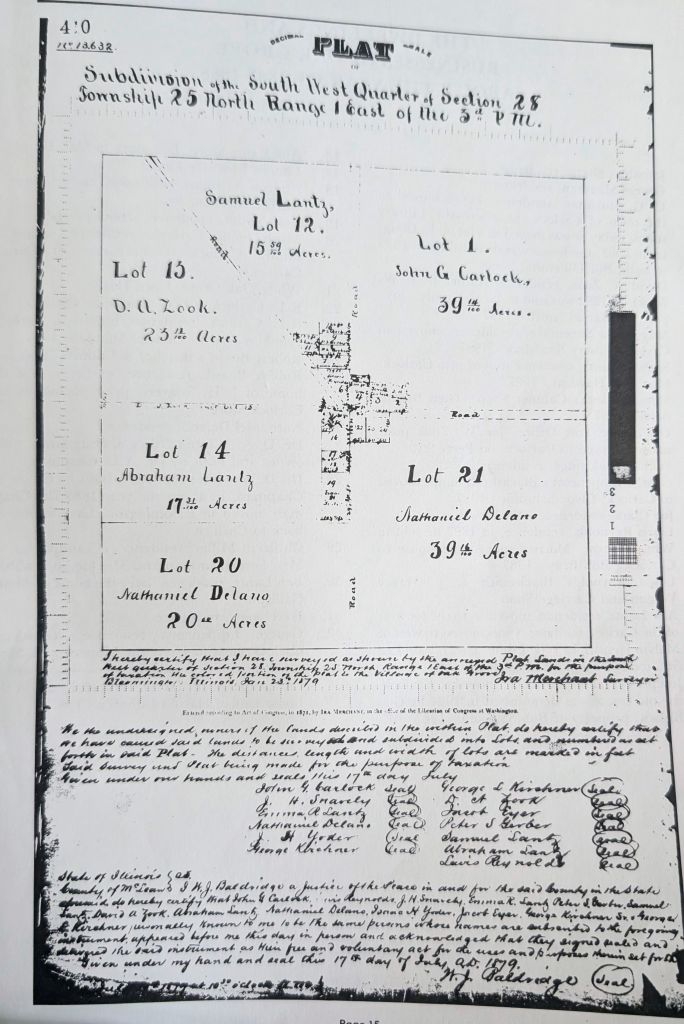
On this map there is no house at the spot where Dad’s house is now, so we know the first house on that spot was built after 1874. There was a blacksmith and wagon shop at the south corner of the property owned by the Lantz family. There is a house on the west boundary of Dad’s property that was the Sam Lantz house. Across the lane going down the hill from his property are two building owned by Abe Lantz. They would have been roughly where the historical marker sign now stands. The Post office sets at the west side of that intersection on the property of David Zook. This is the beginning of Oak Grove. 5 years later the official Plat is created for the formation of the village of Oak Grove with 24 plots. Buildings aren’t marked on this plat so I don’t know if there was a house on the site of Dad’s house yetf, but plots 10, 9 and 8 owned by Peter Gerber is in the spot where the house and front yard is now. Sam’s plot 11 is still on the west boundary and Emma Lantz owns plot 7 south of Gerber’s plots. Lewis Reynolds owns plot 6, the triangle jutting to the intersection at the top of the hill. It gets a bit garbled but I believe plot 5 is still Zook land. Plot 2 is labeled Snavely, Plot 3 John G Carlock. 17 George Kirchner, 18 Jacob Eyer, 19 Isaac Yoder
I accessed the census of 1880 for the Village of Oak Grove on ancestry . com
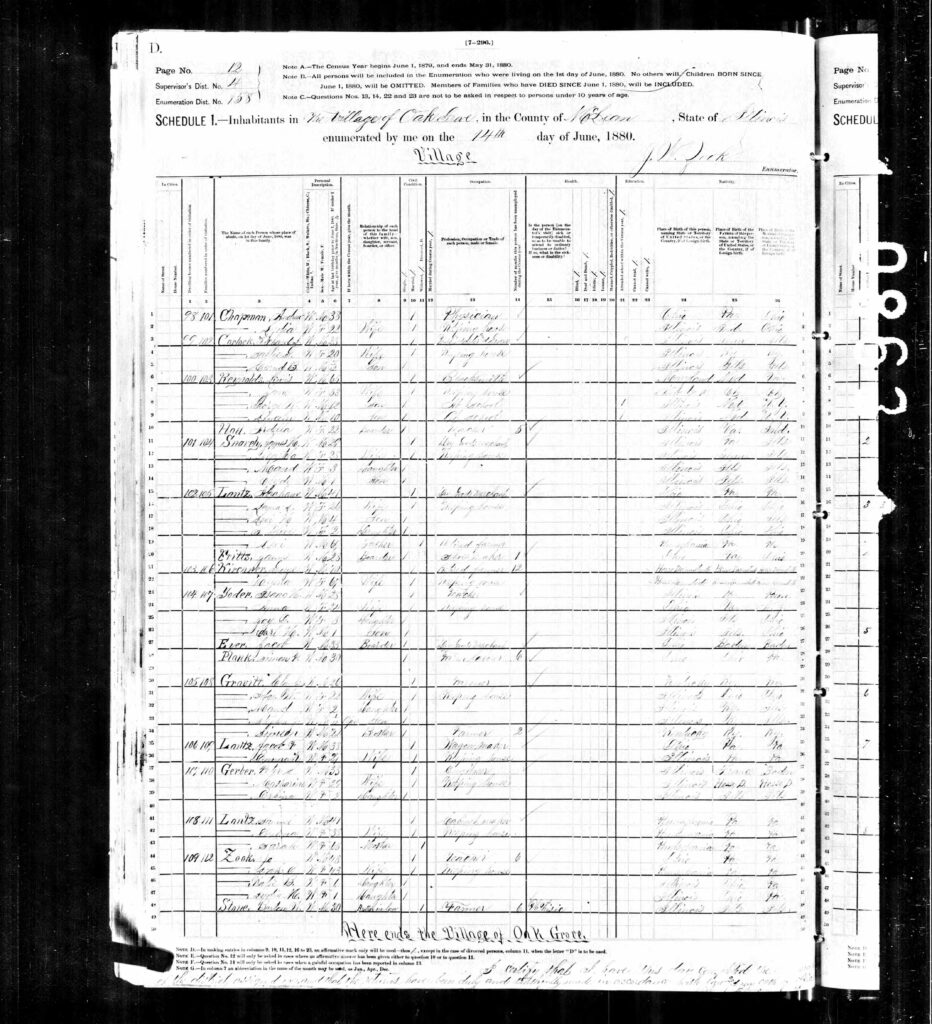
In the 1880 census the first household listed is for Dr. Andrew L. Chapman.
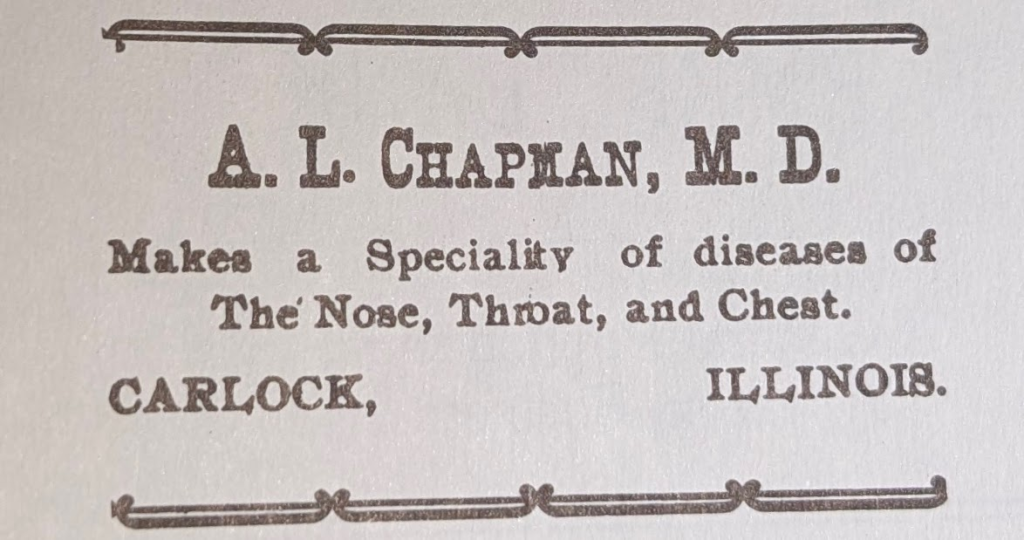
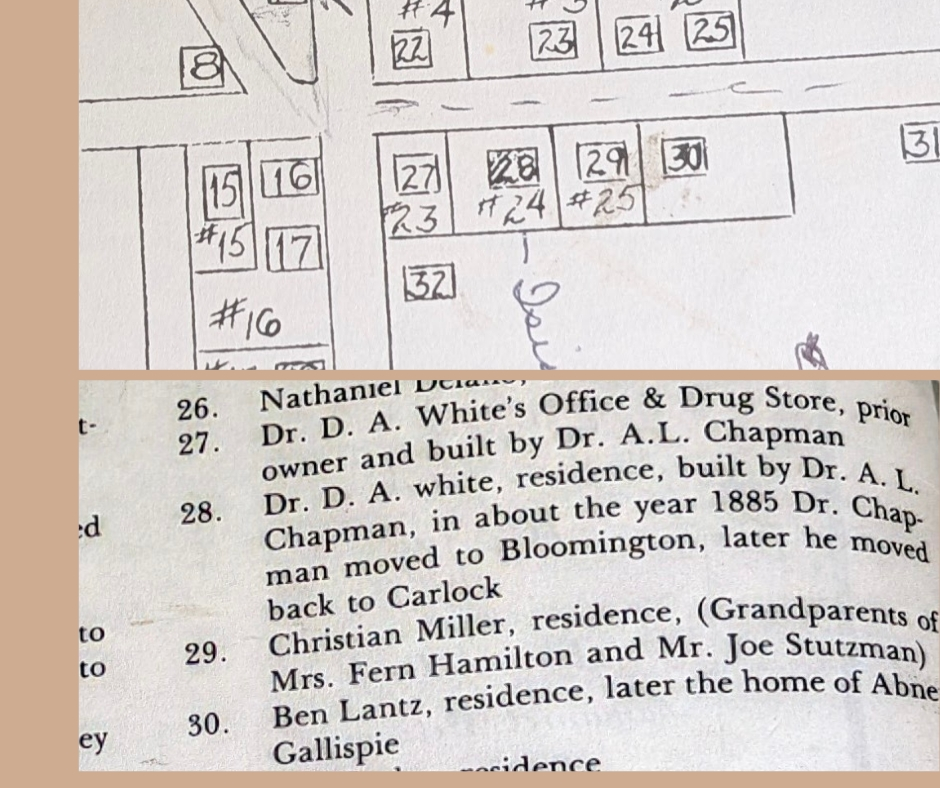
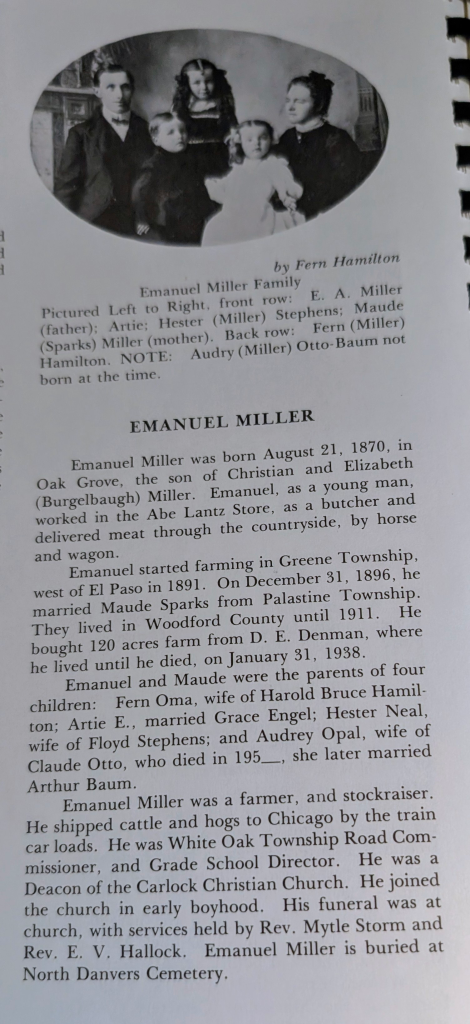
Dr. Chapman settled in Oak Grove in 1877, after graduating from medical school in 1876. Born in Ohio he served during the civil war in battles such as Sherman’s March to the Sea and Gettysburg. His father was also a physician. He married Lydia Bramwell in 1879. The two of them are listed as living in Oak Grove in 1880. They eventually had 5 surviving children. Their home is shown on the map of 1888 as square number 28 across the street from Dad’s property at the ridge line where Danny Isiah once lived. That house was razed decades ago and the Millers have a large home and gardens now at the location where several Oak Grove buildings were previously including the home of Christian and Elizabeth Miller. The Carlock Centennial book included bios and photos of Dr. Chapman and the Millers:
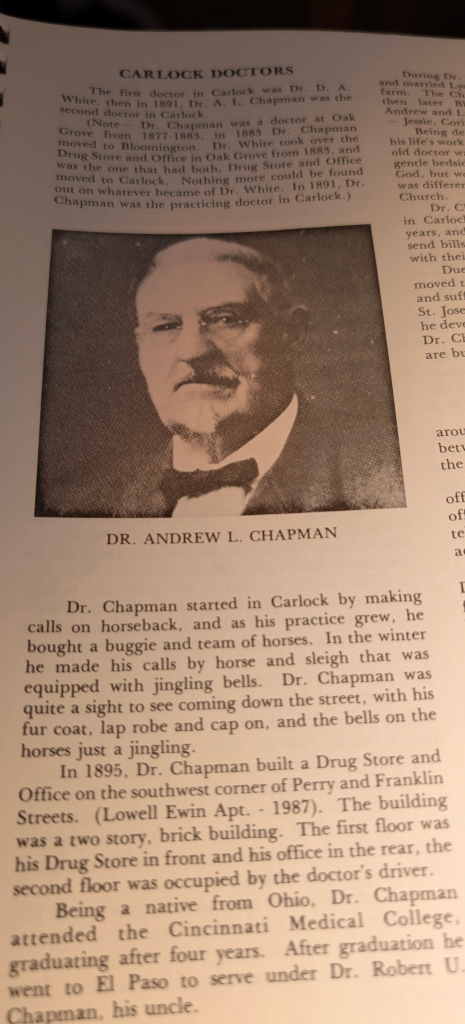
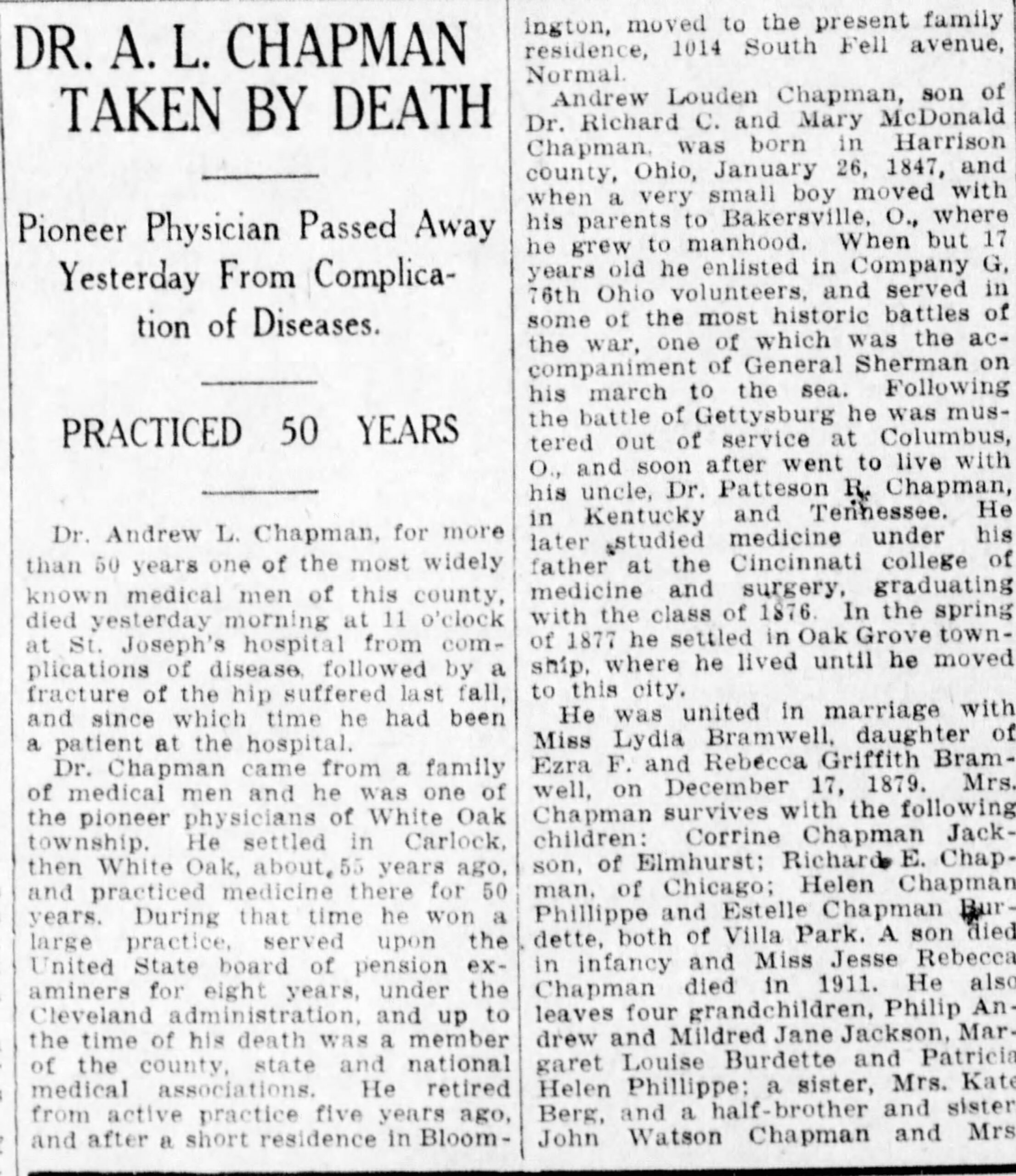
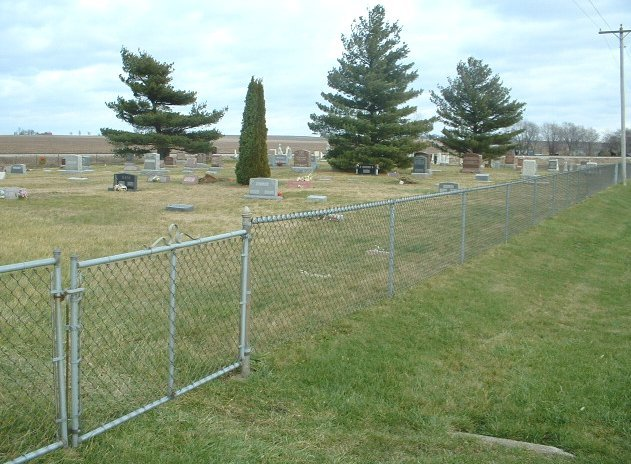
Dr. Chapman died in 1926 having practiced medicine in White Oak township for 50 years. The doctor and his wife are buried in Lantz Cemetery 2 miles south of Oak Grove on what is now close to the intersection of 825 E and N 800 East Roads, just west of Interstate 74 and east of the railroad tracks.
Richard Carlock is listed as a Postmaster and Grocer in the Oak Grove 1880 census living with his wife Sally (Sarah Gertrude Dunlap) and 7 1/2 year old son Claude. Richard was born in Oak Grove in 1856, his father John Goodpasture Carlock, and his relations owning much of the land the village was built upon as well as much of White Oak Township. The Carlock family came to what became White Oak Township and Oak Grove around 1839. The patriarch of this line of Carlocks, Richard’s great grandfather, Abraham Willard Carlock, came to Illinois from Augusta Virginia with his father, also called Abraham. Abraham Willard’s wife Polly was born Mary Rosalie Goodpasture in Overton County Tennessee. The current village of Carlock is named after John Franklin Carlock, whose grandfather, Rueben was Abraham Willard’s brother. There is a whole book on the Carlock family written by Marian Pomeroy Carlock and some history of Oak Grove is of course included in the family history. You can read it for free here: https://www.google.com/books/edition/History_of_the_Carlock_Family_and_Advent/tEU5AAAAMAAJ?hl=en&gbpv=1&pg=PP1&printsec=frontcover
Richard had his home moved to the new town of Carlock and is depicted in the Carlock Centennial book:
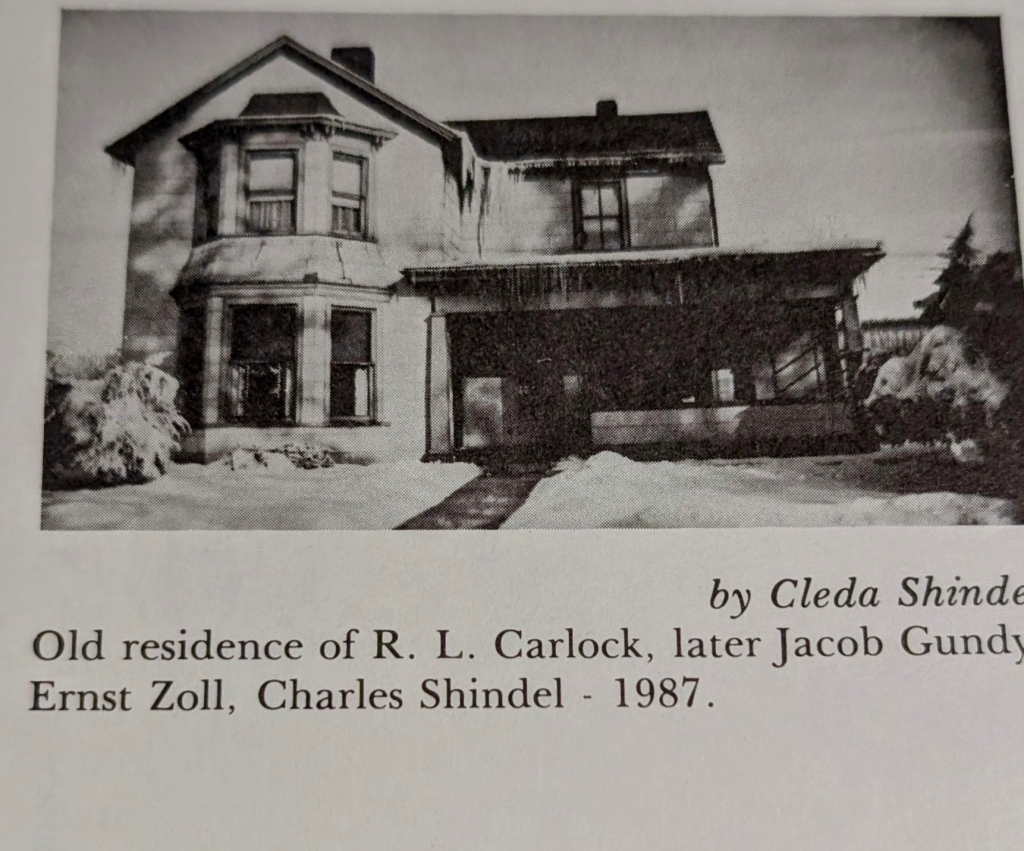
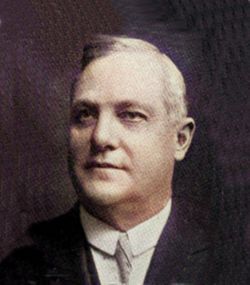
Richard Lee Carlock is probably best remembered as the mayor of Bloomington Illinois. He attended Eureka College and then Eastman’s National Business College at Poughkeepsie New York, graduating in 1877. After leaving Oak Grove he became the deputy county clerk for McLean County and was later elected County Clerk from 1894-1902. He was Mayor from 1909 to 1910 as well as serving as a city commissioner. From his obituary in the Pantagraph, Feb 1912:
“Mayor Carlock is given credit for doubling the size and efficiency of the Bloomington water works. A large portion of a $150.000 bond issue for water improvements in 1909-10 was paid off by the city last year from a sinking fund. The north half of the city water works plant’ was built during his administration.
Developed Zoo.
Another matter for which he became well known was his interest in developing Bloomington’s zoo at Miller park, during his administration as a city commissioner from 1915-18. He believed in the educational value of having many animals in the cages at the park and is credited with having more than were there at any other time. His work in rebullding the water works, however, is considered greatest monument. The period his brought one of the city’s acutest needs for more efficient water pumping. During his- administration an engineer was hired, a comprehensive survey made, 100 test wells bored in the Sugar creek valley, and the method of pumping was changed“
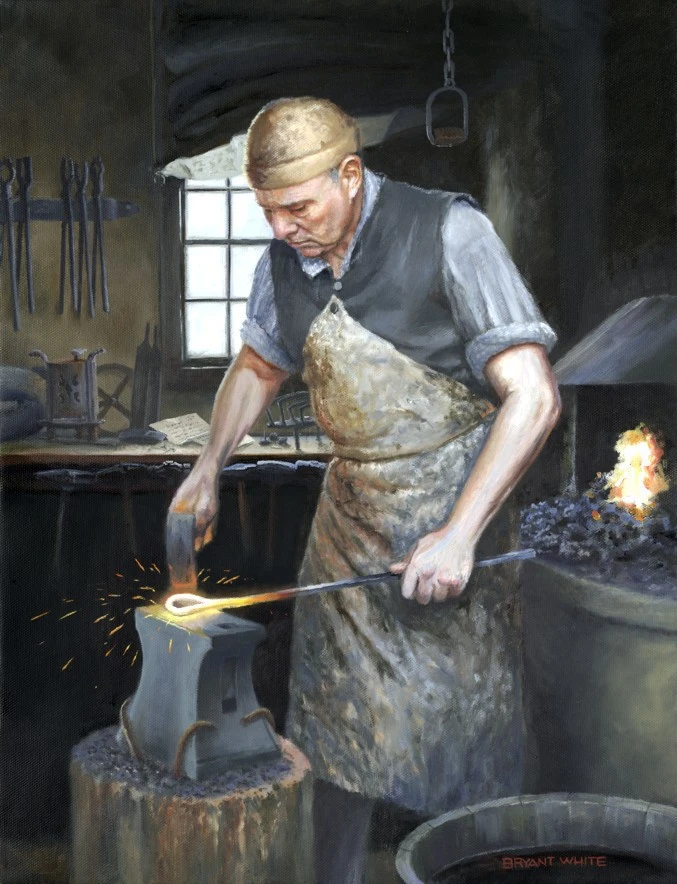
Lewis Reynolds and his wife Jane and children George and Lincoln are next on the census. Lewis is listed as a blacksmith. He was born in Maryland in 1815 and married Mary Jane Warren, in Scott County Iowa in 1854. In 1860 they were in Livingston Missouri before coming to Bloomington in 1870. In 1880 he had a Blacksmith shop in Oak Grove. In 1883 the Pantagraph reported he had contracted to carry the mail from Bloomington to Fanny and return every other day by way of Oak Grove for four years. Fanny may be a misspelling or colloquialism for the town of Flanagan which was established in 1880.
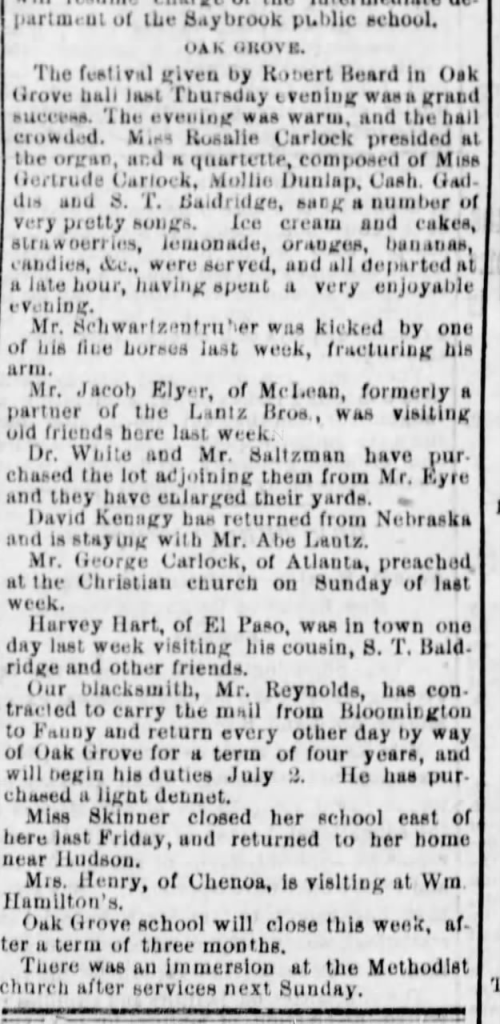
The Reynolds’ eldest, Emma, married Levi Washington Zook. Levi was born in Hudson, Illinois and by 1880 Emma and he had relocated to Nebraska. The family joined them in Nebraska after leaving Oak Grove where Lincoln died at only 19 in 1888. George died in Denver in 1921.
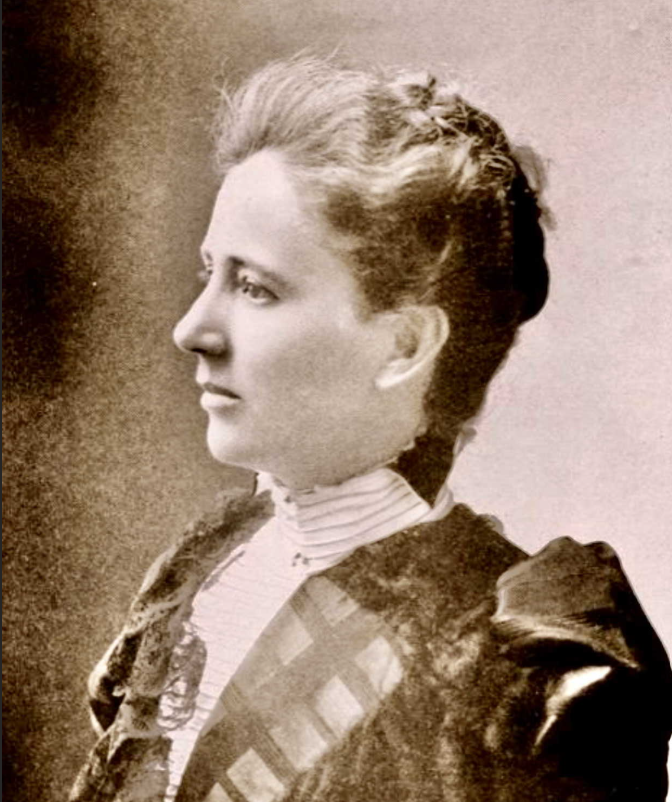
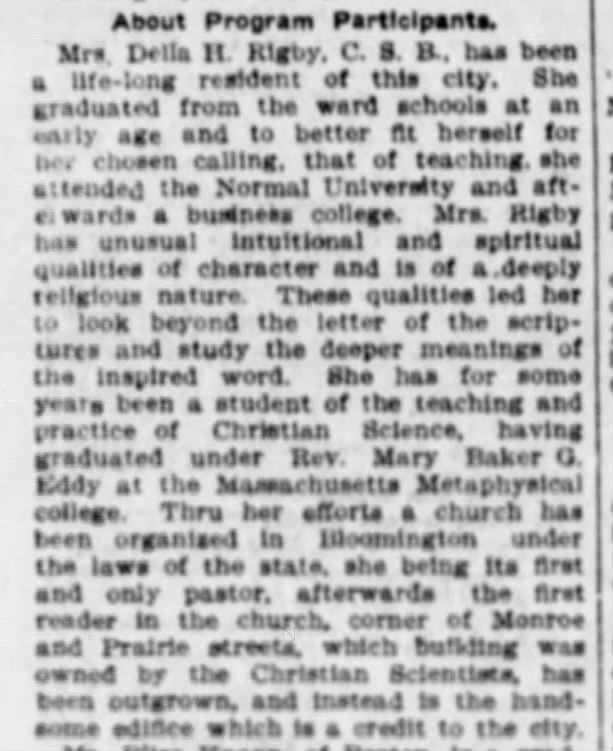
Ardella Hall is listed as a boarder in the 1880 Oak Grove census, of the Lewis Reynolds family. She was the teacher in Oak Grove at the time. She later married Amos Rigby and taught in the Bloomington schools. They are credited as founders of the Christian Scientists Church in Bloomington, and is listed as the superintendent of their Sunday school in 1898. In 1893 she is listed as the Vice President of the Equal Suffrage Association in Bloomington. In May of 1909 the Pantagraph published this piece detailing her background on the occasion of a Christian Science lecture series:
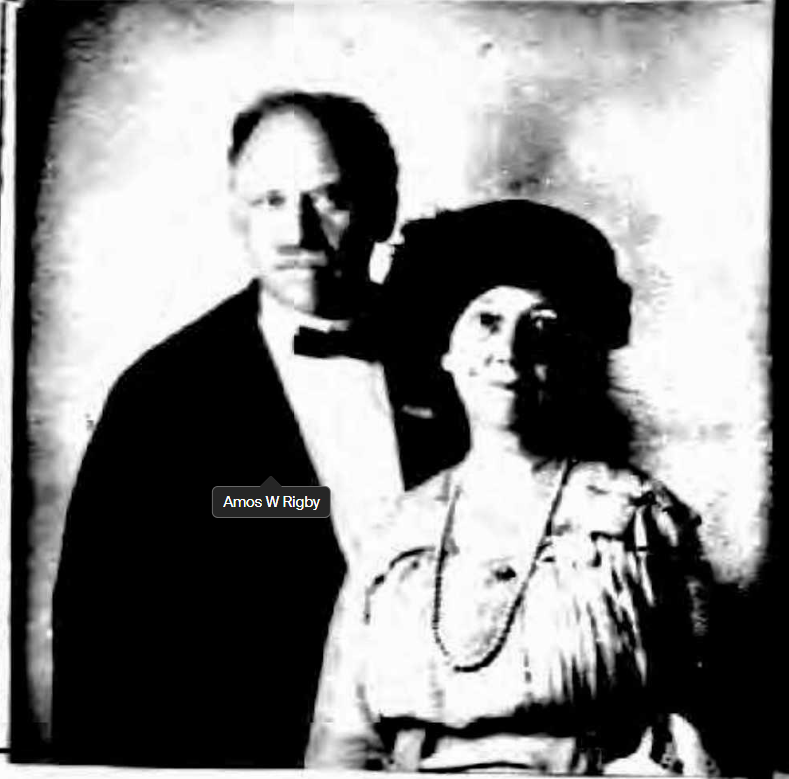
The photo below found on Ancestry . com is from her passport photo when she and her husband visited Cuba in 1921.
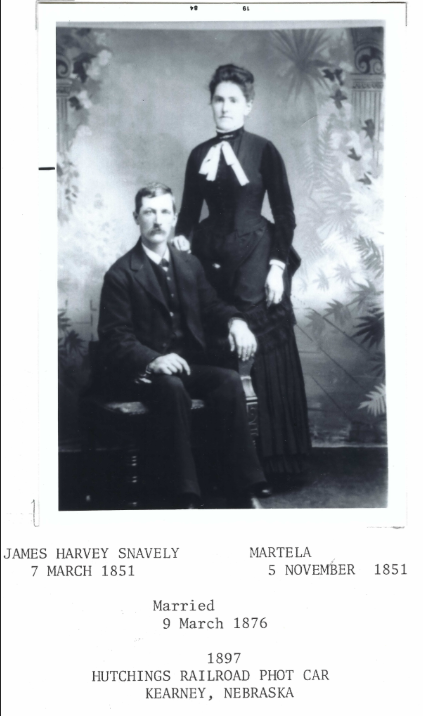
James Harvey Snavely was a dry goods merchant in Oak Grove. Born in 1851 in Hudson, IL he was farming in Oak Grove in the 1870 census with his father Samuel. He married Martela “Mattie” Brown, also a Hudson native, in 1876 in Oak Grove. The couple’s two children were born in Oak Grove. By 1885 they had relocated to Centre Township, Nebraska, but they didn’t stay there. By 1910 they are found in Edina Minnesota, James working as a foreman in a country club. They lived in Edina until 1940 when they returned to Nebraska where their daughter had remained with her husband. Mattie died at the age of 90 and James 91.
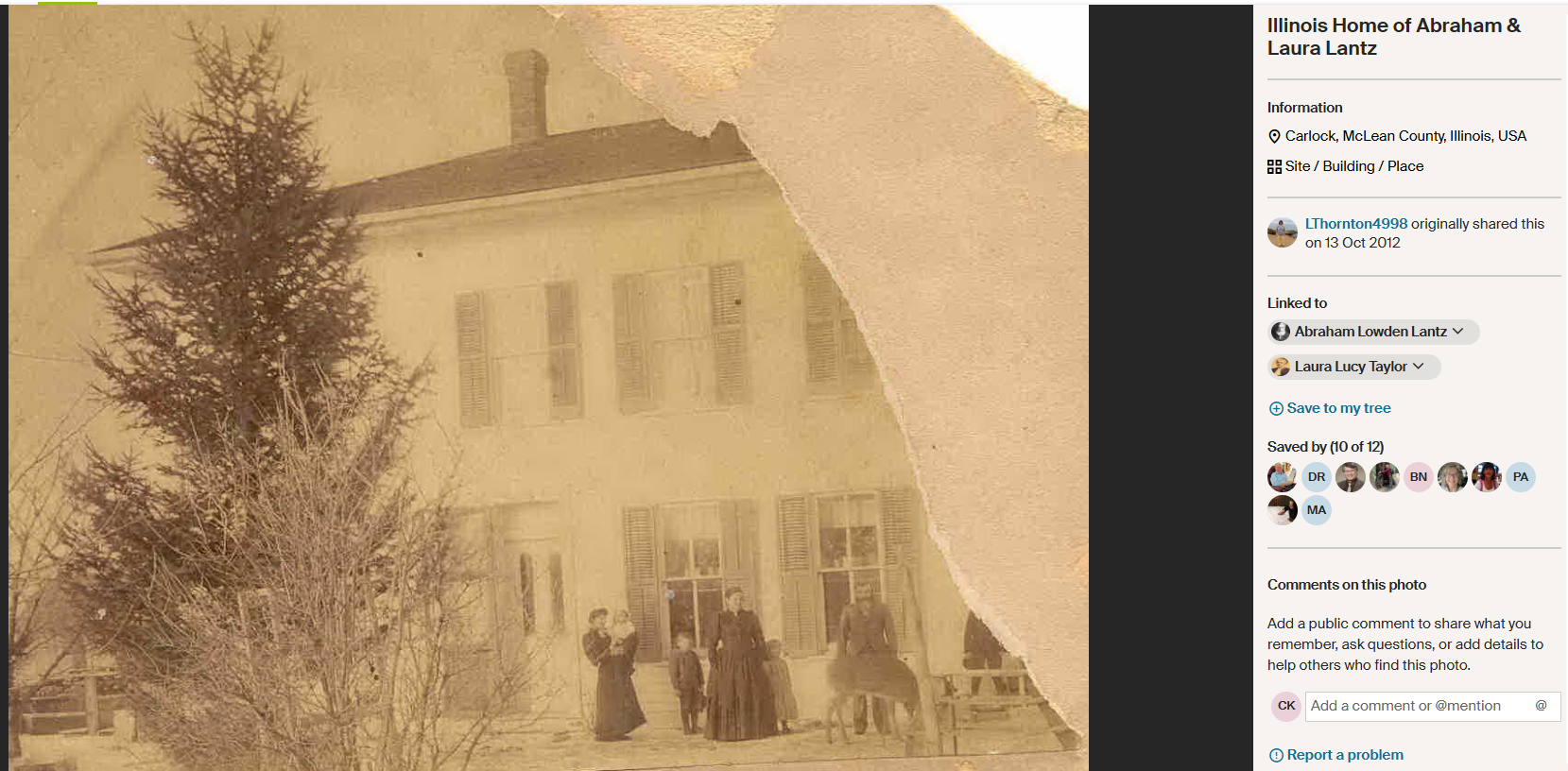
Abraham Lantz was a dry good merchant in the 1880 census. He owned much of the land in Oak Grove and his career there tells much of the history of Oak Grove.
Abe was born in Knox County Ohio in 1839, the son of Levi Lantz an Amish farmer from Pennsylvania who came to Dry Grove Illinois in 1863 by way of Indiana. He settled in Oak Grove in 1870. Abe married Laura “Lucy” Taylor in Oak Grove in 1874.
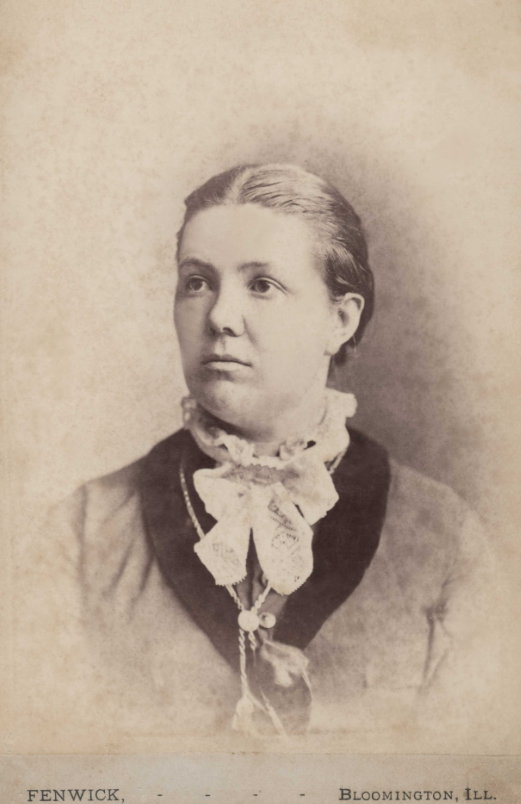
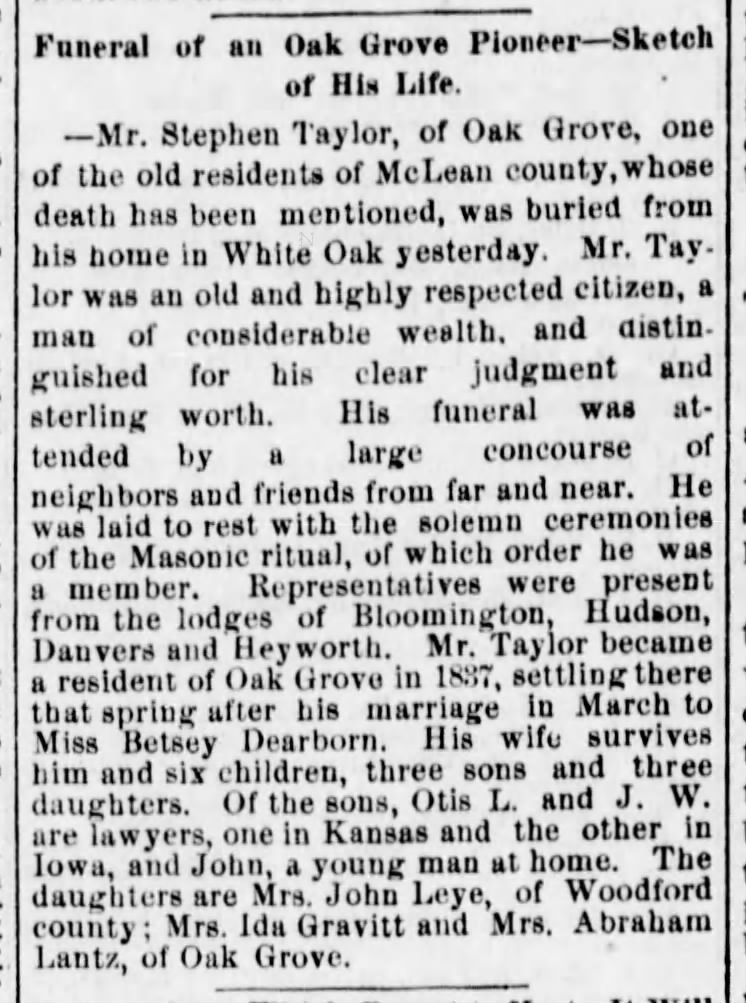
Lucy had been born in Oak Grove, her father Stephen Taylor being one of the oldest residents of McLean County. Born in Detroit Michigan in 1814, he had settled in Oak Grove in 1837 after marrying Betsey Dearborn in Morgan, Ohio the same year.
Abe had four brothers and two sisters.
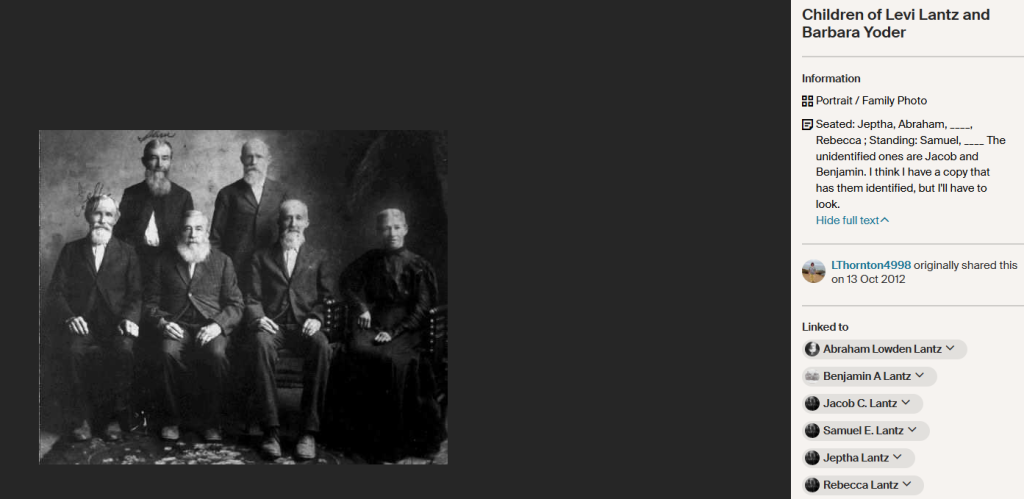
Brothers Samuel and Jacob partnered on a wagon and cabinetmaking business in Oak Grove in the early 1870s. Samuel was married to Emma Joder in 1868. Jacob married Hannah Stephens in 1873 and they moved on to Kansas shortly thereafter. Brother Jeptha also moved to Kansas. Brother Benjamin married Emma Troyer and they had 4 sons and a daughter. They moved to Oak Grove around 1890, but by 1895 they had moved on to Dry Grove Township. He died in Iowa in 1919. Rebecca married Henry Miller and lived in Indiana. Sister Salome only lived to the age of 6 and is buried in Indiana.
January 24, 1877 the Pantagraph reported John Carlock and Abe offered a lot each to build a town hall in Oak Grove. On all accounts the town is booming in 1877. Sam Lantz became the School Treasurer. The school fund was 2,858 for 144 children in White Oak Township, one third of the total population of the entire township.
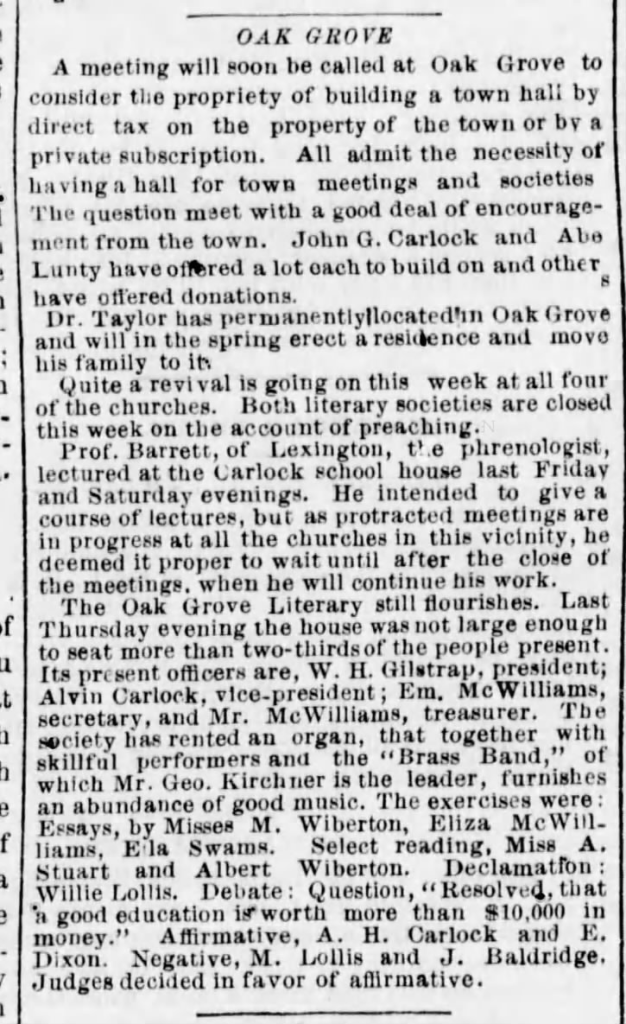
In 1880 Abe had a thriving Dry Goods Store in Oak Grove
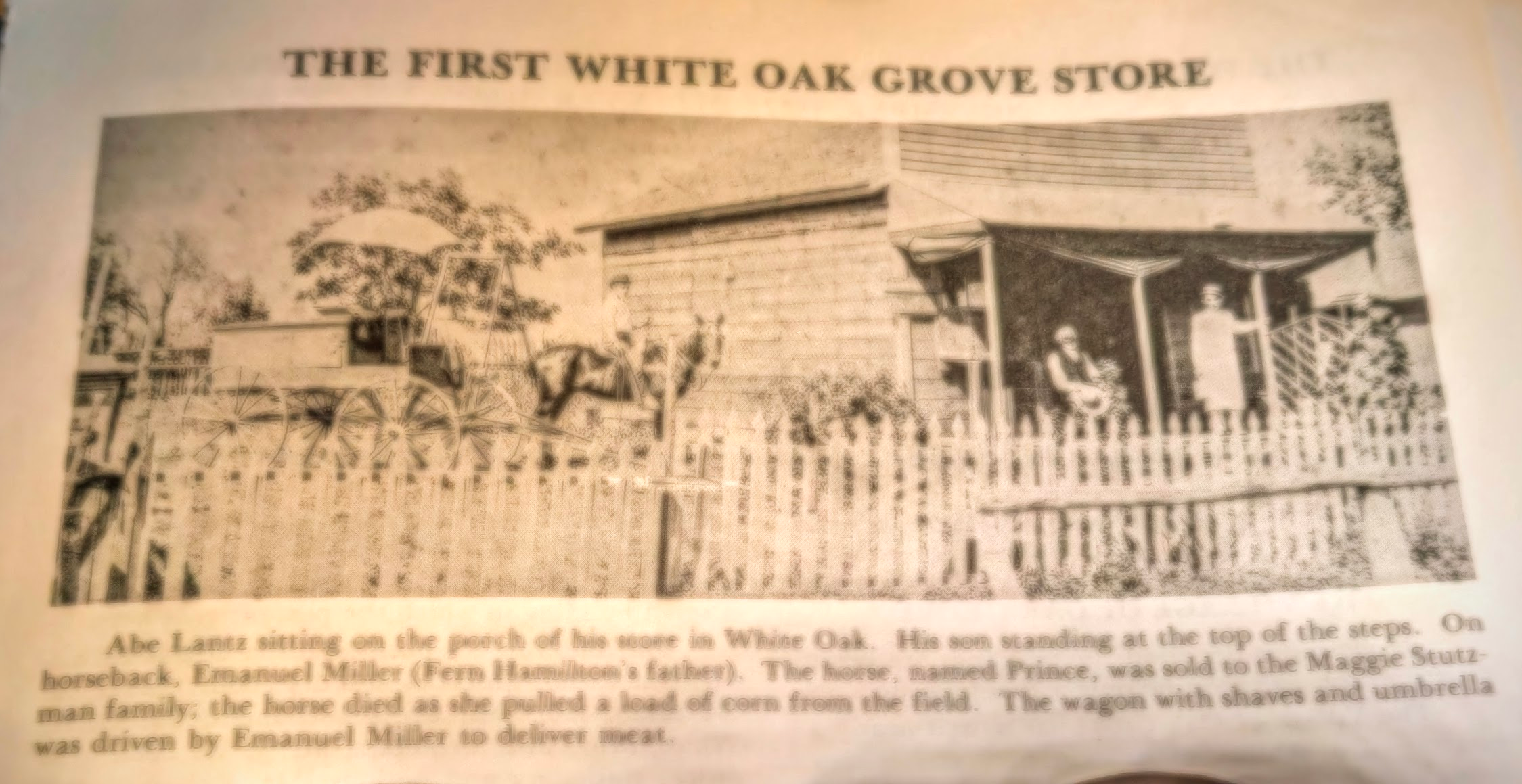
Feb 19, 1886 Abe wrote a letter to the Pantagraph wishing to clarify the “hoodlums” causing trouble in the area are not from Oak Grove.
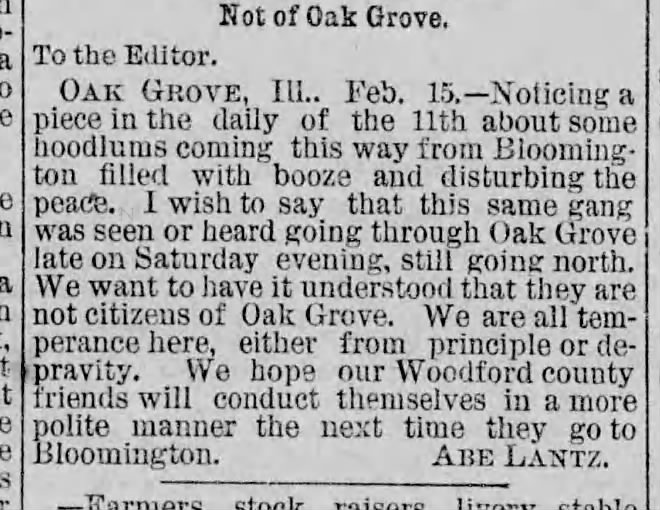
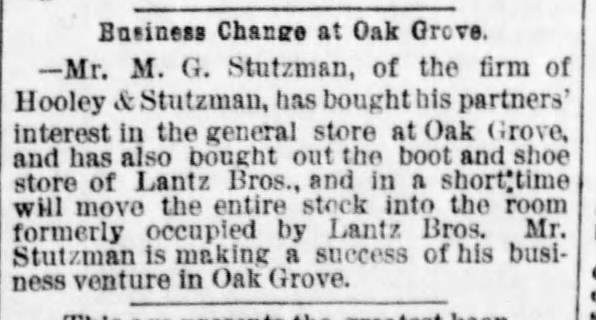
In March of 1887 the Pantagraph reported MG Stutzman bought out the boot and shoe store of the Lantz Bros. This is Ulysses Grant Stutzman, the first grocer in Carlock. He married Mary Ellen Lantz and was the son of Jon and Anna Fry Stutzman. Mary Ellen Lantz was the daughter of Simeon Lantz, who was the son of John and Mary Lantz. Yes there are a whole slew of Lantz’s. And the Lantz family is connected by marriage to the Stutzman, Yoder, Taylor and Plank families. One Lantz branch also married another Lantz branch. Lydia Lantz, another daughter of Simeon Lantz married John K Lantz, son of Jon P Lantz, son of Samuel Lantz, brother of Simeon’s father John. Confused? me too. Most of these families lead back to Christian and Barbara Kurtz Lantz and Lancaster Pennsylvania.
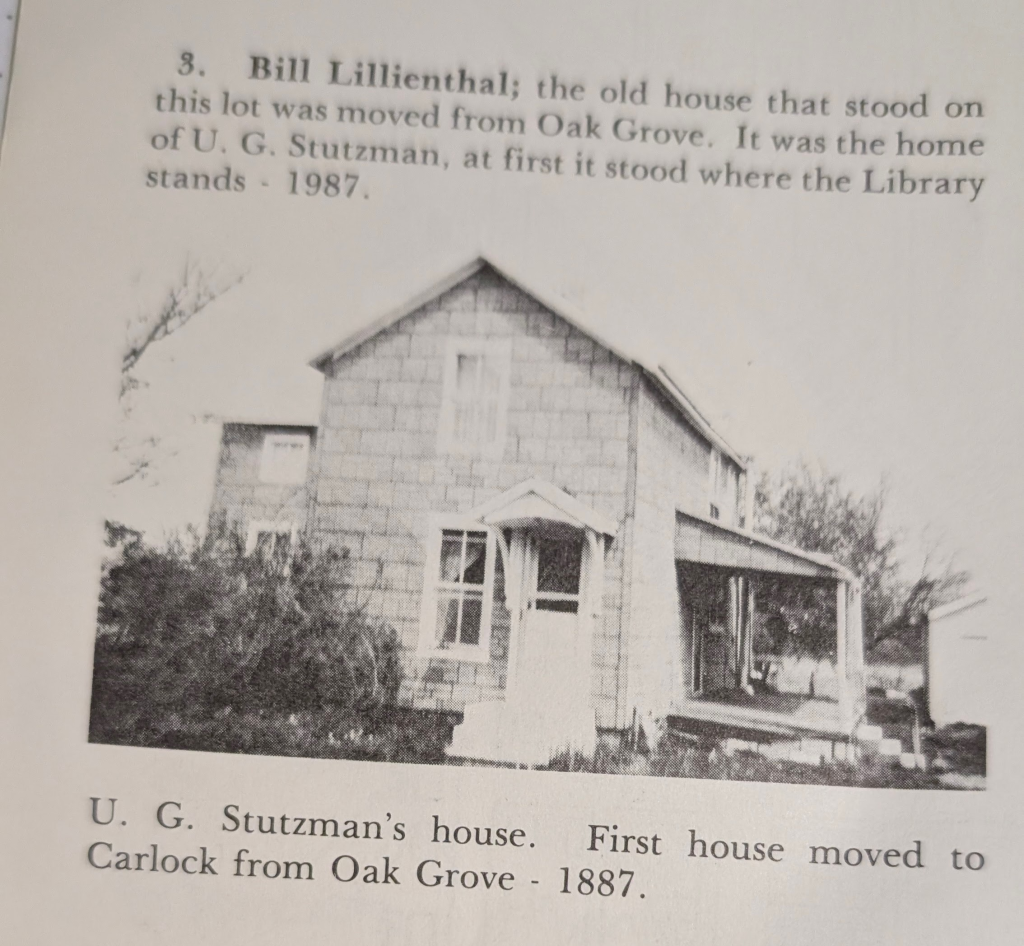
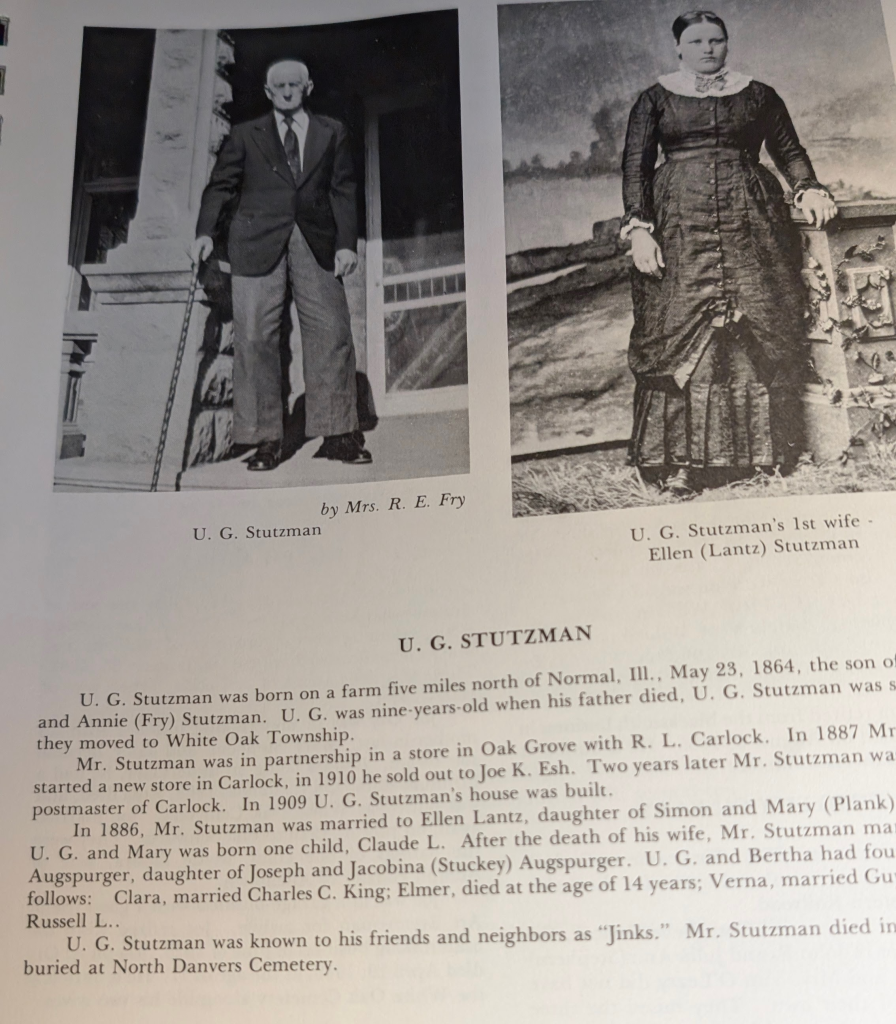
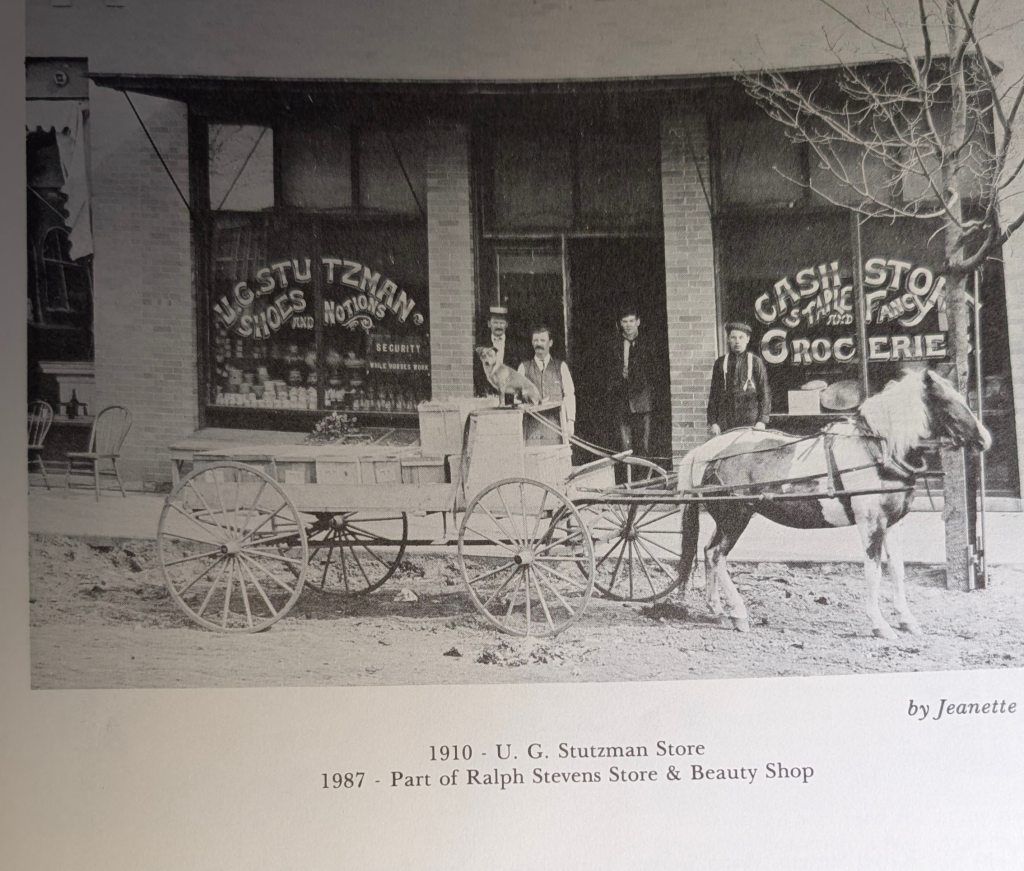
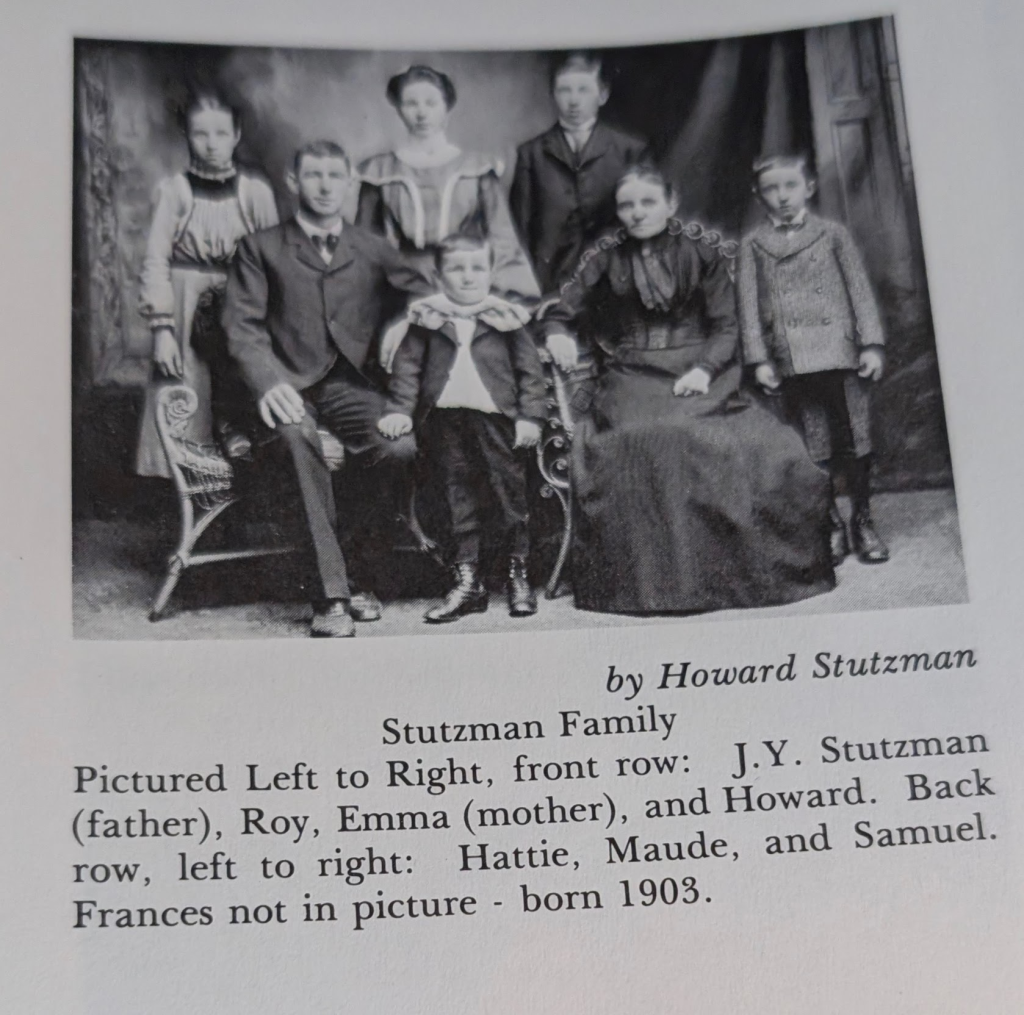
For those in my immediate family wondering about the John L Stutzman who was a family friend of ours, he is related to this family via the Lantz’s, not the Stutzman’s. John L’s father was Roy Stutzman (the youngest child in the picture below) His mother was Emma Lantz, daughter of John Lantz and Sarah Plank, son of Sam Lantz, brother Simeon’s father John. So his family tree includes three of the family names found in Oak Grove.
Samuel Lantz, Abe Lantz’s brother died suddenly in 1888. His widow Emma took over his property.
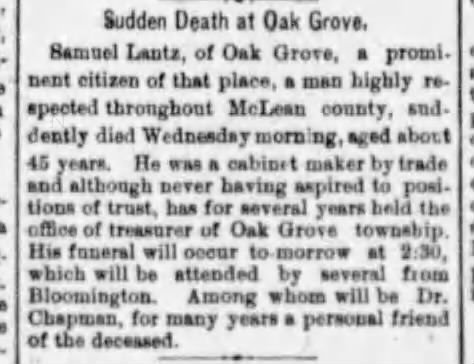
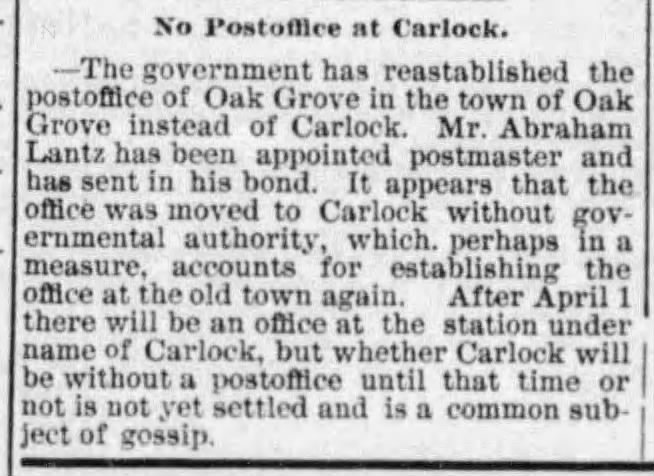
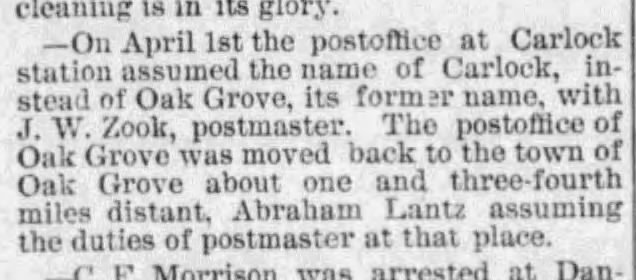
In Feb of 1889 The Pantagraph reported that the government reestablished the post office of Oak Grove with Abe as postmaster. The office had been moved to Carlock without government permission some months before. In April of 1889 a post office did open in the new town of Carlock, with JW Zook as the postmaster.
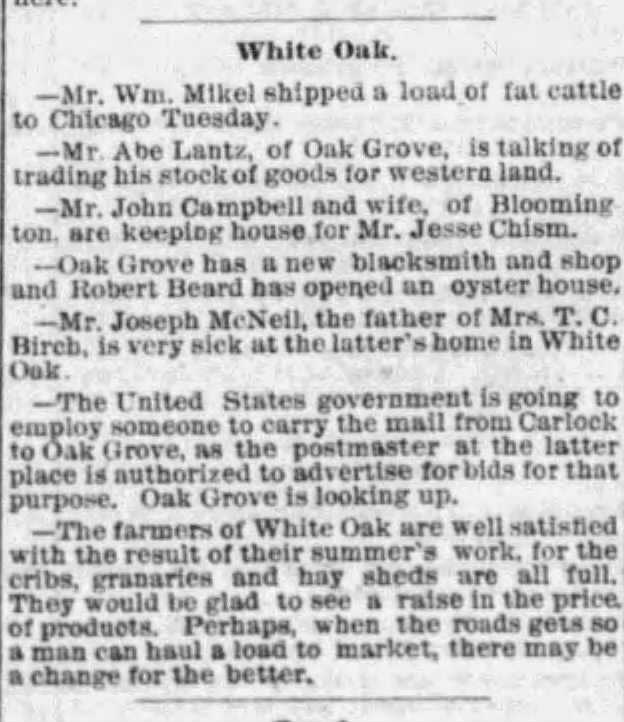
The Pantagraph reported in December of 1889 that Abe is considering moving west, though Oak Grove is still thriving, with a new blacksmith shop and Oyster House coming to town and the post office set to deliver mail again to the residents from the post office in Carlock.
In 1891 Abe opened another store in nearby Congerville
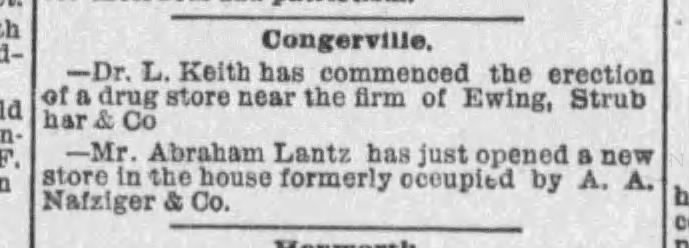
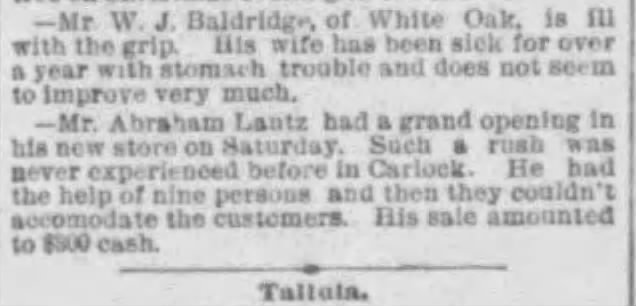
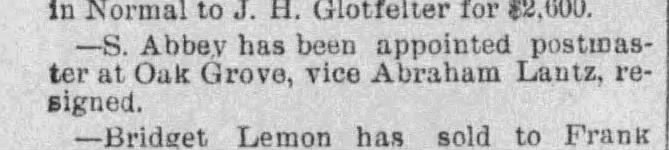
1892 Abe moved the store to Carlock and a grand opening in 1893 was reportedly a huge success. He resigned his position as postmaster in Oak Grove.
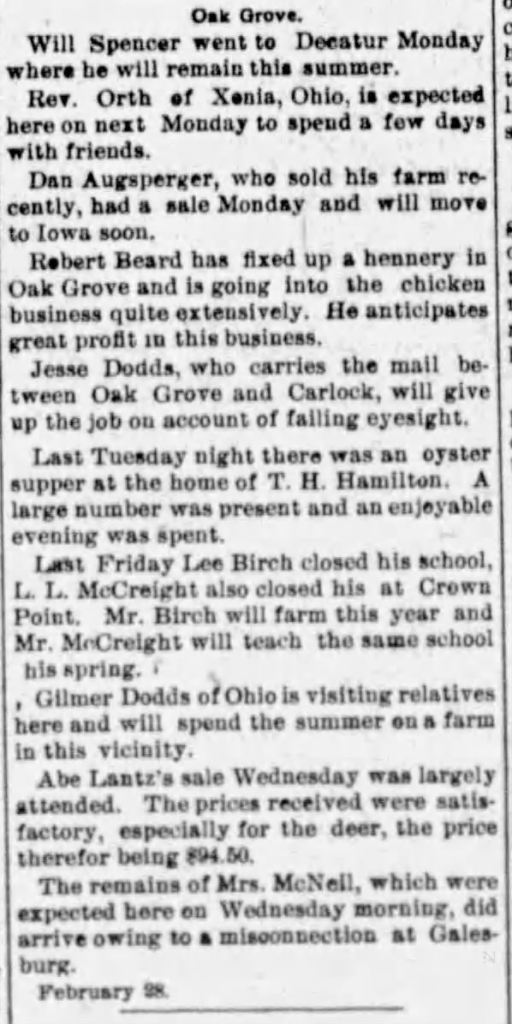
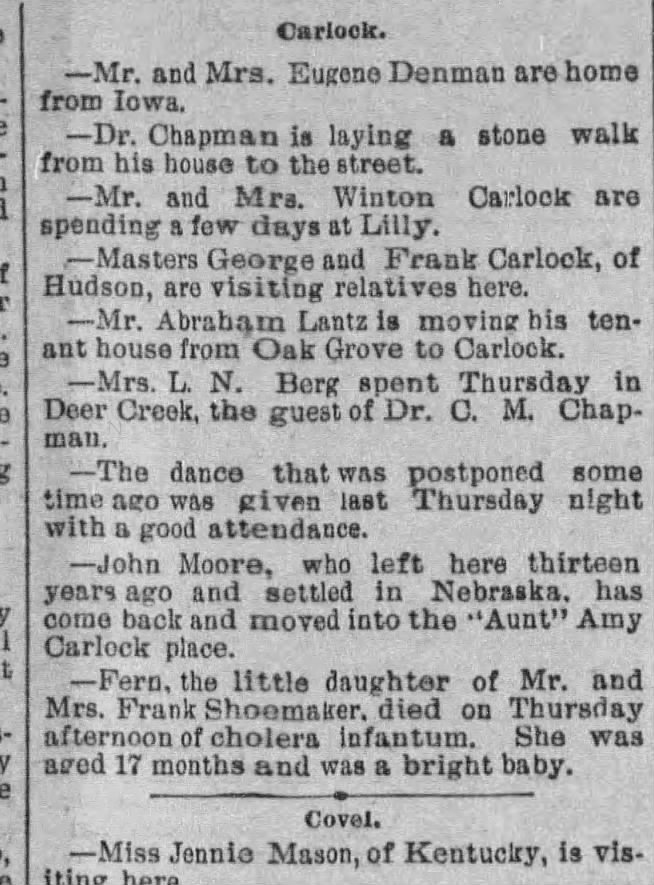
1894 the Pantagraph reports the Lantz sale at Oak Grove was largely attended and prices being satisfactory, especially for his deer which was $94.50. This is an interesting practice I wasn’t previously aware of. Apparently at the time people raised deer for meat much as we do now cows. He moved his tenant house from Oak Grove to Carlock the same year.
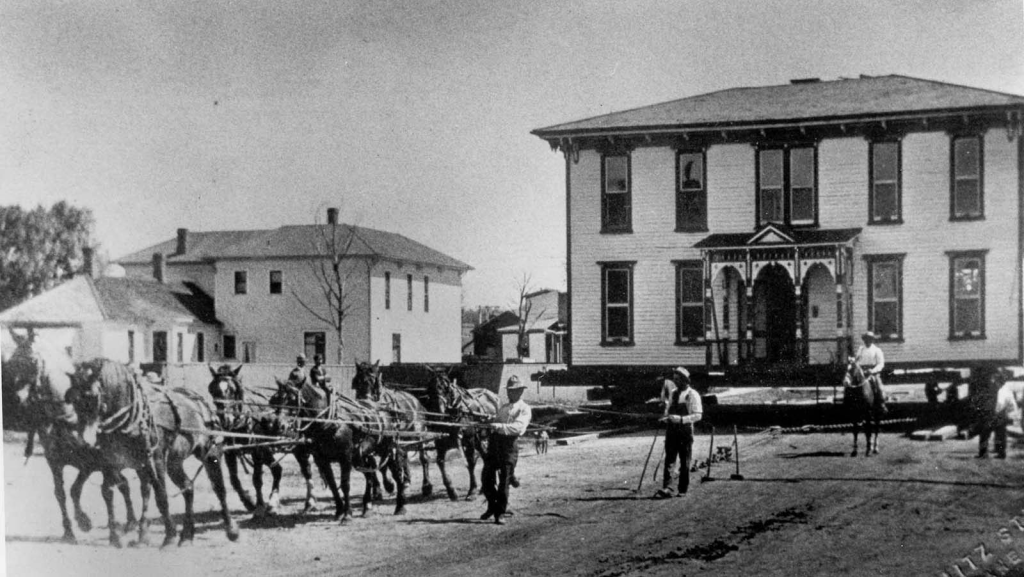
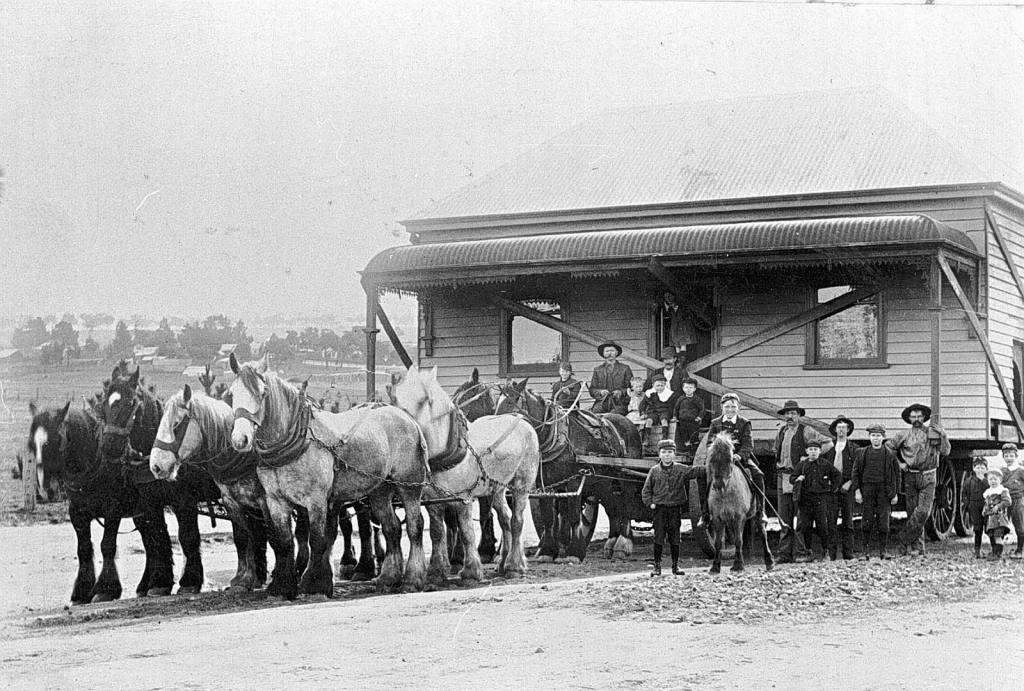
Many buildings were moved whole down the hill from Oak Grove to the new town of Carlock by the railroad. This was a common thing of the time across the country apparently. Teams of horses pulled the buildings along tracks into their new locations. While I know of no photos of this happening in Oak Grove I found some photos of it happening elsewhere. “A temporary wooden track was put down in the street and the greased runners slid along it. The track consisted of flat planks, supported by cross ties, similar to those used on railroad tracks. As the house inched along the street, the planks and ties left behind it were picked up and manually carried to the front of the house and laid down ahead of it. Numerous cross ties and planks, ready for reuse, are visible in the photos. Obviously, you couldn’t hitch a team directly to the front of a house, crack the whip, yell giddeeyapp and expect anything to happen. Horses just weren’t that strong. Instead, it was necessary to mount a capstan in the middle of the street. This capstan was anchored to some very strong objects well ahead of the house. It would appear that the capstan shown in some of the pictures was anchored to trees by means of heavy chains.” –https://rarehistoricalphotos.com/vintage-photographs-move-house-horses/
Of course going to Carlock from Oak Grove gravity would help get them down the hill, then the horses would have to do the heavy lifting to get them in place.
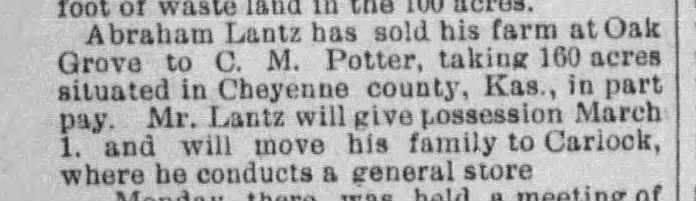
In 1895 Abe sold his farm at Oak Grove to CM Potter and moved to Carlock.
By 1900 the Lantz family sold all their property in McLean County and moved to Mississippi where Abe farmed for 20 years before dying there at the age of 81.
The next family in the 1880 census of Oak Grove was 70 year old retired farmer George Kirchner and his wife Helena. They were born in Breidenbach Germany and came to America between 1854 and 1870. The 1870 census shows him farming in El Paso Illinois. He was appointed postmaster of Oak Grove in 1875. He had partnered with Jacob Eyer to form Kirchner & Eyer which reported taking in 400 dozen eggs in 2 days in 1879 and did a steady general store business until it dissolved in 1879. In 1877 he built a new house on a fraction of an acre he bought in Oak Grove from Kirchner & Eyer. This house remains down the hill from Dad’s property. It was the home of Art Lampi until last year. In 1879 he was commuting by train to Fort Collins Colorado to oversee a sheep farm there. He died in 1897 while visiting in Peoria and his remains were brought to Carlock by train. His funeral was performed in both German and English. Both he and Helena are buried in the Lantz Cemetery near Carlock.
Isaac Yoder was a teacher living in Oak Grove in 1880 with his wife Anna and their children Joy, born in 1876, and Carl, born in 1878. Daughter Stella was born in 1880 after the census, then Ralph in 1882 and Mary and Levi in 1885 and 1887 respectively. By 1900 the family had moved to Iroquois county Illinois to the town of Belmont. In 1910 they were in Normal, Bloomington in 1920, Mackinaw in 1930 and he died in Lily, IL. Isaac was born in Pennsylvania but came to McLean County in 1848 as a toddler with his parents Elias and Lydia Hostettler Yoder who are listed in the Lancaster Pennsylvania Mennonite records. In 1870 at the age of 18 he is living with his parents in Dry Grove Township, Danvers Post Office, teaching school. His father, Elias, had been elected supervisor of Dry Grove Township in 1858. Dry Grove Township is unique in that it has no incorporated town or village, consisting only of various groves with groupings of houses like Yuton which had a population of 10 in 1890. It borders White Oak on the north, Normal on the East and Danvers to its West. I’m not sure which school he taught in, as he’s not mentioned in the Dry Grove School teachers he may have been teaching then in Oak Grove. By 1900 he is no longer teaching and lists his occupation as farmer. Isaac and Anna were buried in the Bergen cemetery in Lily, Tazewell County, Illinois which is west of Danvers.
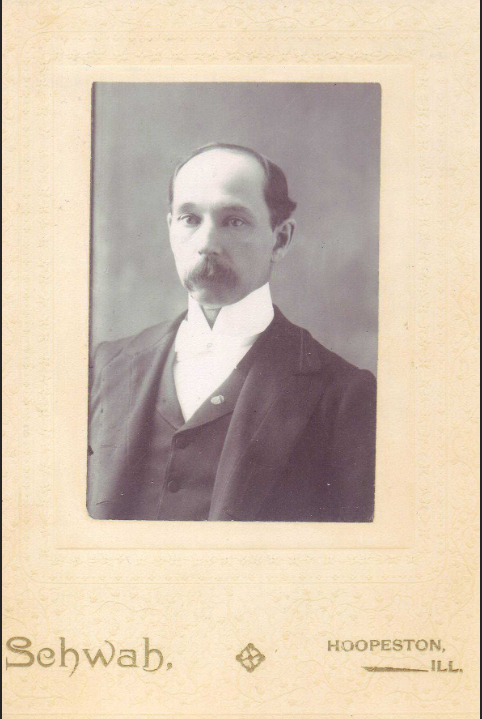
Jacob Eyer – Dry Goods Merchant in Oak Grove 1880
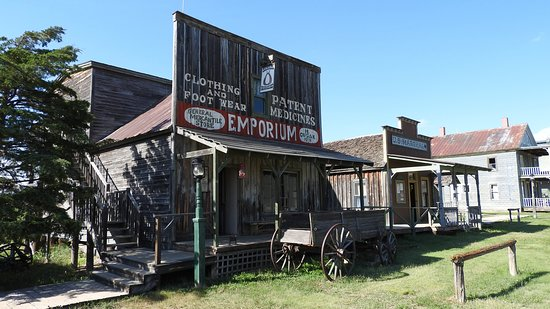
Jacob Eyer is listed as a boarder of Isaac Yoder working as a dry goods merchant in the 1880 census. Jacob was born in Hamilton Ohio in 1847 to first generation immigrants, Rudolph and Barbara Van Gundy Eyer who came to America from Germany in 1834. They relocated to Oak Grove by 1870 and are buried in the Lantz Cemetery. Jacob is listed as a carpenter in the 1870 census, living in Oak Grove with his parents and siblings at the age of 21. In 1874 he purchased an interest in a corn-sheller and thrashing machine, which he operated profitably in White Oak and Dry Grove townships. In 1874 he abandoned farming to engage in mercantile pursuits, having a capital of $600 the results of his earnings.
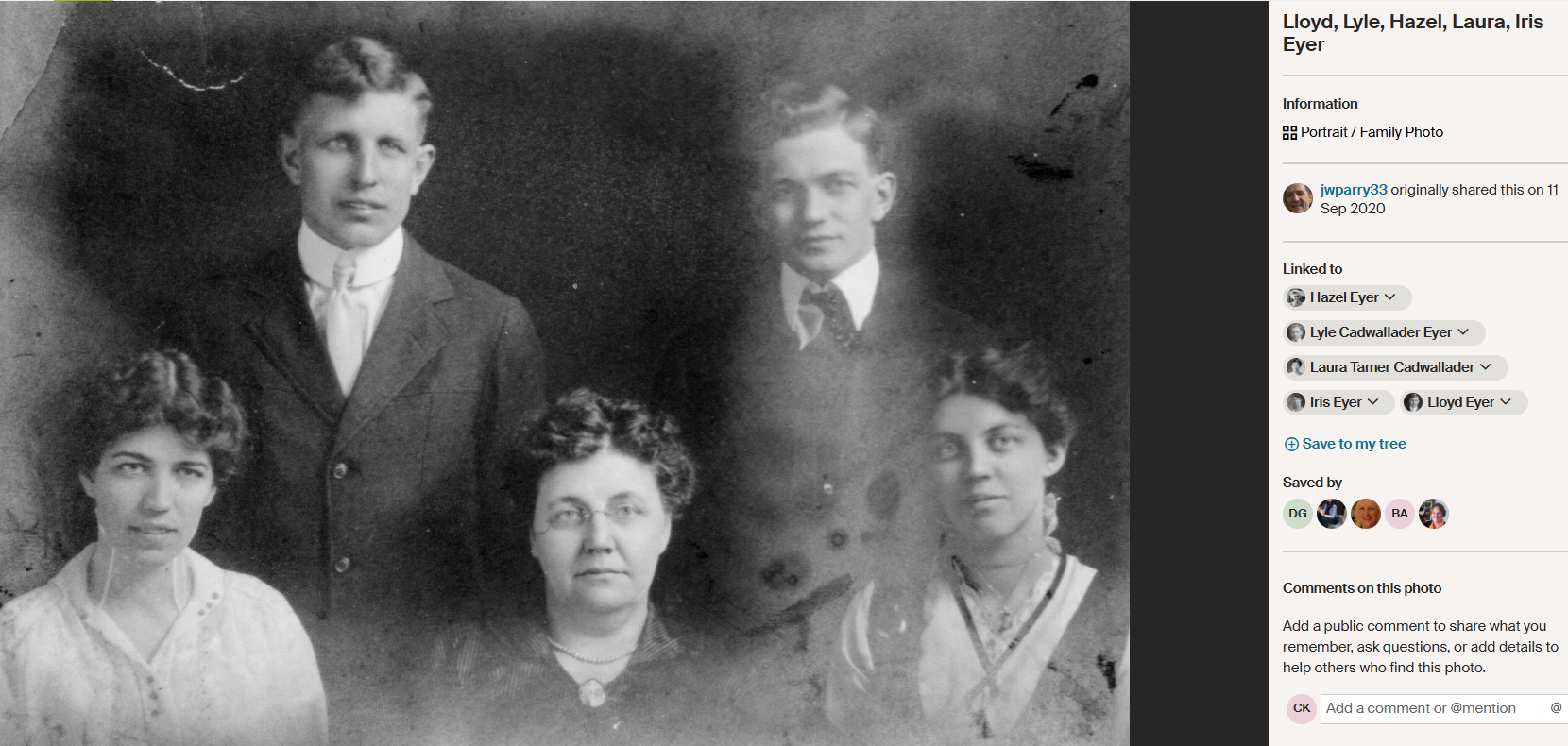
In 1883 he established dry goods and ready made clothing businesses. It was a successful business, carrying an overage stock of $7,000. At the age of 37 he married 21 year old Laura Cadwallader in 1884 in Indiana and his first son was born in Darlington Indiana. Laura was the daughter of Edwin Cadwallader a disabled Union soldier who was listed as shoemaker in the 1880 census and previously was a wagonmaker. The couple settled in Bloomington by 1889 and had two girls and two more boys. Jacob died in 1911 in Pomona California but is buried in Bloomington’s Evergreen Memorial Cemetery. Laura and the surviving children relocated to Pomona California by 1935. Below is their portrait found on ancestry . com
Simon Plank is also listed as a boarder of Isaac Yoder working as a farm laborer.
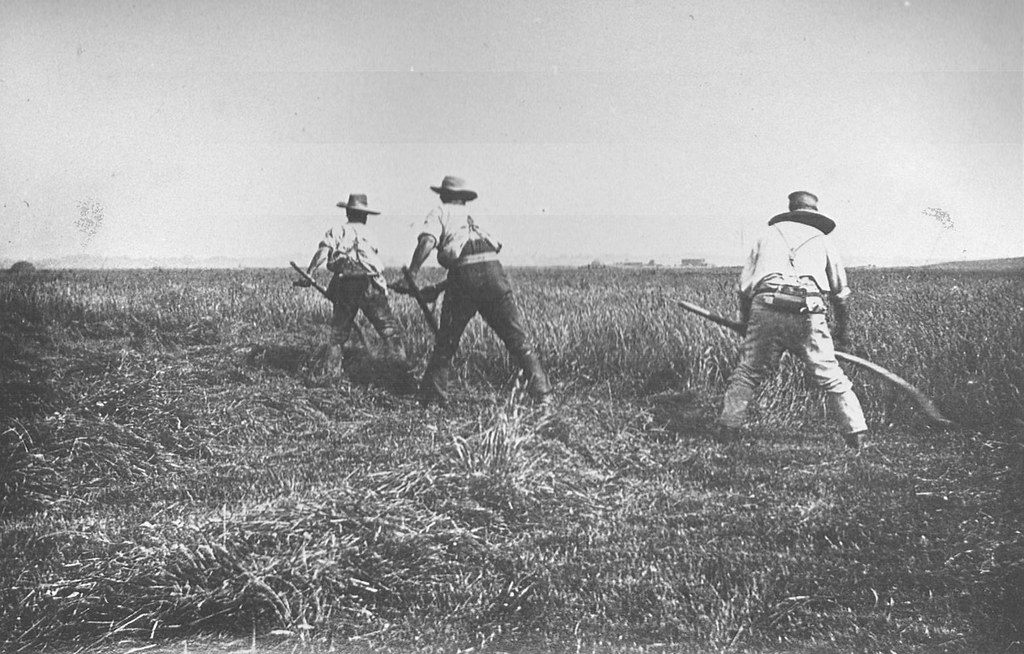
Simon was born in Wooster Ohio in 1850, son of Abraham and Caroline Coppes Plank who also farmed. His family moved from Ohio to Missouri around 1880 which is when we find Simon alone in Oak Grove. It’s possible he stayed in Oak Grove because his cousin, Leah Plank Zook also lived in Oak Grove. Leah’s grandfather was the brother of Simon’s great grandfather. He didn’t stay long in Illinois, soon joining his immediate family in Cass County Missouri where he married Caroline Moore in Henry County Missouri. He and Caroline had one daughter in 1895. Simon farmed in Cass County Missouri until he died in 1931.
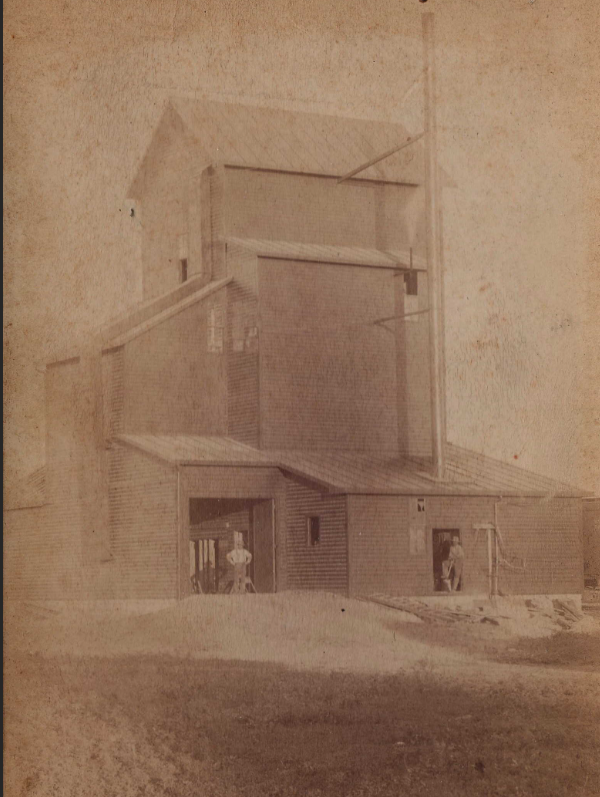
The next family in the 1880 Oak Grove census is that of George “Clayton” and Ida Taylor Gravett, their two children Maud and Stephen and Clayton’s brother James Simeon Gravett. Clayton was born in Clark County Kentucky in 1853 to John and Franky Gravett, farmers. John Gravett brought his family to White Oak Township from Estill Kentucky about 1875. This is the same county my maternal grandmother’s family came from in Kentucky. About 1876 Clayton married Ida Taylor, sister of Lucy Taylor Lantz- Abraham Lantz’s wife – and they settled in Oak Grove through 1880. Their infant Stephen died soon after the census of 1880. By 1882 they had moved to Bloomington and then went on to Glen Elder, Kansas where this photo found on ancestry . com was taken
In 1896 Ida died in Oklahoma City after giving birth to her 5th child. Clayton remarried and had four more sons in Oklahoma, dying a year after the last one was born in 1910 at the age of 56. Brother James Simeon died in Ames Iowa in 1935 leaving a widow, two sons and three daughters.
Peter and Katharina Habecker Gerber and their daughter Erbina are the next family on the census. Peter is in my family tree as the granduncle of the wife of my 1st cousin 3x removed.
Peter was born in Woodford County in 1846, the 4th child of Joseph and Magdelena Sommer Gerber who came to America from France about 1828. They were married in Ohio in 1835 and moved to Illinois about 1840. Peter married Katie Habecker in McLean County in 1869, listed as farming in Dry Grove in the 1870 census. Peter lists engineer as his occupation in the 1880 Oak Grove census. A 1895 map shows his farm north of Normal. His obituary says he and his wife traveled extensively in the interest of their daughter’s health, implying she had a chronic illness. Erbina died in 1904 at the age of 24.
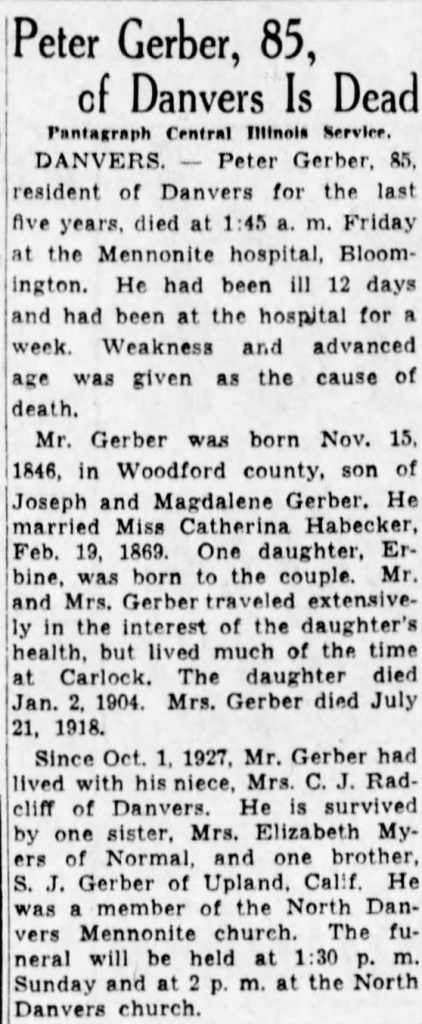
After his wife’s death in 1918 he lived with his niece, Loda Radcliff, daughter of his brother Elmer. Loda was married to Carl J Radcliff, the son of Richard Radcliff who was brother to Lloyd Radcliff, the step father of my maternal great grandfather. Peter is buried in the North Danvers Mennonite Church Cemetery.
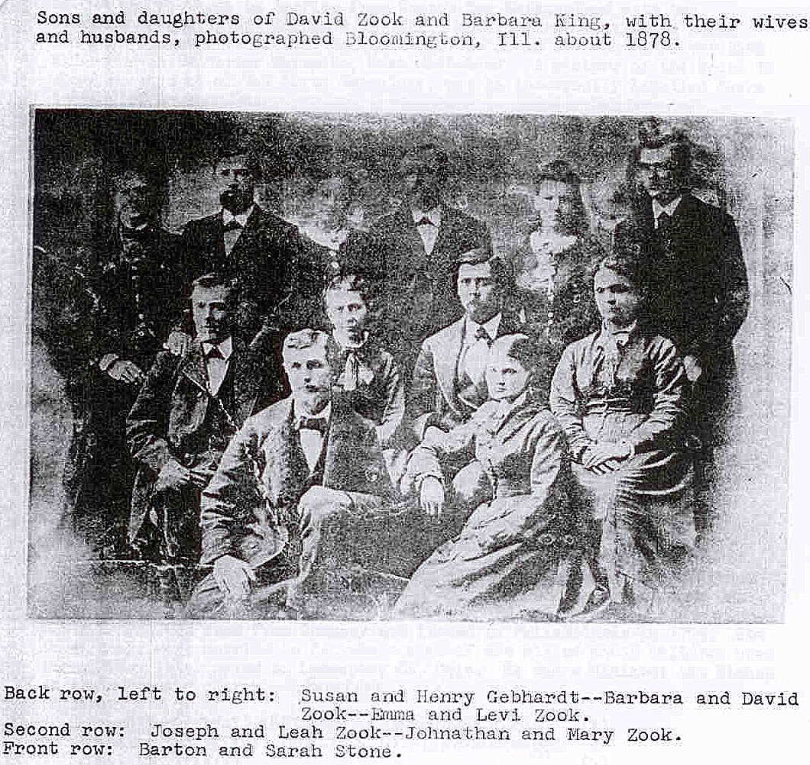
John Zook and Leah Plank Zook and daughters Lydia and Katie are the last family listed on the census. John is listed as a teacher. Leah’s brother Baron Stone is listed a farmer living with them. John’s proper name is Joseph, born in Champaign County Ohio in 1837 to David and Barbara King Zook who came to McLean County about 1851, in Hudson in 1860. I found a picture of the family on ancestry . com dated 1878
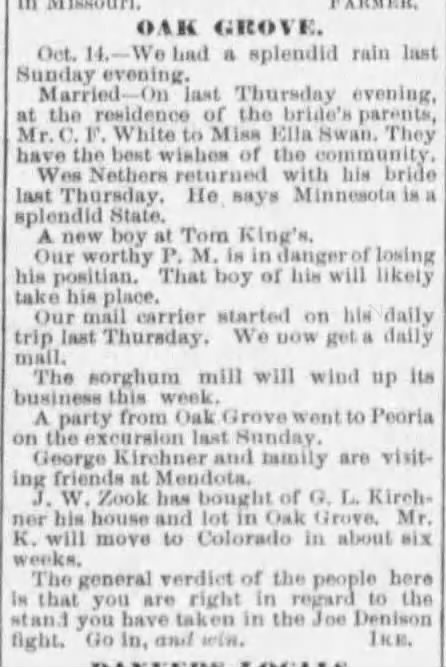
The Pantagraph reported in October of 1879 JW Zook bought a house from George Kirchner.
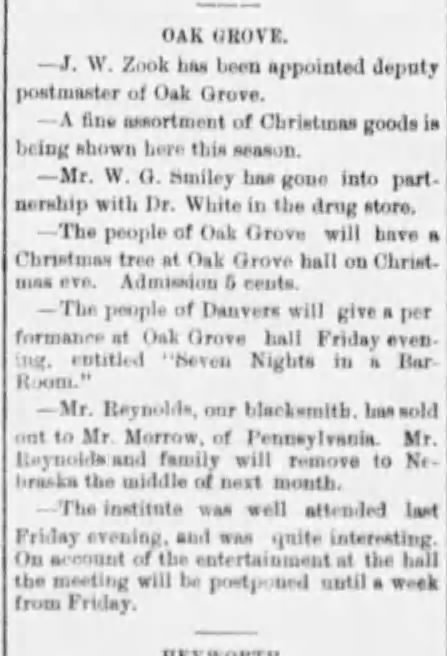
On a side note, the census taker for 1880 was Oak Grove resident Joseph Zook.
In 1881 Joseph was appointed postmaster of Oak Grove.
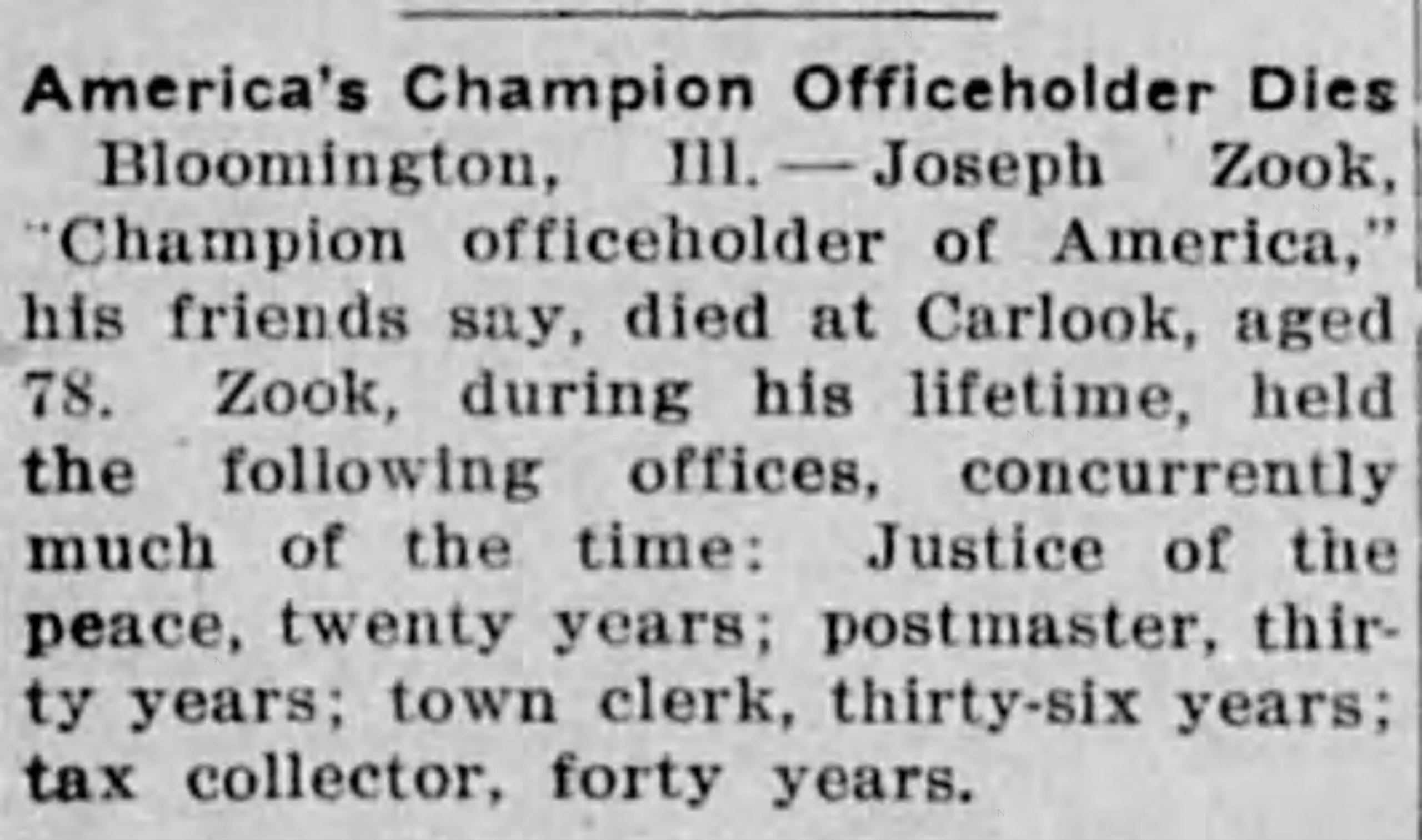
When Joseph died his obituary called him “champion officeholder of America” as during his lifetime he held the offices of Justice of the Peace (20 yrs) Postmaster (30 yrs) Town clerk (36 yrs) Tax collector (40 yrs).
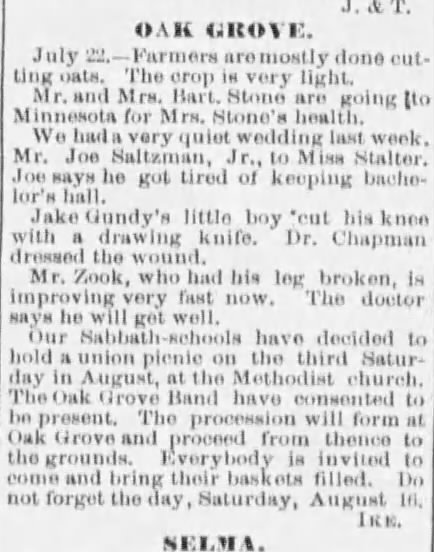
Barton Stone- Farmer, was born in1849 married to Sarah Zook in 1869 lived in Oak Grove in 1870. They had three children between 1872 and 1878, Henry Lee, Leslie Barton and Olive May. The Pantagraph reported in July of 1879 Mr. and Mrs. Barton Stone are going to Minnesota for Mrs. Stone’s health. Sarah died in December of 1879 from “Phthisis Pulmonalis” aka tuberculosis and is buried in the Oak Grove Cemetery.
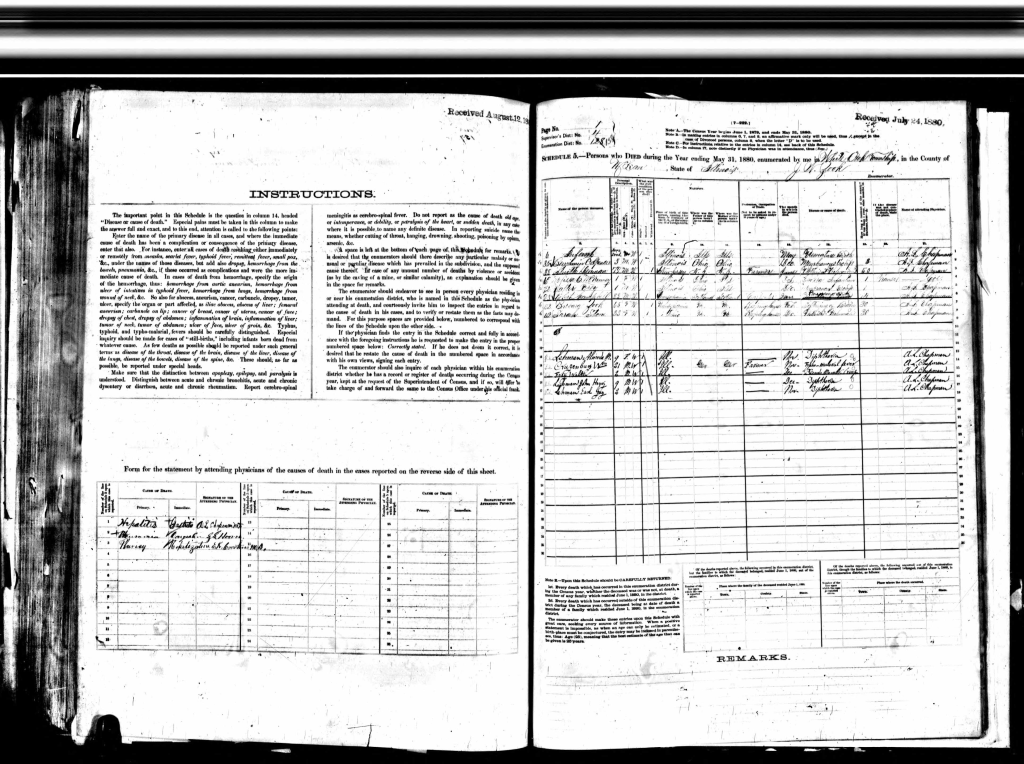
In the 1880 census Barton is marked as being sick with “Phthisic”, aka tuberculosis and living with brother in law Joseph Zook. Barton died in February of 1888 at the age of 39 in Wright County Minnesota. The cause of death was listed as “inflammation bowels”.
Nathaniel Delano is not listed on the Oak Grove census but he is in the 1879 plat.
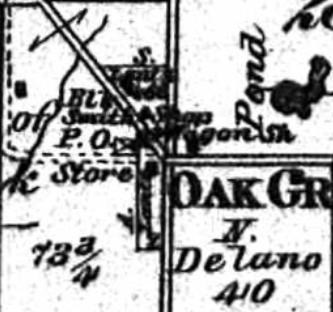
In 1880 he and his wife Olive are listed in the White Oak census along with their children Charles, Edward, William, twins Albert and Alfred and Olive’s father Ebon Safford. Nathaniel was born in Main in 1829, the son of Clarissa and Spencer Delano. Their oldest daughter Clara Ann was born in Oak Grove in 1857, the oldest son George born in Bloomington in 1855. His father died in Maine, so his mother must have brought him to Illinois. She was remarried in White Oak in 1875 to Daniel Robeson. About 1887 the Delanos relocated to Nebraska where Olive died in 1888 and Nathaniel died in 1910.
On the 1895 map of Oak Grove much of the property Dad now owns is listed under the name of William Baldridge. Also as it marks buildings, we know there was a house on the spot where his house stands by 1895. By 1900 William J moved to Bloomington. He lists his occupation as Real Estate on the 1900 census. His obituary tells his story well
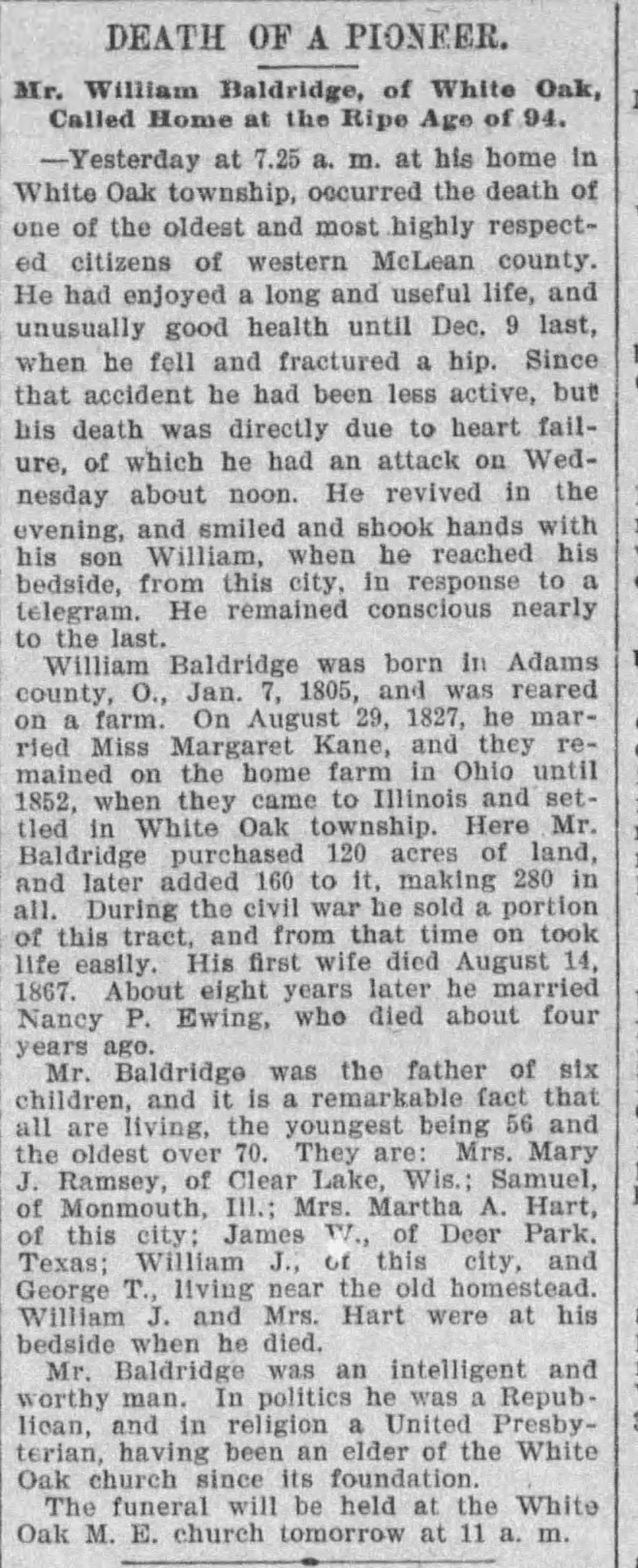
William John Baldridge’s son H.C. Baldridge, born on his farm in White Oak township, went on to become the governor of Idaho in 1927. WJ Baldridge, son of Sam Baldridge became the McLean County treasurer after serving for years as the tax collector. All 3 William J Baldridges are buried in Denham cemetery near Carlock.
The Carlock book has a map from 1888 that marks both buildings and plots and lists who lived where: By 1888 only 5 homes remained in Oak Grove, David Zook, Samuel Lantz, William Baldridge, Andrew Salzman and Dr D.A. White.
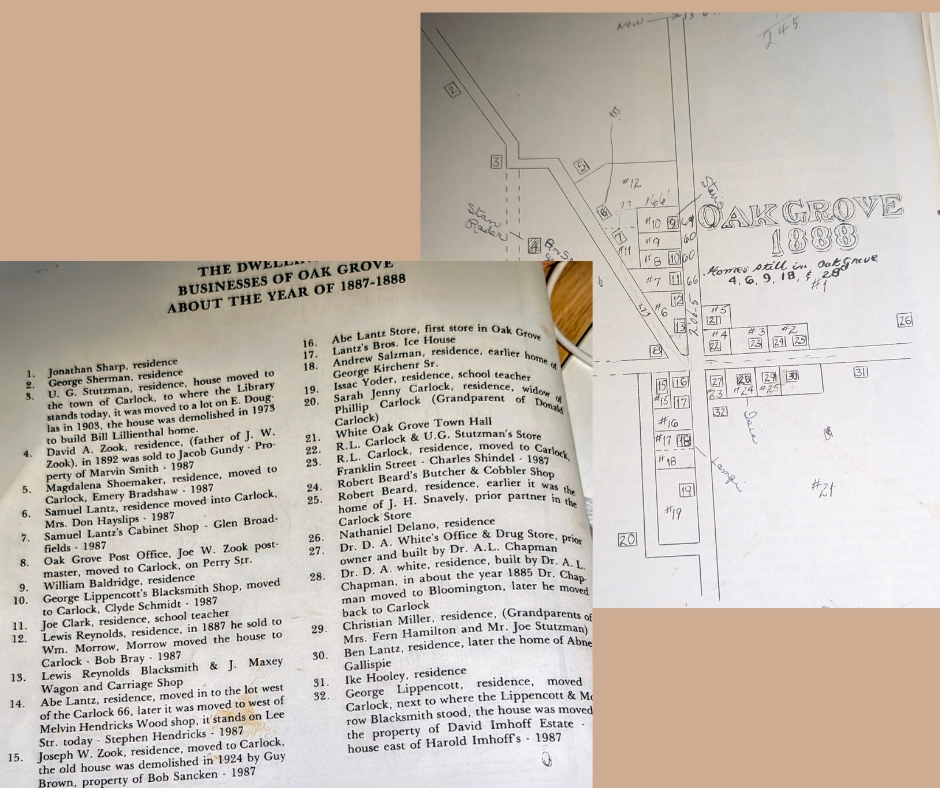
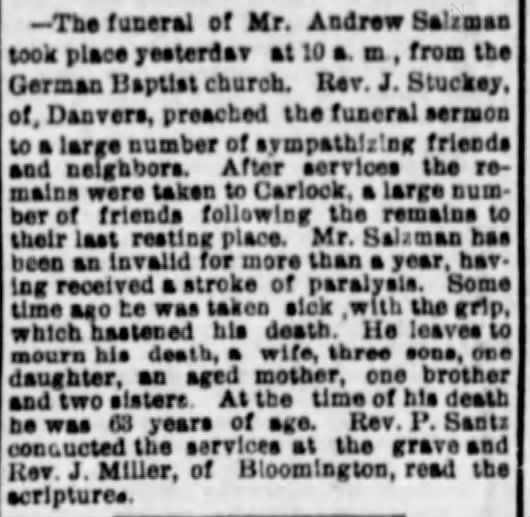
Andrew Salzman was born in France, Alsace Loraine- now part of Germany and came to America with his father, also called Andrew Salzman in 1831. They moved to White Oak in 1854. Andrew Jr married Barbara Schmidt, also from France and they had six children, 2 died in infancy. Barbara was known to tell the tale of her sister dying on the voyage to America and being buried at sea. Andrew and Barbara are buried in the Lantz Cemetery.
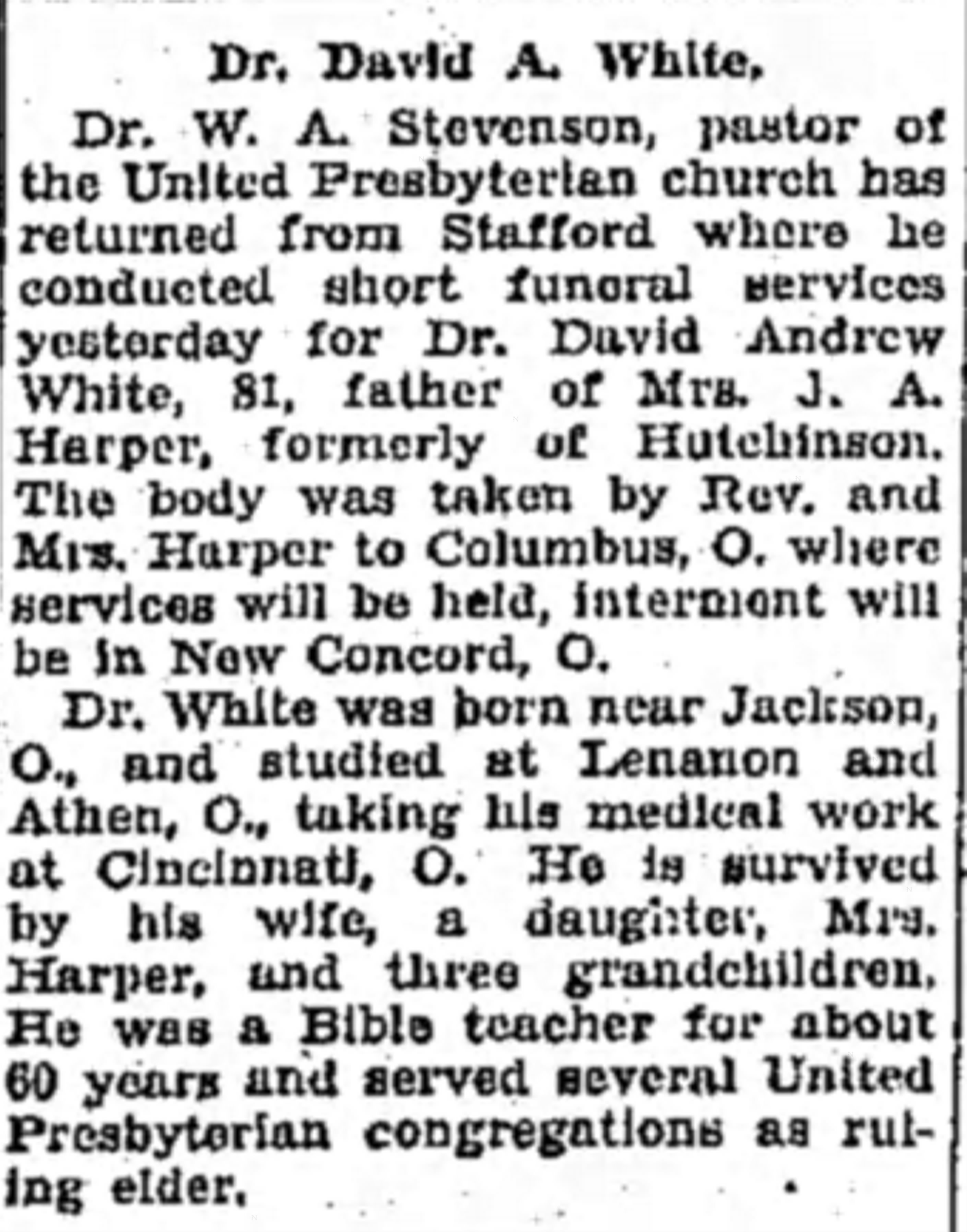
Dr. David Andrew White was born in Jackson County Ohio and did his medical training in Cincinnati. He married Eliza Vandervolt in Ohio and the couple had one daughter, Florence. They came to Oak Grove, taking the over the home and practice of Dr. Chapman in July of 1882. Clippings in the Pantagraph mention him conducting the literary program in 1883 and in 1889 reciting his essay on “Scarliatina” aka Scarlet Fever, in 1889. He was called back to Ohio in 1891 due to the health of his mother and ended up selling his property back to Dr. Chapman in September of that year. Florence married Rev. J.A. Harper in Illinois in 1906 and so they did at times return to the area for visits, the Pantagraph mention their return in 1902 and 1904. Dr. White died in Stafford County Kansas in 1929 at the age of 81 and is buried in his home state of Ohio. Eliza lived on until 1932, Florence had three children with Rev Harper and died in Pinckneyville in 1950.
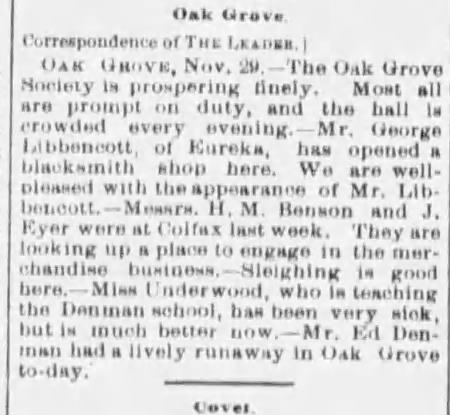
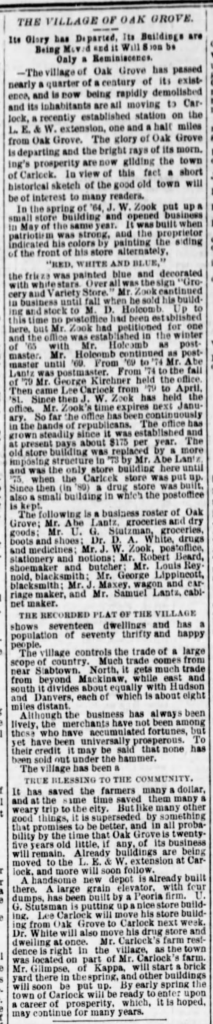
As one by one the buildings of Oak Grove moved down the hill to Carlock in 1887 the Pantagraph published an article titled “It’s Glory has Departed, Its Buildings are Being Moved and it Will Soon be Only a Reminiscence” that gave a little history of the town.
As I got to know the past residents of Oak Grove a few things stood out to me. Many of the families are very interconnected either through blood or marriage or business or often all three. It’s also clear many of the residents of Oak Grove went on to have amazing adventures and successful careers. The pioneering spirit that brough them to Oak Grove served them well. Many of the residents were immigrants or children of immigrants, from Germany and France, and the community was better for their presence. I’m also grateful to women like Ardella Rigby who fought for a woman’s right to vote at a time when that was truly an alien idea to many.
I hope you found my little research project as interesting as I. As always I’m in debt to those who choose to share their family history on ancestry . com and who share what they know of times past online.