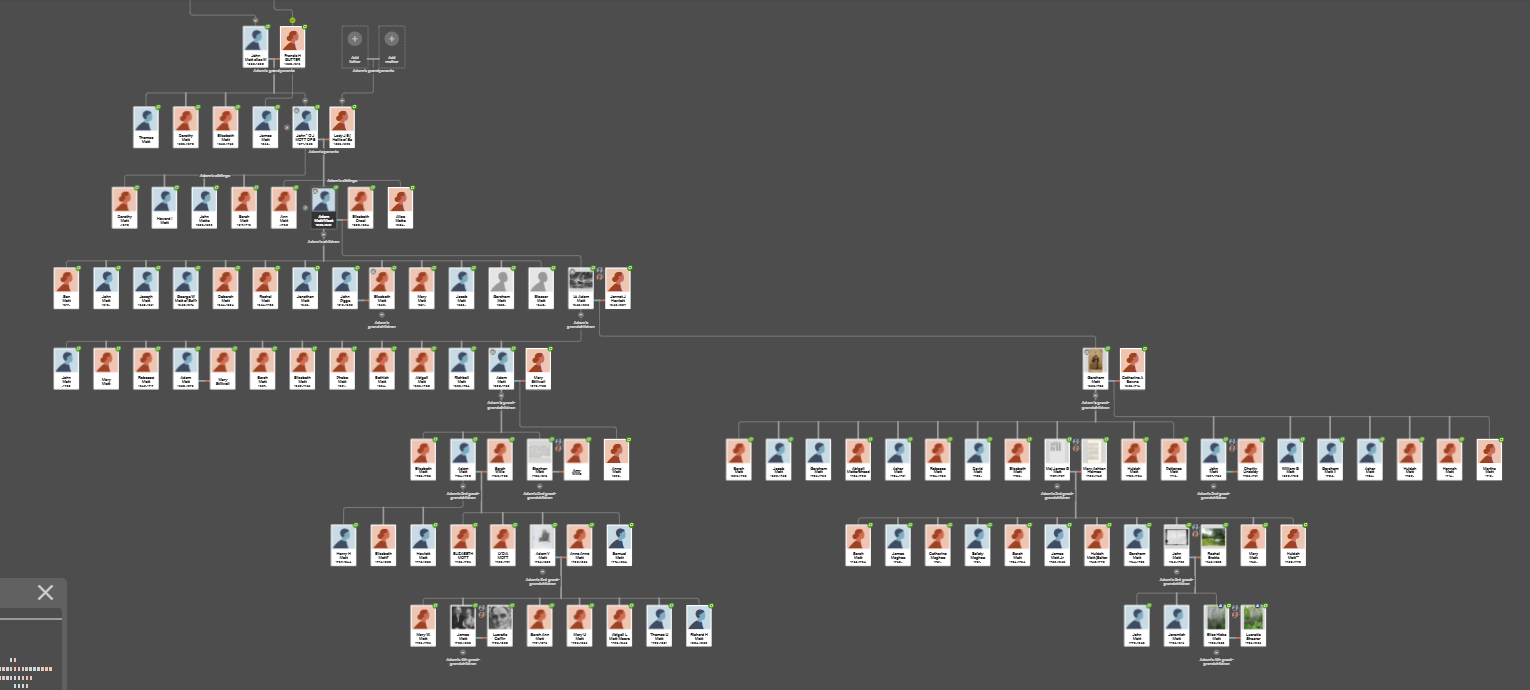
While researching my 4x great grandfather, Elias Mott I found his middle name, Hicks. Elias Hicks Mott. It seemed like a strange middle name so I did what I always do, I googled it. Turns out Elias Hicks was a rather famous Quaker who some say caused a schism in the church. Elias Hicks, like my Mott ancestors going back over 9 generations, was from Long Island NY. Born in 1748 he was a farmer near Jericho, NY that became a prominent minister amongst the Quakers. Walt Whitman, in Nov 1829, wrote about Elias:
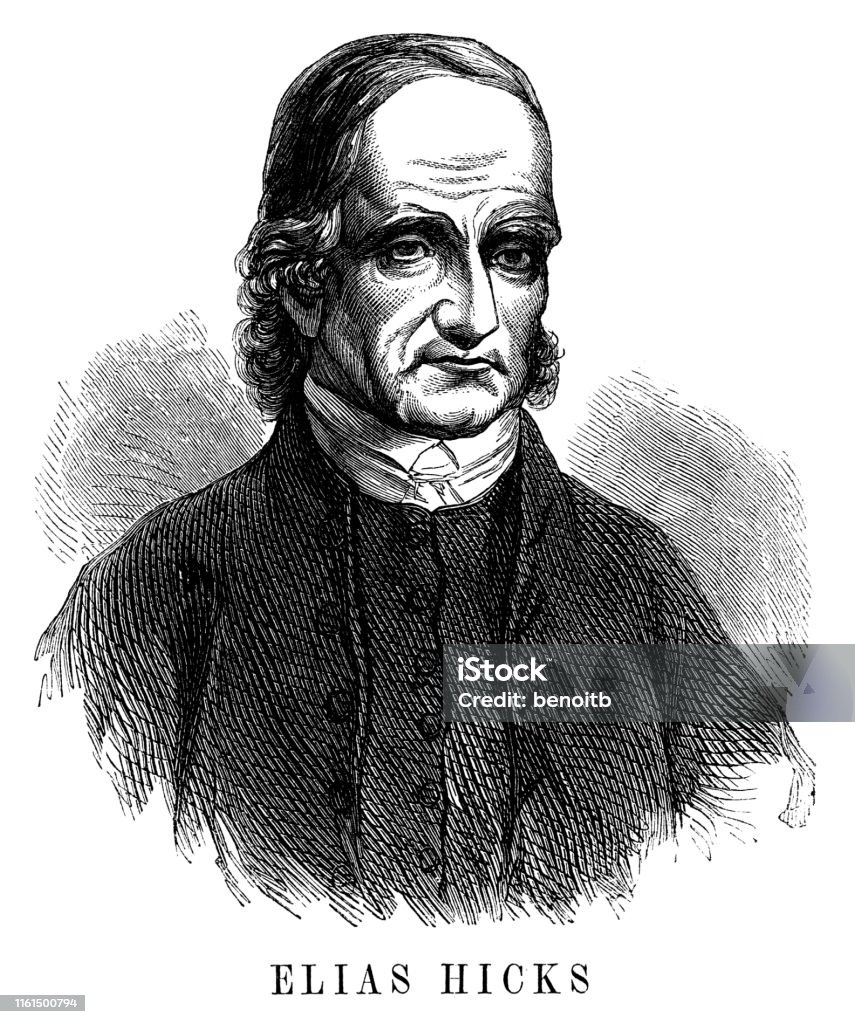
“Always Elias Hicks gives the service of pointing to the fountain of all naked theology, all religion, all worship, all the truth to which you are possibly eligible—namely in yourself and your inherent relations. Others talk of Bibles, saints, churches, exhortations, vicarious atonements—the canons outside of yourself and apart from man—Elias Hicks points to the religion inside of man’s very own nature. This he incessantly labors to kindle, nourish, educate, bring forward and strengthen.”
Elias was one of the early Quaker abolitionists. Along with another Mott relation, Phebe Willets Mott Dodge, he encouraged the Westbury Quakers to free their slaves starting in about 1776. By 1799 there were no longer slaves being held there. In 1794 he founded a charity, the Charity Society of Jericho and Westbury Meetings, to aid the freed black population and educate their children. He advocated for a boycott of slave produced goods before the term boycott was even coined.
Hicks considered the Bible a secondary source of faith, second to a person’s “internal light” and wrote that the scriptures sometimes created more harm than good. Leaders from England visited America and denounced his teachings, which led to a break among the American Unitarians and those that followed Hicks were called the Hicksite Friends, mostly rural and poor Quakers. But all of that happened after my 4x great grandfather was born. Elias Hicks Mott was born in 1783, his name an apparent tribute to the fiery abolitionists his father John and mother Rachel admired deeply.
As I mentioned, the Mott family arrived on the shores of Colonial Rhode Island/Long Island way back, around 1638. “Ould John Mott”, my 11x great grandfather, is recorded in the Portsmouth Rhode Island records from 1644-1656 as being supported by the town and it was “agreed that there shall be a stone house built for the more comfortable being of old John Mott in the winter, for the effecting thereof the townsmen do here promise that upon the call of the overseers aforesaid, they will come in and help forward the work”. In January 1654 they “agreed that the town will be at the charge to pay old man John Mott’s passage to the Barbades Island and back again if he cannot be received there, if he lives to it, if the ship owners will carry him”. It’s unclear if he made that trip, as he is still in Portsmouth in 1656 when he died at the age of 84.
Old John’s granddaughter, Elizabeth, daughter of Adam, is listed as getting married to Edward Thurston in 1647 in one of the earliest “Society of Friends” meetings in Rhode Island. So they were Quakers from the very beginning of America.
Old John’s son Adam had a son called Adam as well and that Adam had a 12 children, among them my 8x great grandfather Gershom Mott, born in Hempstead Long Island in 1653. Interestingly, that Adam had two sons called Adam, by two different wives. His will differentiates the two Adams, calling one young Adam. Young Adam married the aforementioned abolitionist Phebe Willet, contemporary of Elias Hicks, and they had a son called Adam who named a son Adam V Mott who ended up being the school Superintendent for Poughkeepsie New York.
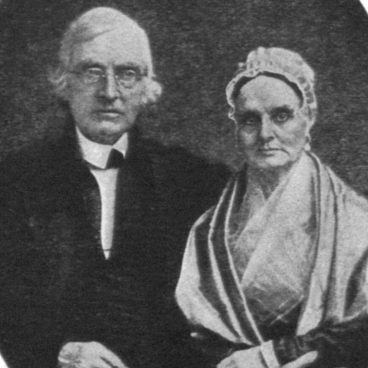
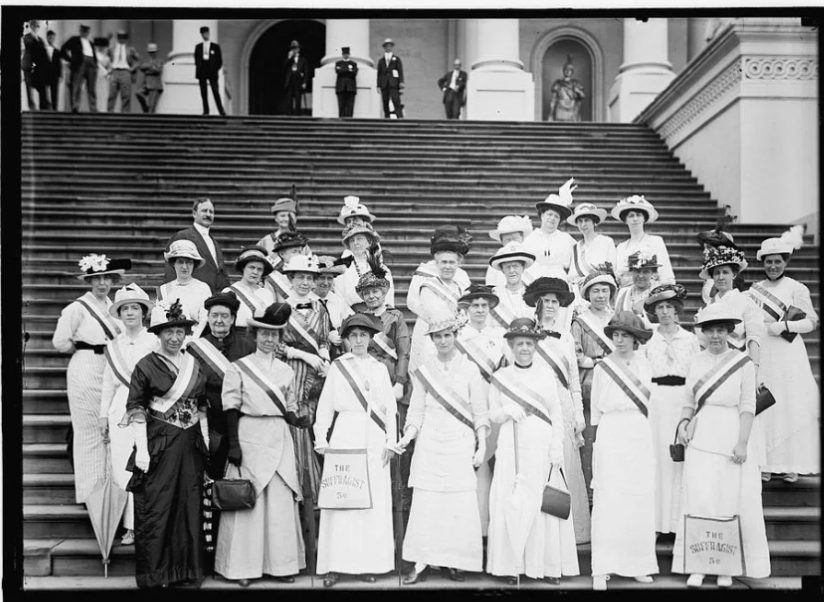
This Adam’s son, James Mott married Lucretia Coffin. Lucretia was a distant cousin of Benjamin Franklin through her mother’s side. James and Lucretia Mott are quite famous abolitionists, Underground Railroad conductors and even in the early 1800s Women’s Rights proponents. Lucretia Mott founded the Philadelphia Female Anti-Slavery Society in 1833. She was ridiculed for speaking in public, as it was considered unacceptable for women to do so at that time. She travelled to the World Anti-Slavery Convention in London in 1840 but she wasn’t allowed to participate because of her sex. It was then she joined forces with Elizabeth Cady Stanton and they held a women’s rights convention in Seneca Falls in 1848, attended by hundreds of people including Frederick Douglass. In Lucretia’s presentation she demanded the word “woman” be inserted into the Declaration of Independence and advocated for divorce, property and custody rights as well as the right to vote – launching the suffrage movement in America over 175 years ago.
In a bit of a coincidence, in 1805 my 4x grandfather, Elias Hicks Mott, married a woman named Lucretia. Lucretia Shearer. This Lucretia Mott is my 5x great grandmother. Their daughter, Eleanor, is the mother of Amelia Billings Starr, mother of my paternal great great grandfather Emory Starr.