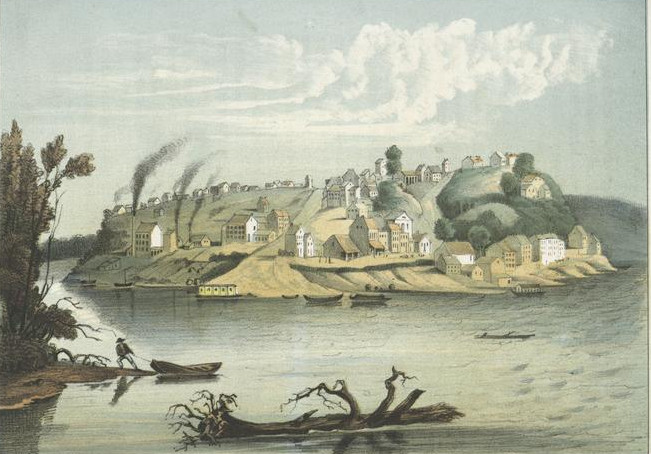
John Harmon
John Harmon, Chris’s 4x great grandfather died 12 Jul 1893 in Keokuk, Iowa. His obituary tells the tale:
Death of a Pioneer – Obituary
DAILY GATE CITY
The Venerable John Harmon is called to his reward.
Another of Keokuk’s venerable citizens has been called to his reward. John Harmon died at 3:30 o’clock yesterday morning at his home, 1911 Reid street (Reid Street was renamed South 7th St in 1934), from ailments incident to old age, his final Illness extending over a period of four weeks. He was 87 years, 2 months and 22 days old.
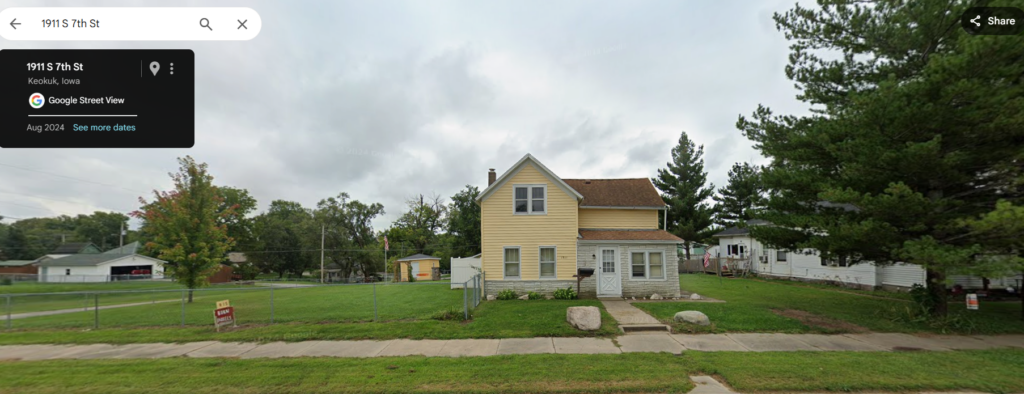
John Harmon was one of the pioneers of Keokuk and Iowa having spent over half a century here. During that time Keokuk has grown from a village, to a prosperous city and Iowa has become “Queen of States.” His was an eventful and well spent life. A few years ago he once said, “I have lived loyally to the law of my country and the law of God and have never been in a law suit, preferring to suffer loss rather than enter into one.” That was no idle boast. And what a proud record! But it was entirely like the noble Christian gentleman he was.
Mr. Harmon was born May 30, 1805, in Jonesboro, Tenn., but was taken to Harrison county, Indiana when a child and when Indiana was yet a territory.
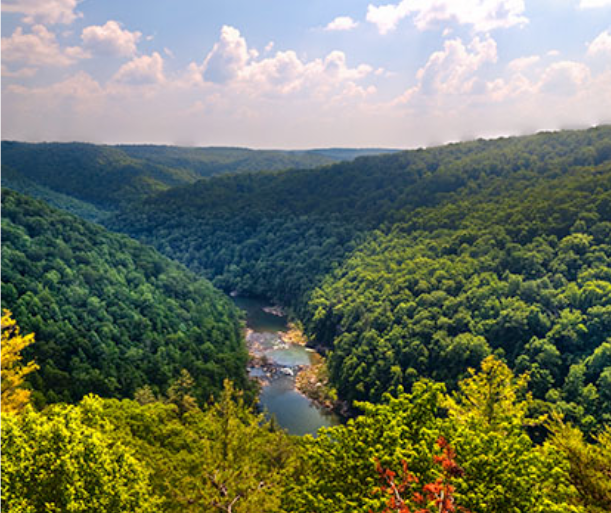
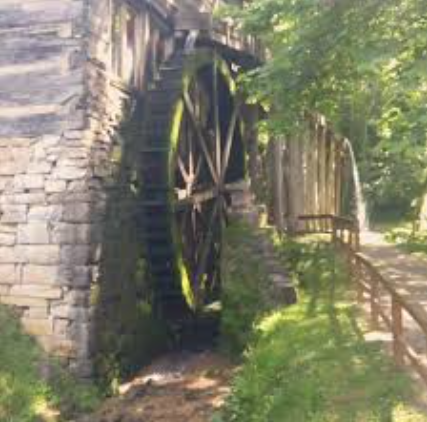
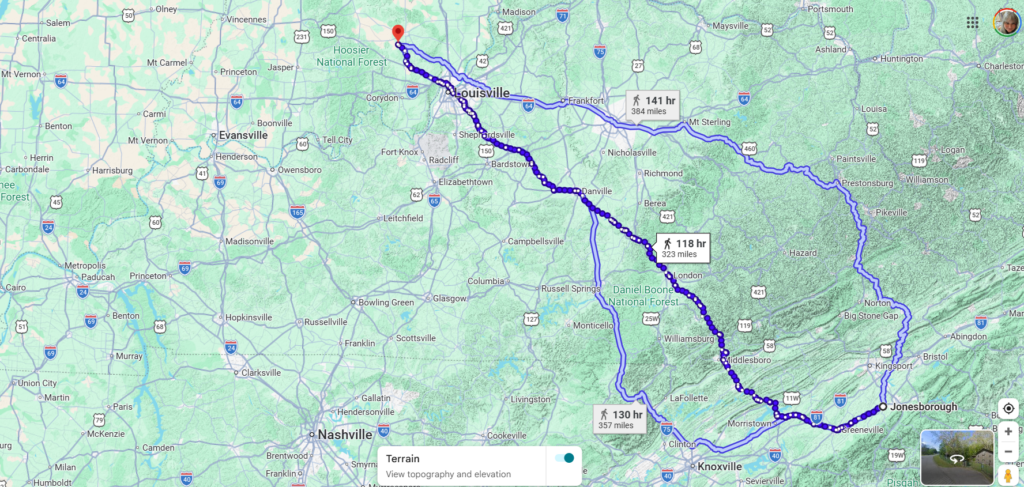
There he grew to manhood enduring the hardships of pioneer life. He remembered when the Indians came into his neighborhood on a marauding expedition and killed, several families, the able bodied men being away from home serving under General Harrison (in the war of 1812). (This is likely referring to the Pigeon Roost Massacre Sept 3, 1812 when Shawnee tribesmen killed 24 settlers who had illegally crossed the Ohio river and settled in Shawnee land in Indiana territory).
Mr. Harmon was married in 1829 to Miss Stacy Witt, who died, and in 1840 he married Miss Butler. She was the companion of his days until three years ago when she died.
In 1841 Mr. Harmon came to Keokuk, making the trip by boat down the Ohio and up the Mississippi.
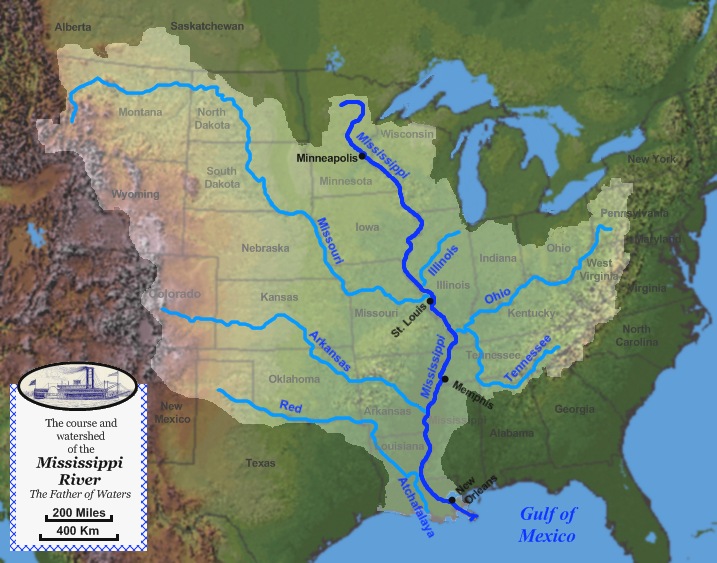
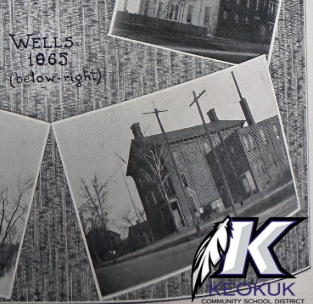
There were then but three houses here, they being built of logs. A frame house was under construction about on Third and Johnson streets and he helped complete it. Where now the Wells school stands, he settled a claim in the timber.
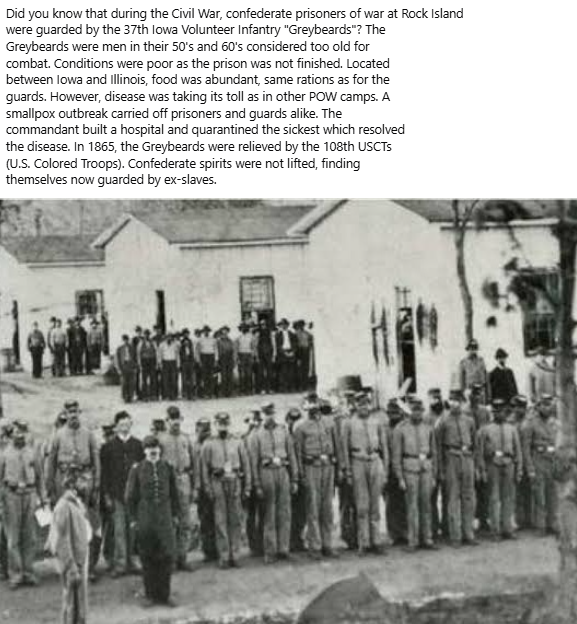
Despite his advanced years, Mr. Harmon could not remain idle when his country called for defenders, and at the breaking out of the civil war he enlisted in the Thirty-seventh lowa, the famous old “Gray Beard” regiment, and was mustered in at Muscatine, Dec. 15, 1862. Lacking nine days, he saw three years of service, enduring all the hardships of war and more than once being thought dead. Beside his own service, he gave to his country the lives of two sons who sleep on Shiloh’s field. Previous to the civil war he did military duty, having for fifteen years been a member of a rifle company, similar to our present militia. When, during “Old Hickory” Jackson’s rule, South Carolina first got the, secession fever, he turned out with his company to help bring the rebellious state into line.
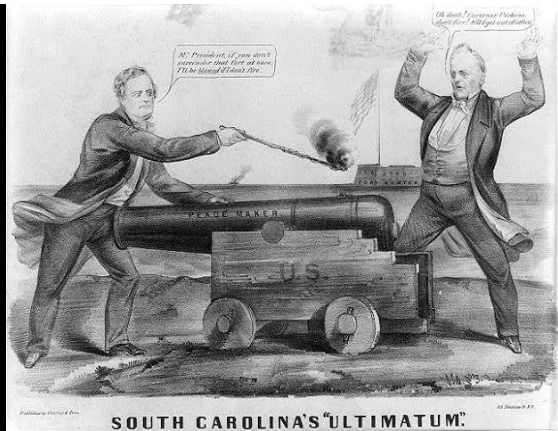
Mr. Harmon was a republican in politics. He was a warm admirer of “Old Hickory” and helped elect him to the presidency. When the Whig party was born, he became identified with it and when it was merged into the Republican Party became a republican. He was a true and conscientious Christian, being identified with the First Methodist church at the time of his death. Of late years what work he did was in the form of market gardening.
Two sons, William and Leroy, and three daughters, Mrs. R. M. Criswell and Mrs. Sarah Hicks of Keokuk, and Mrs. A. J. Mefford of Oklahoma, survive him. By his request the funeral will take place from the family residence at 2 o’clock this afternoon. His remains will be buried in the Prouty cemetery.
William Harmon
The biography of John’s youngest son, William was included in the Biographical Review of Lee County, Iowa. It includes more details on John Harmon and his father Abraham.
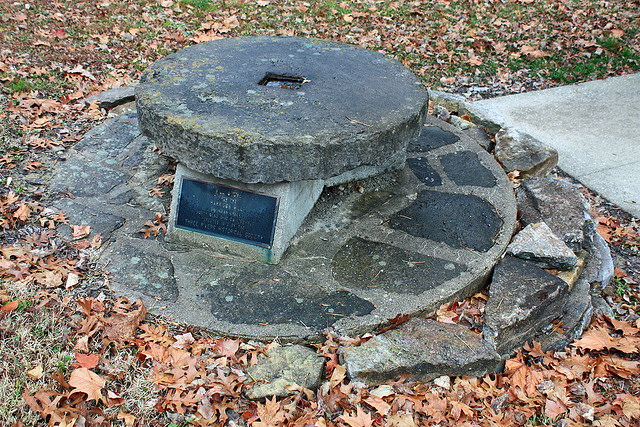
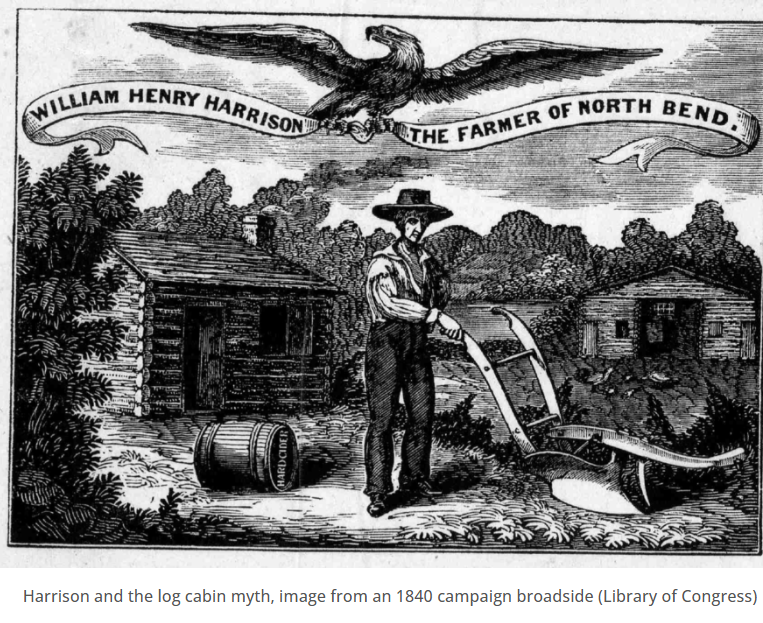
One of the residents of Keokuk whose reminiscences are most valuable in a work dealing with the historical development of Lee county is William Harmon, who was born in Harrison county, Indiana, May 15, 1830. The family is remotely of German origin (Harmon was originally Hermann in Baden-Württemberg, Germany, Johann Jacob Hermann the first Harmon in this line in America was baptized in Stuttgart in 1706, was present in Virginia in 1749), but the first member of whom there is accurate record is Abraham Harmon (5x great grandfather), who came from Tennessee in the pioneer days to Indiana, where he was manager of a gristmill owned by General William Henry Harrison (later 9th president of the United States). It is still remembered that his instructions were to “take toll from the rich and give it to the poor,” thus leaving no profit for the owner.
William Harmon’s father was John Harmon, who was born at Jonesboro, Tennessee, May 30, 1807, and died July 13, 1893. He was reared in Harrison county, Indiana, in territorial times, and remembered the massacre of nine families in his neighborhood by the Indians. In 1829 he married Miss Stacey Witt, who became the mother of our subject. She died in the fall of 1839, and he remarried, his second wife being Miss Butler, whose death occurred in Keokuk. He came west in 1841, locating in Keokuk, where he took up land on the half-breed tract. Indians still occupied the vicinity and the settlement consisted of one frame house and three log houses.
His experience was wide. Previous to the Civil War he served as a soldier twelve years under the old military law of South Carolina, and when General Jackson called out the troops to combat threatened secession in that state he took the field with his regiment.
In Keokuk he was a member of the “Gray Beards,” or Thirty-seventh Iowa Volunteer Infantry, assigned to post duty, which was very severe service.
Two of his sons gave their lives to the Union cause, and are buried near the battlefield of Shiloh. (Son Birdsell Harmon and stepson Isaac Bunch both were killed at Shiloh 6 April 1862).
In 1836 he, with his father-in-law, traveled from Indiana to Illinois by three-horse wagon, camping on the way. It was a large party, and the men of the party walked the whole way, taking turns, however, at riding one of the horses and driving. Although then but six years of age, our subject remembers the journey distinctly.
On account of his wife’s ill health, John Harmon built a flatboat, and took his family for a trip down the Mississippi river. She failed to improve, however, and died six miles below Alton, Illinois, in the American bottoms.
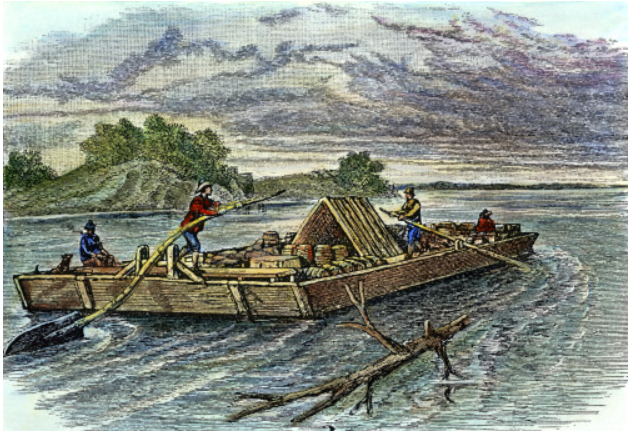
He then revisited Indiana for a year, after which he returned to Keokuk, and with the exception of two or three years’ residence in Clark county, Missouri, here passed the remainder of his life. He voted for Andrew Jackson for President of the United States, but was in politics a Whig and Republican. He was the oldest member of the First Methodist Episcopal church of Keokuk. (My Note: This church became a notorious house of prostitution in the 1920s before being torn down in 1958). He is buried in Prouty Mound cemetery.
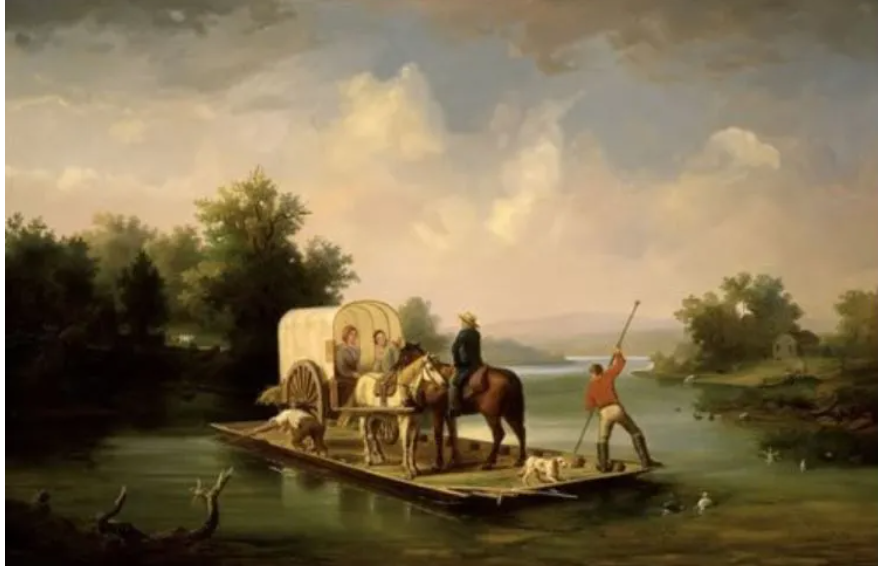
When William Harmon came to Keokuk, Lee county was a wilderness. For the first year he lived in a primitive “shanty,” having the bare earth for a floor. The family cleared away the forest from a tract of land and for a while did some farming. In 1845 they removed to what is called Prouty’s Mound on the banks of the Des Moines river, where for four years they conducted a ferry. The territorial government required no license for ferrymen, but on the formation of a state government a law was passed providing for license formalities, and the privilege which the Harmons enjoyed was secured by a politician, thus depriving them of that source of income.
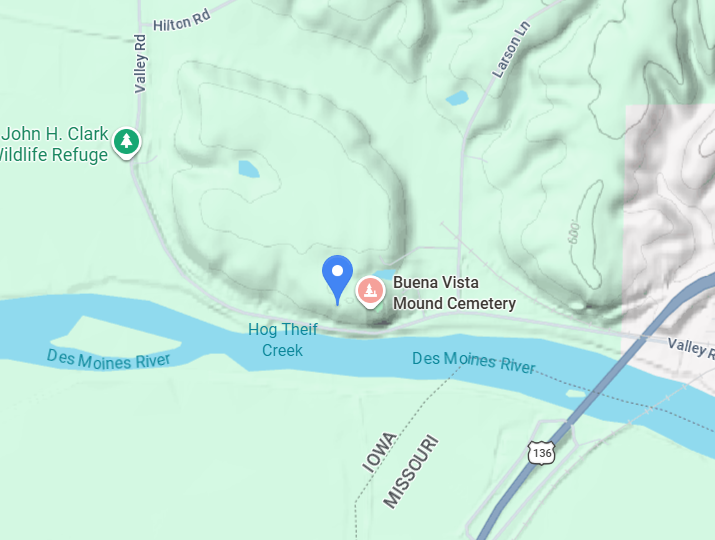
Mr. Harmon as a boy conceived an interest in the statement frequently made that the American Indians in burying their deceased warriors and chiefs followed the custom of burying with them their arms and other valuable possessions. To test its truth he, with others, examined many Indian graves, and he asserts that the theory is evidently without foundation, as no arms or implements of any kind were ever found. He has also closely observed the floods of the Mississippi river, and is convinced, though alone in his contention, that the famous “flood of fifty-one” has not since been equaled. Throughout the three weeks of its duration he was engaged in rescue work at Alexandria. He and his father owned a boat, and with this they saved a great deal of valuable property, often entering houses in which water stood shoulder-high, and diving to recover household goods.(In 1851 74 inches of rain fell in Iowa, mostly over 40 days- a record that holds to this day).
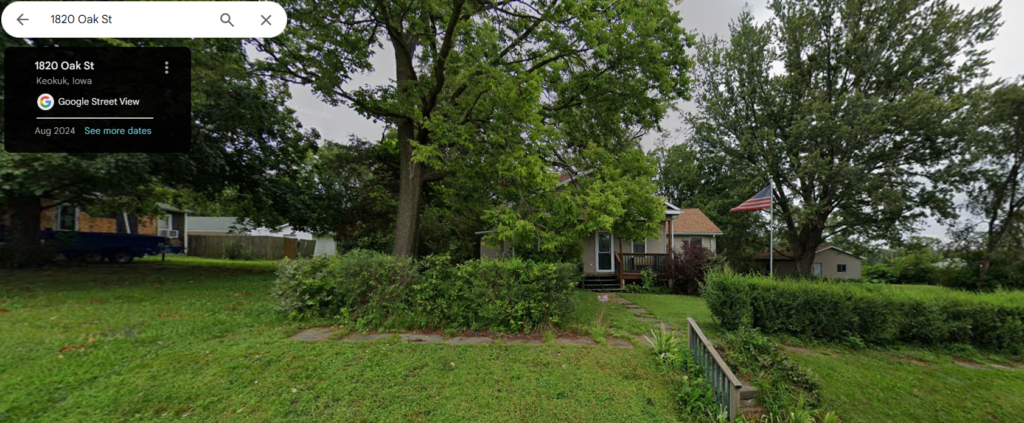
July 30, 1851, Mr. Harmon was united in marriage to Miss Sarah K. Wickham, daughter of Slattriel Wickham. She was born near Zanesville, Ohio, March 7, 1832. They are the parents of the following sons and daughters: Mary Ellen, born April 22, 1852, died January 22, 1854; Stacey Drusella, born January 31, 1854, died March 16, 1854; Nancy Ann, born September 6, 1855, died April 9, 1886; John William, born September 23, 1857, and Charles, born March 9, 1861. Both sons live in Keokuk, occupying homes in the immediate vicinity of the father’s residence at 1820 Oak street. With his father and brother-in-law Mr. Harmon early purchased a ninety-acre tract of land on the Des Moines river in order to secure the timber, and later it was cleared and cultivated. He sold his share in 1855.
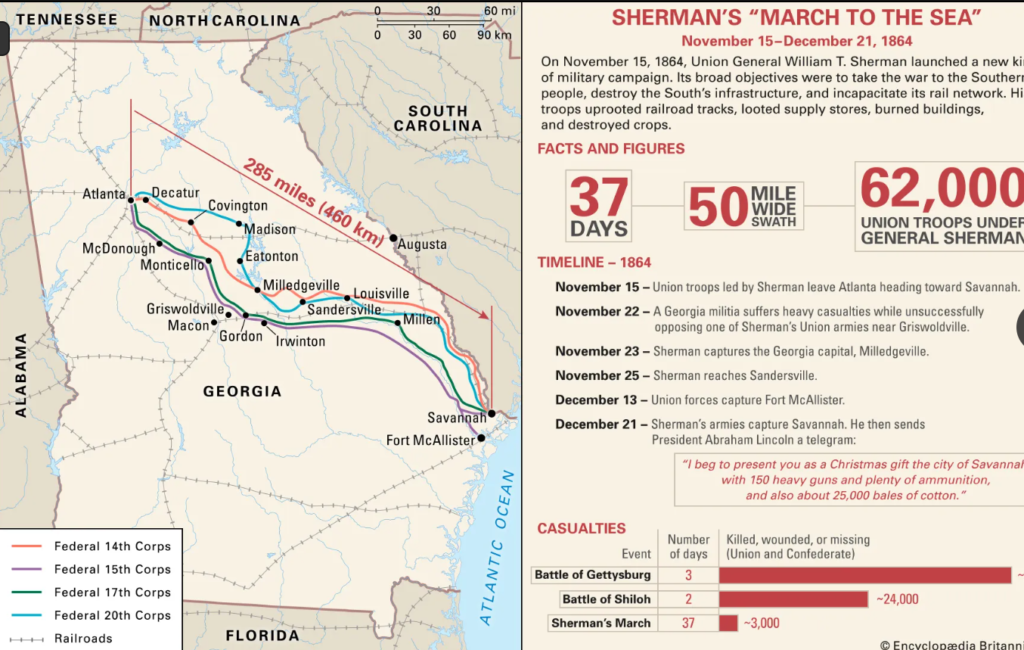
On March 1, 1862, leaving a wife and three small children to answer the call of patriotism, Mr. Harmon enlisted in Company E, Seventh Iowa Volunteer Infantry, under Captain (afterward Colonel) Parrott, and went into camp at Camp Lincoln, Pittsburg Landing. Thence proceeding to Corinth, he arrived there three days after the battle, and at this place he saw first active service, taking part in skirmishes. His health failed, and for three weeks he was in Monterey Field Hospital, and later in Quincy Hospital. On recovery from his illness he was placed upon detached service, in which he continued for about eighteen months, first coming to Keokuk to join a body of 100 men detailed to guard the city. For a time be was acting sergeant, and frequently took out squads of soldiers at night to guard the fords of the Des Moines river, as Keokuk was menaced by Rebel guerrilla and Southern sympathizers. This service ended, he rejoined the active forces in the field, and followed General Sherman in his famous march to the sea. He was honorably discharged March 6, 1865, at Goodwin’s Mill, South Carolina, but continued with the army for a period of twenty-five days thereafter. Although gifted with a fine physical constitution, Mr. Harmon still suffers from the hardships of his army experience.
After the war he was variously employed, for rather more than a year. He ran a dray in Keokuk for four years, having a ten-year contract to do hauling for a foundry. The company for which he worked suffered financial failure, but a new company was organized, and he secured another contract for five years.
Mr. Harmon owns a pleasant home in town and seventy or eighty acres of island land in the Des Moines river — land formerly owned ‘by his father. He has retired from active pursuits. Although self-educated, never having received any schooling, he gives much time to reading, and is thoroughly informed on current topics and events. In his religious connection, he is a member of the First Methodist Episcopal church, as is also Mrs. Harmon, and has been an active worker since ante-bellum days. He has acted as class leader and steward, and having in a marked degree the gift of language, formerly was a very successful exhorter. His sons and their wives are also members of the church. He is a member of Belknap Post of the Grand Army of the Republic. Politically be has always been a loyal and consistent Republican since the organization of that party. His first vote was east for the Whig candidate for President. William Harmon has many friends in Keokuk, and no man is more respected for his earnest Christian character and his unwavering fidelity to the right as he sees it.
Mr. Harmon died suddenly while in his fields gathering corn, on Friday afternoon, November 11, 1904. At the time of his death he was Keokuk’s oldest resident in point of continuous residence.
————————- ————————-
The above text is a transcription from the book Biographical Review of Lee County, Iowa: Containing Biographical and Genealogical Sketches of Many of the Prominent Citizens of To-day and Also of the Past. Chicago, Hobart Publishing Company, 1905. Pages 348-350. Worldcat record http://www.worldcat.org/oclc/6430209.
_____________________________________________
Leroy Harmon
John’s second son, Leroy Freeman Harmon is Chris’s 3x great grandfather. Leroy was born 15 Dec 1833 in Harrison County, Indiana. His mother died when he was 5 years old, in 1839. His mother was born Stacy Witt. Her father was Jesse Witt who came to Knox County, Illinois from Virginia.
A year later, in 1840 his father remarried, to Nancy (Butler) Bunch, who was recently widowed and the family came to Keokuk in 1841. Not mentioned in the obituary above, Nancy and John had six children together between 1842 and 1850. Sometime after 1847 the family left Keokuk and moved 20 miles west to Clark County, Missouri. (near Kahoka).
In the 1850 census he was 17, living on a farm with his father and stepmother and 8 siblings in Clark County, Missouri.
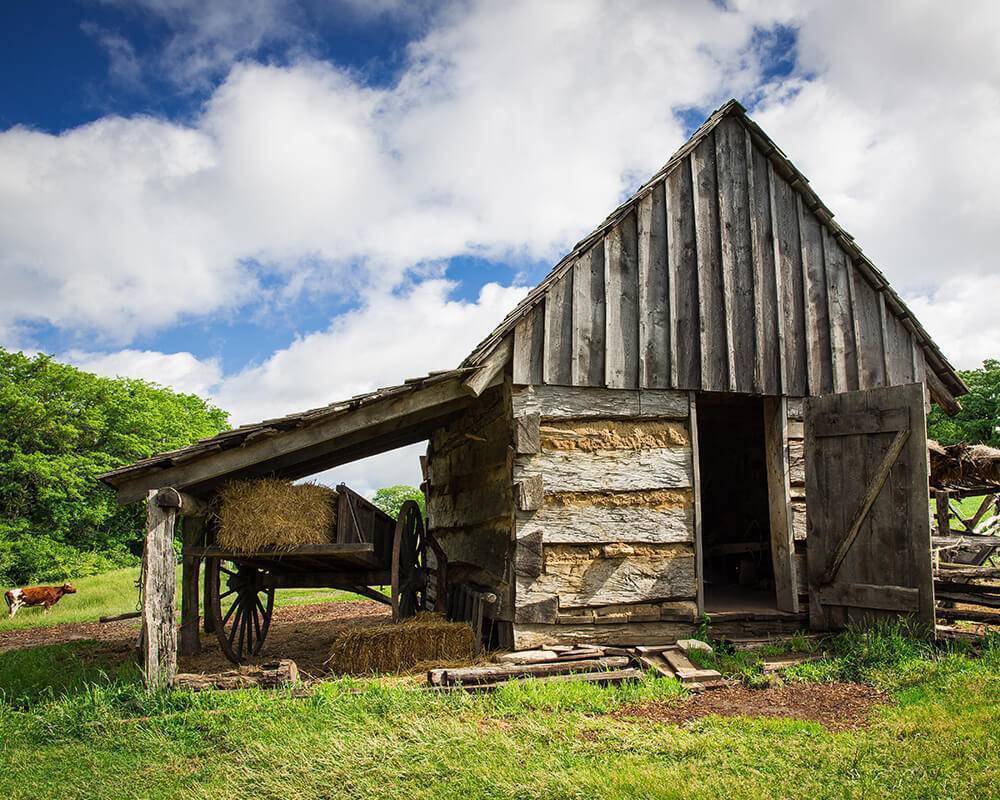
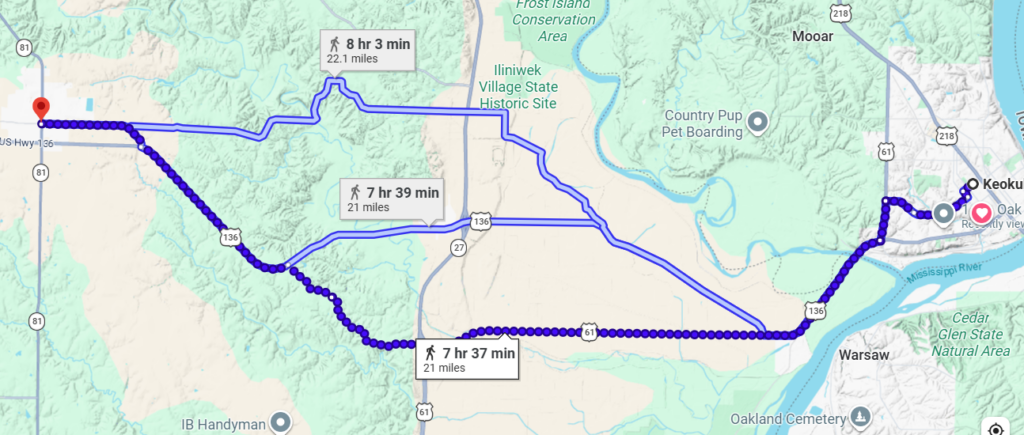
At the age of 20, on 7 Dec 1854, he married Emelina “Emma” Lowder, an Illinois native, in Clark County, Missouri. The couple started off in Fulton County Illinois where their first two children were born.
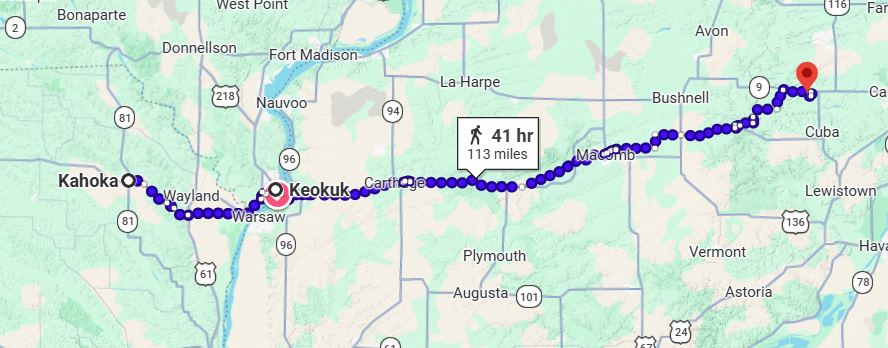
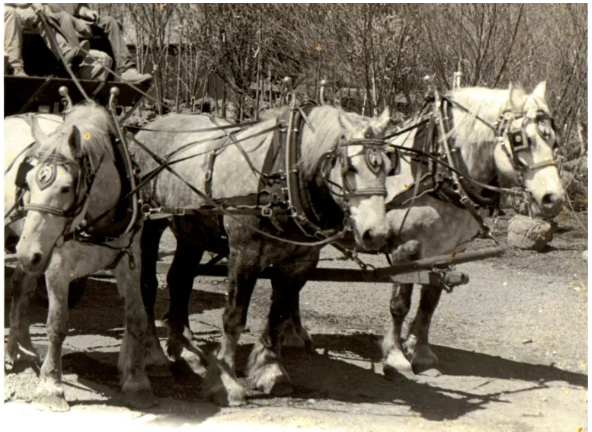
By 1860 they moved to Keokuk where Leroy lists his occupation as laborer. Chris’s 2x great grandmother Alice Jane Harmon is born there in Keokuk in 1860. The couple added 9 more children between 1860 and 1878. In the 1870 census Leroy lists his occupation as drayman, a driver of a “dray”, a low, flatbed wagon pulled by horses to transport heavy things like barrels. He and his brother William worked a contract with the local foundry. In 1880 and 1885 Leroy lists his occupation as teamster, still living in Keokuk. Emma died in November of 1900 at the age of 63. In 1910 76 year hold Leroy is living with Alice and her 3rd husband, William Gerhardt in Keokuk. In 1920, now 86, Leroy is living with his granddaughter Gertrude and her husband Fred Thiem and their young children. Gertrude is the daughter of Alice’s sister Addie (Harmon) Bunch. Leroy died 29 Sep 1924 in Keokuk.
Alice Harmon Kelly
Leroy’s eldest daughter, Alice, Chris’s 2x great grandmother married Lorenzo Warren Kelly 13 April 1882. Her first son, Horace William Kelly, a fraternal twin to Emma Kelly, died in infancy in 1883. Six years later she bore another set of twins, Freeman Leroy Kelly (her father’s name was Leroy Freeman Harmon), and John Brice Kelly. 2 years later she had Bonnie Bell Kelly in April of 1891. Just three months later Lorenzo died of typhoid fever, but Alice brought up his children in Keokuk. Lee married Kahoka native Katie Sansom and they too brought their children up in Keokuk, including Chris’s grandfather Henry Kelly who lived there his whole life and brought up his children there, including Chris’s father, Bill Kelly. Bill graduated from Keokuk High School in 1957, but then went away to college in Wisconsin and after marrying Judy Perry they began their family in Burlington, Iowa. Bill was buried in Kahoka, Missouri last March, his funeral lunch served in the Keokuk church he attended as a chlid.